

Reliance Industries Share Price Target for Tomorrow
📊 Get insights on Reliance Industries' share price target for tomorrow, covering market trends, analyst views, company health, and economic factors in India.
Edited By
Liam Cooper
Bharti Airtel remains one of the most closely watched stocks on the Indian exchanges, often reflecting broader trends in the telecom sector. As an investor or trader, keeping an eye on its share price target for tomorrow provides actionable insight into potential short-term moves.
The stock’s movement hinges on various factors: recent earnings reports, regulatory updates from the Telecom Regulatory Authority of India (TRAI), and shifts in competitive dynamics driven by rivals like Reliance Jio and Vodafone Idea. Market-wide influences such as global tech stock trends and macroeconomic data also affect Airtel’s price.
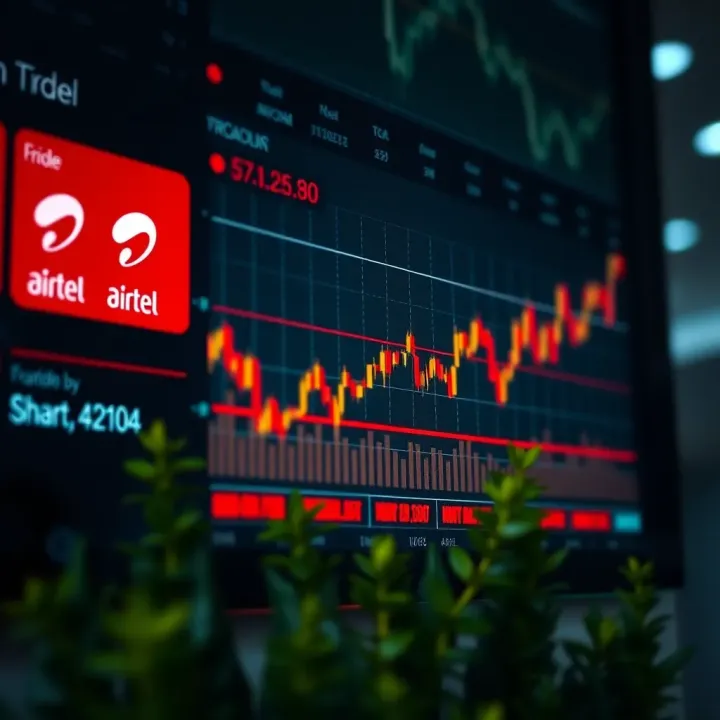
Understanding tomorrow's price target requires blending technical analysis with fundamental perspectives. Investors who rely solely on charts might miss key triggers like rulings on spectrum auctions or shifts in subscriber growth.
Here are important points to consider:
Earnings Impact: Airtel's quarterly results often cause sharp price swings. For instance, a surprising rise in Average Revenue Per User (ARPU) or subscriber base growth can boost confidence, pushing the price higher.
Technical Levels: Support and resistance levels from charts indicate potential price floors or ceilings. Traders often watch for volume spikes near ₹700-₹720 levels, signalling strong buying interest.
Sector News: Any government policy favouring telecom infrastructure development or spectrum pricing reforms can nudge the stock upward.
Global Cues: Since Airtel has international operations, fluctuations in forex or global tech indices can influence its short-term trend.
For those considering intraday or short-term trades, watching Bharti Airtel's performance after market hours and tracking pre-market futures can offer clues about tomorrow’s price trajectory.
Combining these aspects with daily market sentiment helps craft a well-rounded expectation of what the share price target might be. Staying updated helps you plan entries and exits without relying on guesswork alone.
Getting a solid grip on Bharti Airtel's current market scenario is key for anyone aiming to predict its share price tomorrow. This overview sheds light on how the stock has behaved recently, what external factors are nudging it, and how it stacks up against fellow telecom firms. Such insights help investors and traders decide when to hold, buy, or sell, balancing both opportunity and risk.
Price movements in the last week give a snapshot of the stock's immediate momentum. For instance, if Bharti Airtel's shares rose steadily through the week, it might suggest positive investor sentiment or anticipation of favourable announcements. Conversely, sudden dips might prompt caution. This short-term trend highlights the stock's sensitivity to events and market moods, crucial for day traders or those looking for quick entries.
Impact of broader market trends also plays a role. If the Sensex or Nifty 50 slipped due to economic worries, Bharti Airtel's shares may feel the pinch even if company fundamentals remain strong. Similarly, if the telecom sector is gaining investor favour, the stock could ride that wave irrespective of its standalone news. Recognising such wider market influences helps you separate company-specific moves from sector-wide or economy-wide shifts.
Comparison with sector peers like Reliance Jio Infocomm or Vodafone Idea offers perspective. If Bharti Airtel outperforms others, it might suggest stronger fundamentals or better growth prospects. On the flip side, lagging behind could signal challenges unique to Airtel. Such benchmarks are handy to spot if the stock's movements are isolated or part of a sectoral trend.
Effect of RBI policy changes often ripples through markets. For example, if the Reserve Bank of India (RBI) tweaks interest rates, it affects loan costs for telecom companies and consumer spending power alike. A sudden repo rate cut could lower Airtel's financing expenses, potentially boosting profitability and share price. Traders track RBI's monetary decisions carefully as these can prompt swift market reactions.
International telecom market developments matter since Airtel has operations beyond India, like in Africa. Regulatory changes or competitive shifts in those markets can impact revenue and investor confidence. Recently, if African countries imposed new taxes on telecoms, Airtel's earnings may face pressure. Hence, global industry news shouldn't be overlooked when gauging share price moves.
Currency fluctuations and their impact also play a part. Since Bharti Airtel earns partly in foreign currencies, a weaker rupee against the dollar or euro can enhance repatriated profits. However, it also raises the cost of foreign debt. Monitoring currency trends helps traders anticipate these profit swings that can shift the stock price unexpectedly.
Keeping track of Bharti Airtel's weekly price action alongside market moods, peer performance, RBI policies, international telecom news, and currency movements form the backbone of making smart short-term investment calls.
By understanding these pieces, investors can better read the signals that the share price throws up today and tomorrow.
Stock moves rarely happen in isolation; specific triggers can prompt changes in Bharti Airtel’s share price, especially in the short term. Understanding these triggers helps traders and investors anticipate price swings and adjust strategies accordingly. This section breaks down critical factors seen to influence the stock tomorrow.
Quarterly earnings expectations play a major role in shaping investor sentiment. If Bharti Airtel’s earnings report, due soon, exceeds market estimates on subscriber growth or revenue from data services, it tends to lift the stock. Conversely, misses or cautious guidance can weigh heavily. For instance, a strong Q3 FY24 report with upticks in average revenue per user (ARPU) amidst growing 5G adoption could boost confidence.
New partnerships or business expansions are another key factor. Bharti Airtel recently partnering with global tech firms for cloud or digital services could signal future revenue streams, encouraging buying interest. Likewise, expansion into underserved rural areas or stepping up fibre broadband services can be seen as growth triggers that push the stock higher.

Regulatory updates from bodies like TRAI (Telecom Regulatory Authority of India) or SEBI (Securities and Exchange Board of India) can unexpectedly sway prices. If TRAI announces new spectrum auction rules or SEBI tightens norms around telecom stock disclosures, it affects investor confidence in the short term. For example, a favourable regulatory policy easing entry barriers may lift the shares.
Large trading volumes and sudden volume spikes often precede price jumps or declines. High volumes usually reflect strong interest—whether buying or selling—helping validate price movements. Suppose tomorrow sees volume well above the daily average on Bharti Airtel; this hints at institutional activity or news being priced in.
The role of institutional investors is crucial. When mutual funds, foreign portfolio investors (FPIs), or insurance companies increase their stakes, they tend to stabilise or lift the share price due to their buying power. On the other hand, large selling by these players could trigger downward pressure, signalling a short-term correction.
Short-term technical indicators like Relative Strength Index (RSI), moving averages, and MACD (Moving Average Convergence Divergence) offer useful clues. If the RSI nears an overbought level, traders may expect a price pullback soon. Conversely, bullish crossovers in moving averages indicate upward momentum. Using these technical signals alongside volume data can help time entry and exit better.
Keeping an eye on earnings, partnerships, regulatory changes, and market sentiment equips investors to make informed moves on Bharti Airtel shares tomorrow, reducing guesswork and improving potential returns.
Understanding these triggers lets you step beyond guesswork and engage with Bharti Airtel shares strategically, especially if you trade frequently or manage a volatile portfolio.
Expert predictions and analyst price targets offer valuable guidance for investors trying to gauge Bharti Airtel's potential share price movement tomorrow. These forecasts distil complex market data, company fundamentals, and sector trends into actionable price estimates. For traders and investors, understanding these targets helps in setting realistic expectations and planning entry or exit points accordingly.
Range of short-term price targets: Analysts often provide a range of expected prices rather than a single figure, reflecting the uncertainty and rapid changes in market conditions. For Bharti Airtel, this range might vary between ₹750 to ₹780 for the next trading day, depending on recent earnings reports and sector activity. This range helps investors understand the spectrum of possible outcomes and prepares them for price fluctuations within those bounds rather than fixate on one number.
Factors analysts consider in forecasts: Brokerage houses base their forecasts on multiple factors, including the company's recent financial performance, industry developments like 5G rollout progress, and macroeconomic indicators such as policy changes by the Reserve Bank of India (RBI). For instance, if Bharti Airtel announces expansion in digital services or achieves better-than-expected subscriber growth, forecasts tend to swing upwards. Conversely, increased competition or regulatory hurdles might push targets down.
Divergences in expert opinions: Different analysts may hold varied views, producing a spread of forecasts. This happens because they assign different weights to market variables like global telecom trends or currency fluctuations. Moreover, some might emphasise technical signals while others focus more on fundamentals. Acknowledging these differences is crucial; a single forecast should not be taken as gospel but rather interpreted as part of a broader dialogue among experts.
Support and resistance levels: These are price points where the stock historically tends to stop falling (support) or rising (resistance). For Bharti Airtel, a support level might be around ₹740, indicating strong buying interest if prices dip. Resistance may stand near ₹760 or ₹770, where selling pressure might increase. Traders watch these levels closely to decide when to buy or sell in anticipation of price rebounds or pullbacks.
Moving averages and relative strength index (RSI): Moving averages smooth out daily price movements to show overall trends. A 50-day moving average might serve as a dynamic support line, with prices bouncing off it frequently. The RSI measures momentum; an RSI above 70 suggests the stock is overbought, signalling a potential pullback, while below 30 indicates oversold conditions, which might attract buyers. These indicators help traders time their moves more precisely.
Predicted price bands for tomorrow: Technical analysts often establish a price band within which they expect the stock to trade the next day — for example, between ₹745 and ₹765. This band considers volatility, recent price action, and market sentiment. For traders, these predicted bands guide setting stop-loss and target prices to limit risk and maximise gains.
Understanding expert predictions and technical signals together provides a nuanced view of Bharti Airtel’s likely short-term price movement. Traders who blend both approaches equip themselves better to navigate market swings confidently.
Understanding how Bharti Airtel's share price movements affect investor decisions is key to making smart trades. Market volatility, sector risks, and technical signals directly influence trading tactics and risk management. This section breaks down practical aspects investors should watch for when dealing with Bharti Airtel shares, especially with tomorrow's price target in mind.
Volatility measures like the Average True Range (ATR) and beta coefficient serve as crucial tools for tracking Bharti Airtel's price swings. The ATR helps gauge daily price fluctuations—higher ATR means greater volatility, which can imply more trading opportunities but also higher risk. Meanwhile, beta compares Bharti Airtel's volatility to the overall market; a beta above 1 suggests the stock swings more sharply, making it more sensitive to market moves. For instance, if the Sensex is volatile, Bharti Airtel’s share might react more dramatically.
Telecom sector risks also shape Bharti Airtel's share price. Regulatory uncertainties from TRAI (Telecom Regulatory Authority of India), licensing cost changes, and spectrum auctions can instantly rattle investor confidence. Besides, intense competition from rivals like Reliance Jio and Vodafone Idea keeps profit margins under pressure. Macro factors like shifts in government policy or macroeconomic slowdowns add to this risk stack. Remember, telecom firms invest heavily in infrastructure, and any delay or cost overrun here can hurt earnings forecasts.
Managing exposure in such a volatile environment means knowing when to cut losses and when to hold firm. Diversification across sectors can buffer telecom-specific risks, but within telecom, keeping an eye on Bharti Airtel’s fundamental news and technical indicators helps time your trades better. Using smaller position sizes during uncertain phases is wise; for example, reducing holding during a period of expected regulatory announcements can limit downside.
Setting clear stop-loss and target prices prevents emotional decisions amid rapid price changes. If you buy Bharti Airtel at ₹780 with a short-term target of ₹800, placing a stop-loss around ₹770 can cap losses if the price dips. These parameters should rely on recent support and resistance levels, plus the volatility you observe.
Timing entry and exit depends heavily on forecasting tools and market momentum. If analyst forecasts predict a likely uptick tomorrow due to strong quarterly results, consider entering early but watch for reversal signals. Conversely, exit points should align with technical cues such as overbought RSI (Relative Strength Index) or major resistance zones, allowing you to lock in gains before a pullback.
Using derivatives like futures and options can amplify profits but also increase risk. Short-term traders might buy call options if they expect price rises or use stop-limit orders in futures contracts to automate exits. Margin trading, meanwhile, lets you trade larger volumes but requires discipline to avoid margin calls during volatility. So, careful calculation of risk-to-reward and margin requirements is essential before deploying these strategies.
Successful trading with Bharti Airtel shares means blending risk awareness, technical insight, and disciplined execution, especially when aiming for short-term gains amid a shifting market scenario.
Focusing on the medium-term outlook helps investors understand Bharti Airtel’s potential beyond immediate price fluctuations. While daily share movements matter, the medium term reflects how strategic decisions and market shifts shape the company's trajectory. This perspective assists you in planning your investments more thoughtfully, rather than reacting to short-term noise.
Bharti Airtel's aggressive push in 5G deployment is reshaping its market position. With 5G commercial services launched in major cities and plans for wider coverage, the company stands to attract higher-value subscribers and enterprise contracts. Infrastructure expansion, including fibre network enhancement, supports faster data speeds and better coverage, directly impacting revenue growth.
In practical terms, these investments mean Airtel could see a rise in Average Revenue Per User (ARPU) as customers adopt premium 5G services. Also, improved infrastructure reduces churn and upsells digital offerings, boosting medium-term financial health.
To reduce dependence on traditional voice and data revenues, Airtel is focusing on digital services like Airtel Thanks app, mobile payments, and cloud solutions. These segments provide steady income and offer scalability. For instance, Airtel's digital payments arm competes with PhonePe and Google Pay, carving out a share in India's fast-growing fintech space.
This diversification cushions Airtel against volatility in core telecom markets. It also opens fresh growth avenues as India’s digital economy expands. Investors should watch these streams as indicators of Airtel’s adaptability and future earnings stability.
The Indian telecom market remains fiercely competitive, with Reliance Jio and Vodafone Idea actively challenging Airtel’s dominance. Price wars, especially in prepaid plans, can pressure margins. However, Airtel's focus on quality and enterprise services could provide an edge.
Regulatory updates from the Telecom Regulatory Authority of India (TRAI) and the Department of Telecommunication (DoT) impact spectrum fees, licence renewals, and pricing rules. Keeping an eye on these changes can help anticipate cost pressures or opportunities, influencing medium-term stock performance.
Bharti Airtel’s share movement often mirrors broader telecom sector trends. For example, if the entire sector shows strength due to optimism on 5G adoption or easing regulatory concerns, Airtel’s stock tends to rise alongside peers.
Understanding this link helps investors spot whether price movements are company-specific or industry-driven. This insight is valuable for calibrating risk exposure and timing trades effectively.
Tomorrow's share price can hint at shifts in market sentiment that might warrant portfolio reviews. A strong performance backed by positive sector news could encourage increasing exposure to Bharti Airtel or telecom-focused funds.
Conversely, if price drops reflect sector-wide challenges, it might be prudent to rebalance holdings to manage risk. Hence, monitoring Bharti Airtel's daily moves within the context of upcoming quarters informs smarter portfolio decisions.
Several events can influence Airtel’s medium-term outlook: expansion in 5G coverage, fresh spectrum auctions, or new digital partnerships are likely to act as growth triggers. Additionally, government policies favouring telecom infrastructure investments or easing financial burdens could boost investor confidence.
Staying alert to these catalysts allows investors to anticipate and capitalise on positive momentum, rather than just reacting to past movements.
Medium-term perspective complements short-term trading, offering a clearer picture of Bharti Airtel’s direction amid sector shifts and company strategies. It’s a useful lens for managing investments wisely in a dynamic market.
📊 Get insights on Reliance Industries' share price target for tomorrow, covering market trends, analyst views, company health, and economic factors in India.

📈 Explore the long-term outlook of Reliance Industries share price by 2030, factoring in market trends, company strategy, and economic risks for Indian investors.

📈 Explore Reliance Industries’ projected 2030 target price with insights on financial health, strategy, market trends & long-term growth outlook.

📊 Explore Reliance Industries' 2025 target price through financial reviews, market status & expert forecasts. Insights for informed Indian investors 🇮🇳
Based on 7 reviews