
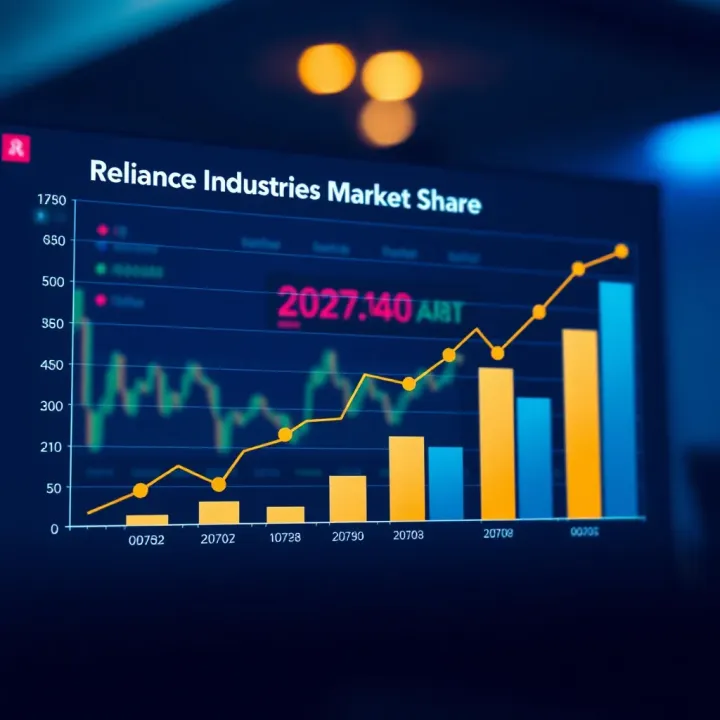
Reliance Industries Market Share Forecast 2030
🔍 Explore Reliance's projected market share in 2030! Understand key growth sectors, challenges, and economic trends shaping India's business future.📈
Edited By
Emma Sutton
Bitcoin remains one of the most talked-about digital assets in India’s financial circles. Its price movements grab attention not only from traders but also from long-term investors watching for trends and shifts that signal buying or selling opportunities.
Currently, the Bitcoin market shows a mixed picture. After facing steep volatility earlier this year, the price has somewhat stabilised, hovering around key support and resistance levels. Understanding these trends can help investors and traders better position themselves, whether for short-term gains or long-term holding.
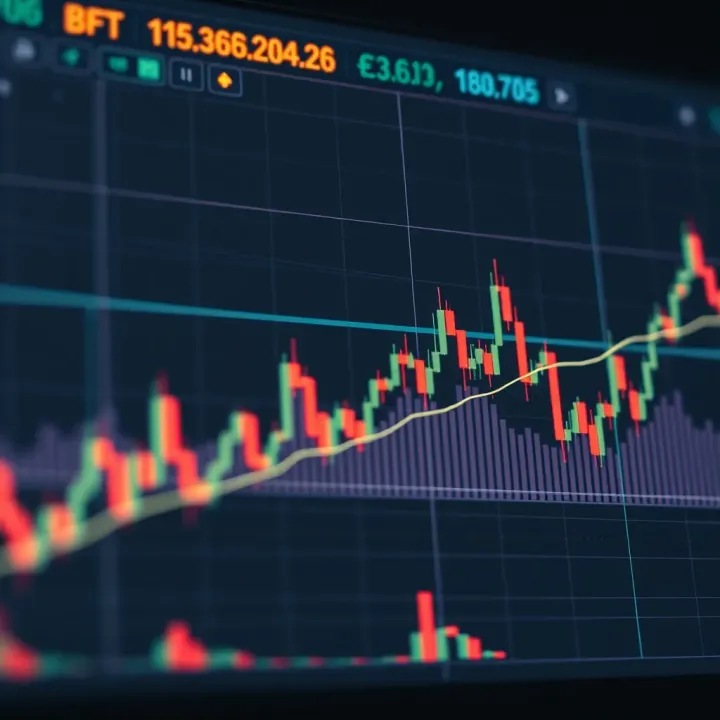
Several factors are shaping Bitcoin’s price today. Global economic conditions, including inflation rates and central bank policies, influence risk appetite among investors. For example, when the US Federal Reserve signals interest rate hikes, Bitcoin often reacts due to shifting flows from high-risk to safer assets. Moreover, India’s own regulatory stance towards cryptocurrencies adds an extra layer of uncertainty for local participants.
Technical analysis tools such as moving averages, Relative Strength Index (RSI), and trading volumes provide critical signals. For instance, a bullish crossover in moving averages might hint at upward momentum, while oversold RSI levels suggest potential rebound points. Investors should watch these indicators alongside macroeconomic data for a fuller picture.
Understanding Bitcoin’s price drivers and market sentiment remains key for anyone investing or trading in this volatile environment.
Indian investors must also consider practical risks like cybersecurity threats, frauds, and exchange liquidity. Choosing reputed platforms such as WazirX or CoinDCX can mitigate some concerns. Plus, staying alert to sudden regulatory announcements ensures smoother navigation amid changing rules.
To sum up, today's Bitcoin forecast reflects a balance of cautious optimism backed by market signals and ongoing challenges tied to regulation and global economic shifts. Keeping abreast of market analysis, combining technical and fundamental perspectives, and following trusted expert opinions will help you make clearer, more confident decisions in India’s rapidly evolving crypto space.
Understanding current trends in Bitcoin’s price is key for traders and investors aiming to make well-informed decisions. Prices rarely move in isolation but follow patterns shaped by market behaviour, regulatory impacts, and global economic shifts. Grasping these trends helps in anticipating potential price action and adjusting strategies accordingly.
Daily and weekly price fluctuations reveal how volatile Bitcoin can be within short periods. For example, over the past week, Bitcoin may swing between ₹25 lakh and ₹27 lakh within days due to sudden shifts in market sentiment or news developments. Such moves give traders chances to enter or exit positions quickly, while investors can use weekly patterns to assess medium-term strength or weakness.
Volume trends reflect market participation levels and help gauge sentiment. A sharp increase in trading volume alongside a price rise often confirms bullish sentiment, signalling strong buyer interest. Conversely, falling volume during a price surge might warn of a weak rally that could reverse soon. For instance, if volumes spike on Indian crypto exchanges like WazirX or CoinDCX during a price dip, it indicates growing buyer confidence.
Global economic factors significantly influence Bitcoin’s price as it often behaves like a risk asset. Inflation hikes or interest rate changes in the US or Europe can sway Bitcoin either way. When the US dollar weakens due to easy monetary policies, Bitcoin sometimes gains as investors look for alternative stores of value. On the contrary, geopolitical uncertainty or stock market dips might trigger a sell-off in Bitcoin as investors seek liquidity.
India’s regulatory environment is evolving, impacting investor confidence. Recently, discussions on crypto tax rules and potential frameworks for digital asset classification have kept market participants on alert. For example, the imposition of a 1% TDS (tax deducted at source) on crypto transactions adds complexity for retail investors, affecting trading volumes.
Global regulations from countries like the US, China, and the EU also play a part. Restrictions in China have forced miners and traders to relocate, affecting supply and market liquidity. Meanwhile, clear regulations in the US around Bitcoin ETFs have encouraged institutional participation, driving the price upward.
The Securities and Exchange Board of India (SEBI) and Reserve Bank of India (RBI) maintain cautious stances towards cryptocurrencies. The RBI remains concerned about risks to financial stability, while SEBI emphasises investor protection in unregulated crypto trading platforms. Their perspectives shape how exchanges and investors operate, influencing price stability and adoption in India.
Tracking these trends enables you not only to react but also to anticipate moves in Bitcoin pricing, especially amid ongoing shifts in markets and regulations.
Technical analysis plays a significant role in understanding Bitcoin’s price movements today. Traders and investors often rely on it to make short-term decisions based on historical price data and chart patterns, which provide tangible cues about potential market behaviour. Unlike fundamental analysis, technical indicators help in spotting entry and exit points, especially in a market known for Bitcoin’s rapid swings.
Support levels mark price points where Bitcoin tends to stop falling, as buyers step in to push prices higher. Resistance levels, on the other hand, indicate price points where selling pressure mounts, preventing further rise. For example, if Bitcoin repeatedly bounces back near ₹30 lakh, traders view this as a support zone. Breaking below this might indicate weakness. Resistance at ₹33 lakh could cap upward moves until the buyers gain enough strength to cross it.
Understanding these levels helps manage risk—traders place stop-loss or take-profit orders around these zones. When Bitcoin breaks support or resistance decisively, it often signals a new trend or correction, alerting traders to adjust their strategies accordingly.
Moving averages (MAs) smooth out price data over set periods, highlighting underlying trends. The commonly used 50-day and 200-day MAs show intermediate and long-term trends. If Bitcoin’s price crosses above the 50-day MA, it’s generally bullish; if it falls below, sellers are likely to dominate. Crossovers between short-term and long-term MAs, like the "golden cross" or "death cross," provide strong trend reversal signals.
The Relative Strength Index (RSI) measures momentum, scaling from 0 to 100. An RSI above 70 suggests Bitcoin is overbought and might face a price correction soon, while below 30 indicates oversold conditions, hinting at a possible rebound. In April 2024, an RSI nudging above 70 warned traders of a potential pullback after a sudden rally.
Volume reflects how many Bitcoin units are traded within a timeframe, confirming price moves. High volume during price rises signals strong buying interest; volume spikes during declines suggest selling pressure. Momentum tools like the Moving Average Convergence Divergence (MACD) track the strength and direction of trends. For instance, a rising MACD line above its signal line confirms bullish momentum.
Volume helps filter out false breakouts. If Bitcoin breaks ₹32 lakh resistance with weak volume, the breakout may lack conviction, advising caution. Conversely, a breakout accompanied by heavy volume likely indicates a genuine shift.
In short-term trading, spotting potential breakouts or corrections is vital. A breakout occurs when Bitcoin moves beyond established support or resistance with conviction, often sparking rapid price action. Traders watch for consolidation patterns like triangles or flags before a breakout.
Corrections happen when prices retrace after strong moves, offering opportunities to buy at lower levels during an uptrend or exit in a downtrend. Recognising correction depth and duration helps avoid getting caught in whipsaws.
Indicators like candlestick patterns (doji, hammer), MA crossovers, and divergence in RSI or MACD point towards trend reversals. For example, a death cross (50-day MA crossing below 200-day MA) often signals a bearish turn. Such signals allow traders to pre-empt shifts and adjust their positions.
Daily Bitcoin forecasts depend heavily on technical analysis because Bitcoin’s price reacts swiftly to market sentiment and news. Technical tools offer a structured way to read these reactions. They help traders make timely decisions, balancing risks and rewards in volatile markets.
Technical analysis forms the backbone of daily Bitcoin price forecasting, offering measurable signals that aid in navigating the crypto’s rapid ups and downs.
In summary, combining support/resistance, moving averages, RSI, volume, and momentum indicators equips investors and traders with practical insights. These tools help decode Bitcoin’s price movements, manage risks, and seize opportunities in the current market.
Understanding the fundamental factors impacting Bitcoin today is key to grasping its price behaviour and market sentiment. These factors reach beyond charts and technical indicators, touching on broader economic realities and technological progress that steer investor decisions. Let’s break down the main contributors.
Inflation trends and interest rates play a crucial role in shaping Bitcoin’s appeal. When inflation rises, fiat currencies lose purchasing power, leading some investors to treat Bitcoin as a hedge. For instance, with inflation running high in many economies, including India, Bitcoin often attracts those wanting to preserve value. However, rising interest rates tend to increase the opportunity cost of holding non-yielding assets like Bitcoin. RBI’s recent rate hikes to manage inflation, for example, could dampen traders’ enthusiasm for Bitcoin as borrowing costs increase.
The impact of the US dollar and global markets also significantly steers Bitcoin’s price. Bitcoin often moves inversely to the US dollar index; when the dollar weakens, Bitcoin tends to gain, partly because it becomes cheaper for holders of other currencies. Moreover, global stock market trends influence Bitcoin as an emerging risk asset. A bullish stock market like the US Nasdaq can cause investors to rotate funds away from Bitcoin, while turbulent markets may drive inflows into crypto amid searches for alternative assets.
Investor appetite for risk assets affects demand for Bitcoin substantially. When markets are upbeat and investors chase high returns, cryptocurrencies see increased inflows. Conversely, during uncertain times or economic slowdowns, investors tend to pull back from volatile assets like Bitcoin, seeking safer options. This cyclical behaviour was visible when risk-off sentiment hit during the pandemic onset in 2020, momentarily crushing Bitcoin’s price before its recovery.
The growth in institutional investment shows Bitcoin’s gradual acceptance as a serious asset class. Indian and global institutional players, such as mutual funds and family offices, have begun dipping toes into Bitcoin exposure, often through regulated channels or funds. Institutional backing adds credibility and liquidity, reducing wild price swings and giving retail investors more confidence.
Recent Bitcoin network upgrades also affect investor sentiment and utility. Protocol improvements focusing on transaction speed, security, and scalability make Bitcoin more viable for everyday use and institutional adoption. For example, advancements in the Lightning Network reduce transaction time and costs, allowing faster micro-payments which could fuel wider acceptance.
Finally, acceptance by Indian businesses and consumers has climbed steadily. While still early days compared to countries like the US, Indian startups and merchants are starting to accept Bitcoin payments either directly or via payment gateways. This growing ecosystem encourages usage beyond mere speculation and strengthens the currency’s position. Plus, with more Indian investors aware of crypto, market depth and trading activity have seen a noticeable rise.
In short, Bitcoin’s price today reflects a mix of economic pressures, technological progress, and widening adoption, all crucial for investors to watch closely.
Navigating Bitcoin investments requires a clear understanding of the risks involved. Unlike traditional assets, Bitcoin’s unique market behaviour, security challenges, and regulatory uncertainties make it essential for investors to be cautious. Being aware of these risks helps traders and investors safeguard their holdings and avoid sudden losses.
Bitcoin is infamous for its sharp price swings. A coin valued at ₹30 lakh one day can drop to ₹25 lakh within hours. This extreme volatility means that traders can either gain handsomely or lose heavily in a short span. As an example, a sudden market sell-off following negative news can wipe out gains quickly. Hence, understanding these price moves is vital for day traders and investors alike to time their entry and exit effectively.
Market perception plays a large role in Bitcoin’s value. News reports—whether about regulatory crackdowns, endorsements by influential figures, or technological glitches—can trigger rapid buying or selling. Speculation often drives prices beyond fundamental value, causing erratic movements. For instance, rumours of a government ban can cause panicked selling, while announcements of institutional adoption might rally prices. Such factors underline why verifying information before making decisions is critical.
Limiting exposure prevents large-scale losses during unpredictable swings. Investors often use strategies like setting stop-loss orders or only investing a small portion of their portfolio in Bitcoin. Hedging through other assets or diversifying within cryptocurrencies can also cushion the impact. For example, allocating no more than 10-15% of the total investment to Bitcoin is a common risk management approach to ride out market ups and downs without jeopardising overall wealth.
Bitcoin’s digital nature makes it vulnerable to hacking and theft. Weak passwords, phishing scams, or storing coins on untrusted exchanges can lead to losses. A notable case in India involved a crypto exchange hack where users lost crores of rupees. Using hardware wallets (cold wallets) and enabling two-factor authentication are practical steps to improve security. Regularly updating software and avoiding sharing private keys also reduce risk.
Regulators in India and worldwide have puzzled over how to handle cryptocurrencies. Sudden policy changes, such as RBI's freeze on bank transactions related to crypto in 2018, impact liquidity and confidence. Although the Supreme Court lifted this ban later, regulatory unpredictability remains. Investors must stay updated on RBI and SEBI announcements to anticipate and adapt to such changes, avoiding exposure when regulations tighten.
Currently, Bitcoin is neither illegal nor officially recognised as legal tender in India. This ambiguous stance means there is no formal protection for investors if disputes arise. Furthermore, taxation rules require reporting gains from crypto trades under capital gains. The lack of clear guidelines can complicate compliance and legal recourse. Awareness of this legal grey area is crucial for Indian investors to navigate responsibly and maintain proper records.
Understanding these risks allows Bitcoin investors to make informed choices and design strategies that protect their interests while harnessing the asset’s potential.
Staying updated with Bitcoin’s volatile market requires practical advice that helps investors filter noise and make informed decisions. This section focuses on how to choose trusted information sources and provides specific tips for Indian investors navigating the cryptocurrency scene.
Trusted Indian and international Bitcoin news portals play a key role in providing timely, accurate market data and regulatory updates. Platforms like CoinDesk and CryptoSlate offer comprehensive price charts and in-depth analysis, while Indian sites such as CoinCrunch India or Crypto Kanoon keep you informed about local developments and regulatory changes. These portals often include expert opinions and breakdowns of complex news, which can help you anticipate market reactions.
Role of social media and expert analysis is a double-edged sword. Twitter handles of respected analysts or blockchain experts like Balaji Srinivasan or Vijay Boyapati can give quick market insights, but social media also spreads rumours and hype. Following verified accounts and cross-checking announcements with credible news sources prevents falling prey to misleading information.
Importance of cross-verifying information cannot be overstated in the crypto world. One breaking news piece can cause sharp price swings, so confirm from 2-3 independent sources before making a trading call. For example, if the Reserve Bank of India updates its stance on cryptocurrencies, verify this through official RBI statements and reputed Indian news portals rather than relying solely on social media.
Diversifying portfolio with cryptocurrencies helps reduce risk. Instead of pouring all funds into Bitcoin, consider allocating some investments to other established coins like Ethereum or emerging tokens with strong use cases. This strategy balances potential returns and minimises overexposure to Bitcoin’s sharp ups and downs.
Understanding tax implications is crucial since cryptocurrency gains are taxable under Indian law from FY2022-23 onward. Profits from crypto trading attract a flat 30% tax, and platforms usually deduct TDS (tax deducted at source) over ₹1 lakh of transactions. Staying aware of these rules ensures you factor tax liabilities into your investment returns and avoid compliance issues when filing income tax returns (ITR).
Using regulated exchanges and secure wallets protects your assets and reduces fraud risk. Indian investors should prefer exchanges authorised by Indian regulators, such as WazirX or CoinDCX, which follow KYC norms and provide legal safeguards. Also, storing coins in hardware wallets or trusted software wallets with two-factor authentication limits exposure to hacking and theft.
Following these practical steps keeps you better equipped to ride Bitcoin’s waves rather than being tossed about by every headline or price spike. Trustworthy information and disciplined investing habits go a long way in today’s dynamic Bitcoin market.
🔍 Explore Reliance's projected market share in 2030! Understand key growth sectors, challenges, and economic trends shaping India's business future.📈
📈 Explore the long-term outlook of Reliance Industries share price by 2030, factoring in market trends, company strategy, and economic risks for Indian investors.

Explore Reliance Industries' future growth, market trends, and tech moves in India 🌏. Get insights on strategies, challenges, and new opportunities ahead 📈.
📈 Explore the future of Reliance share price over the next decade, with insights on growth drivers, risks, and market trends for smart investing in India.
Based on 13 reviews