

Reliance Share Price Prediction 2030: Analysis & Outlook
📈 Explore Reliance share price predictions for 2030, analyzing market trends, company strengths, sector growth, and risks to guide investors wisely.
Edited By
Emily Carter
Cardano (ADA) has steadily gained attention in the cryptocurrency world since its launch in 2017. Known for its research-driven approach, Cardano positions itself as a third-generation blockchain, aiming to overcome challenges faced by earlier platforms like Bitcoin and Ethereum. As investors and traders look ahead to 2040, understanding Cardano's price potential over the long term becomes critical.
Several factors influence Cardano's future price trajectory. These include its technological upgrades, adoption rates, regulatory environment, and broader market trends impacting digital assets. For instance, Cardano's transition to a proof-of-stake (PoS) consensus with its Shelley upgrade has set it apart by offering scalability and energy efficiency that attract institutional interest.
India's growing crypto community, despite regulatory uncertainties, shows enthusiasm for projects like Cardano due to their strong fundamentals and sustainable ecosystem. It is important to monitor how Indian regulations evolve, as compliance will affect participation and investment volumes.
Understanding Cardano's price outlook requires analysing its technology, market behaviour, and expert expectations comprehensively—rather than relying on short-term hype.
Key elements to watch for in Cardano's journey to 2040 include:
Network development: Continued rollout of smart contracts, DeFi platforms, and interoperable applications.
Partnerships and integrations: Collaborations with governments, enterprises, and Indian tech firms can boost real-world adoption.
Market sentiment: Trends in investor interest, global economic factors, and competitor blockchain projects.
This article aims to offer a clear, data-driven perspective to help traders, financial analysts, and investors in India make informed decisions about Cardano's long-term potential. The focus remains on facts, trends, and realistic forecasts to support strategic investment choices.
Grasping Cardano’s core technology and its foundations is vital for investors tracking its long-term value. Cardano’s blockchain architecture and development approach underpin its potential resilience, scalability, and adoption. Knowing these technical aspects sheds light on how Cardano differs from other cryptocurrencies and why it might hold value in the future.
Cardano started in 2015, designed by experts aiming to build a secure and flexible blockchain. Unlike many blockchains developed rapidly, Cardano adopted a research-driven approach with peer-reviewed academic input. It uses the Ouroboros protocol, a proof of stake system, which balances security with energy efficiency. This architecture ensures lower transaction costs and faster processing compared to legacy proof of work chains, making Cardano practical for global users, including India’s tech-savvy population.
Cardano’s development follows a structured roadmap with key updates unlocking new features. Important milestones include the ‘Shelley’ upgrade introducing decentralisation and the ‘Alonzo’ hard fork that enabled smart contracts. Each phase added capabilities, allowing developers to build decentralised applications (dApps) and expanding Cardano’s use cases beyond simple transactions. Staying aware of these milestones helps investors judge the project’s maturity and future outlook.
The Cardano ecosystem is expanding steadily with partnerships across finance, education, and government sectors. For instance, recent collaborations in Africa aim to provide blockchain-based identity and financial solutions. Such real-world use cases reinforce Cardano’s relevance and could drive demand for ADA tokens. For investors, this adoption signals a platform not just built on hype but with tangible applications, strengthening its long-term prospects.
Cardano’s use of proof of stake (PoS) consensus reduces energy consumption compared to Bitcoin’s proof of work model. This makes Cardano more sustainable, an attractive factor as governments tighten regulations around crypto mining’s environmental impact. For example, in India, where energy costs and environmental concerns matter, such a green blockchain gains appeal both from regulators and users.
Enabling smart contracts is a big step for Cardano, opening doors for dApps in DeFi, gaming, and supply chain. The ‘Alonzo’ upgrade brought this to life, allowing developers to write complex applications on the blockchain. As more dApps launch, demand for ADA tokens tends to increase, as they’re needed for transaction fees and governance.
Cardano invests in techniques like Hydra for off-chain scaling to boost transaction speed while keeping costs low. Interoperability with other blockchains is also a focus, meaning Cardano can connect and communicate with networks like Ethereum easily. This cross-chain functionality enhances Cardano’s utility and attractiveness, helping it stay competitive and grow.
Understanding these technical foundations lets investors assess Cardano’s strength and potential realistically rather than jumping on short-term price moves.
This clear focus on technology and ecosystem growth gives Cardano a solid chance to maintain and possibly increase value by 2040, which makes these factors especially relevant to long-term investors and traders.
Understanding the factors that influence Cardano’s price over the long term is key for investors aiming to make informed decisions. These factors include market sentiments, regulatory developments, technological progress, and competitive dynamics. Each plays a distinct role in shaping how Cardano’s value might evolve by 2040.
Regulations in India and globally significantly affect Cardano’s market performance. For instance, RBI’s cautious stance on cryptocurrencies shapes Indian investor confidence. Recent moves towards clearer crypto policies give some assurance but also bring uncertainty. Globally, regulatory crackdowns can trigger price swings, while supportive laws tend to encourage adoption and investment. This patchwork of rules means investors must stay alert to new updates as these can alter Cardano’s prospects swiftly.
Investor behaviour follows these regulatory signals closely, but sentiment trends matter on their own too. When buzz around Cardano’s upgrades or partnerships picks up, price rallies often follow. Conversely, negative news can lead to sharp sell-offs. In India, social media platforms and crypto forums greatly influence sentiment, turning emotions into market moves. Small and big investors alike track these to time entries and exits effectively.
Cardano’s innovation has boosted its adoption steadily. Its proof-of-stake consensus reduces energy usage compared to older blockchains, appealing to environmentally conscious users and regulators. Introduction of smart contract functionality expanded its dApp ecosystem, attracting developers from various sectors. For example, Cardano’s deployment in identity verification projects in Africa showcases its potential beyond finance.
Sector-specific applications also play a big role. In finance, Cardano enables faster, cheaper cross-border payments, useful for remittances between India and other countries. Governance use cases include blockchain-based voting systems, which India’s states have begun exploring experimentally. Such real-world applications could drive demand for ADA tokens, supporting price growth by increasing network utility beyond speculation.
Cardano competes with blockchains like Ethereum and Solana, each with strengths and weaknesses. Ethereum remains dominant with a huge developer base but faces high gas fees and slower transactions. In contrast, Solana offers speed but has faced network stability issues. Cardano’s approach balances decentralisation, sustainability, and scalability, carving its own space.
Its niche lies in combining academic research with peer-reviewed protocols, which draws institutions seeking long-term security over quick gains. This positions Cardano as a platform suited to serious projects rather than just speculative tokens. Investors eyeing sustainable growth see this as an advantage, potentially supporting ADA’s price in the longer run.
To sum up, monitoring market sentiment, regulatory changes, tech evolution, and competition gives a clear view of the forces likely to influence Cardano’s price trajectory through 2040.
Studying Cardano's historical price movements provides valuable clues about its future trajectory. For investors and traders alike, understanding past trends helps anticipate potential opportunities or pitfalls. The crypto market is notoriously volatile, and Cardano (ADA) has seen its fair share of ups and downs since launch. Analysing these fluctuations can sharpen one’s sense of timing and risk management.
Cardano’s price journey began modestly but gained traction around 2017–18 during the broader cryptocurrency boom. The first major milestone was crossing the $1 mark in early 2021, riding the wave of renewed interest in decentralised finance and smart contract platforms. However, this growth came with notable volatility—sharp corrections followed spikes as market sentiment shifted quickly.
One practical takeaway is that Cardano's price has not moved linearly; it experiences distinct boom-and-bust cycles. For example, during the 2021 bull run, ADA reached for nearly $3, only to retrace substantially months later. Recognising these volatility phases is crucial for investors to avoid getting caught in hype-driven surges and to adopt strategies like cost averaging or timely exits.
Cardano’s price has also demonstrated resilience by rebounding from steep dips, suggesting a strong underlying interest in its ecosystem rather than pure speculative bursts. This history helps frame expectations: long-term holders might expect periodic roller coaster rides but potential for significant gains if fundamentals hold.
Cardano’s price patterns have largely mirrored wider crypto market cycles, particularly movements in Bitcoin and Ethereum. When the overall market enters a bull phase, ADA tends to follow suit, benefiting from increased liquidity and investor enthusiasm.
Conversely, bearish phases tied to regulatory uncertainty or macroeconomic pressures often pull ADA down along with other cryptos. For instance, during global events such as the COVID-19 market turmoil in March 2020, Cardano’s price dropped sharply but rebounded as the market recovered. This shows the importance of tracking broader market sentiment alongside project-specific developments.
Understanding how ADA’s price correlates with the crypto market helps investors time their entry and exit points better, also positioning their portfolio to withstand sector-wide downturns.
Cardano’s price has reacted noticeably to major protocol upgrades, signalling investor confidence in the platform’s evolution. The Alonzo upgrade in 2021, which introduced smart contract functionality, sparked a price rally as it opened up ADA to DeFi and NFT applications. While short-term price jumps followed upgrade announcements, sustained adoption depends on the actual impact and developer activity.
Investors should note that hype around upgrades can inflate prices temporarily, so weighing long-term use cases and real-world adoption remains key. Past behaviour suggests that while upgrades can boost sentiment, they also invite heightened scrutiny and volatility.
Global economic factors such as inflation, monetary policy changes, or geopolitical tensions have influenced Cardano’s price movements indirectly. For example, tightening liquidity by central banks or downturns in risk appetite often lead to crypto market sell-offs, including ADA.
During phases of market uncertainty, investors tend to pull out of riskier assets like cryptocurrencies, causing steep declines regardless of the platform’s fundamentals. This relationship underscores the need for investors to consider global macroeconomic trends alongside Cardano’s internal progress when making decisions.
By reflecting on these economic triggers, traders can better prepare for sudden market swings and position their investments to weather external shocks.
A clear grasp of Cardano’s historical price patterns, combined with market-wide contexts, equips investors to make informed long-term choices rather than reacting emotionally to short-lived market changes.
Understanding expert forecasts and price predictions for Cardano (ADA) in 2040 provides valuable insights for investors who want to grasp the long-term potential amidst market uncertainties. These forecasts combine historical data, technical analysis, and industry trends, offering a snapshot of what might lie ahead. While no prediction is foolproof, analysing expert opinions gives a practical basis to help traders, investors, and financial analysts make informed decisions.
Analysts often present a range of price targets for Cardano’s long-term value, reflecting various scenarios. Some estimates forecast ADA reaching ₹1,000 or even higher by 2040, driven by increasing adoption of smart contracts and blockchain scalability enhancements. Others adopt a more cautious stance, suggesting moderate growth based on factors like market competition and regulatory landscapes.
These price targets depend on assumptions such as sustained development progress, growth in decentralised applications (dApps), and broader crypto market expansion. For example, if Cardano maintains its focus on energy-efficient Proof of Stake consensus and taps into emerging sectors like decentralized finance (DeFi) or identity verification, demand for ADA could spike accordingly.
Confidence levels in these estimates vary widely. Experts always include caveats highlighting the inherent volatility of cryptocurrencies and the possibility of unforeseen disruptions. For instance, sudden regulatory crackdowns or macroeconomic shocks can derail even the most optimistic forecasts.
Thus, while these predictions provide helpful guidance, investors should treat them as one input among several. Incorporating them carefully prevents overreliance on speculative figures, encouraging realistic expectations.
Technological breakthroughs remain a major driver for Cardano’s growth. Innovations such as advanced scalability solutions, better cross-chain interoperability, or breakthroughs in on-chain governance could boost network usage significantly. In India, for example, blockchain applications in government services or supply chain management could create new demand, lifting ADA's value.
On the flip side, regulatory challenges continue to cloud the outlook. Ambiguous crypto rules in India and globally often trigger market uncertainty. Stringent policies, delayed regulations, or restrictions on exchanges could slow adoption. Market acceptance also hinges on broader awareness and trust, as many retail investors hesitate to embrace crypto fully.
Therefore, regulatory clarity and proactive integration with real-world use cases will play key roles in shaping Cardano’s price by 2040.
Expert forecasts offer a valuable lens but remember: adaptability in strategy and continuous market monitoring remain vital for long-term success.
Investing in Cardano for the long haul means navigating both risks and opportunities while keeping an eye on market timing. Understanding these practical aspects is vital for making informed decisions and maximising returns over the years until 2040.
Volatility and long-term investing strategies: Cryptocurrency markets, including Cardano (ADA), tend to be highly volatile. Prices can swing sharply within short periods due to regulatory news, technological updates, or broader economic changes. For a long-term investor, like those looking at 2040, adopting a strategy that smooths out these fluctuations is key. Systematic investment plans (SIPs) or dollar-cost averaging, where one invests a fixed amount regularly irrespective of market conditions, help reduce the effect of timing risks. For example, an investor putting in ₹5,000 every month in ADA over years can avoid the stress of trying to catch exact market bottoms or tops.
Diversification and portfolio management: Concentrating all funds in Cardano alone can amplify risk if unforeseen issues arise with the project or the crypto sector weakens. Diversifying across multiple asset classes—such as stocks, bonds, and other cryptocurrencies—helps balance risk and reward. Within crypto, mixing established coins like Bitcoin or Ethereum with Cardano lowers vulnerability to project-specific setbacks. Indian investors with exposure to stocks in sectors aligned with blockchain technology, such as IT services firms that support Cardano development, might also gain indirect benefits while reducing risk.
Assessing market cycles for better entry: Cryptocurrencies often follow boom and bust cycles marked by phases of rapid appreciation and sharp correction. Entering during a bear market phase or after major corrections might offer better long-term value, though these periods can test patience. Monitoring overall market sentiment, regulatory developments, and Cardano’s project milestones can help identify more favourable entry points. For instance, after the Alonzo upgrade launch led to a price dip due to profit-taking, patient investors who bought then potentially secured lower entry levels.
Patience and periodic reviews of investment: Holding Cardano until 2040 means resisting the urge to react hastily to short-term dips or hype. Long-term returns often reward investors who stay invested despite volatility. Nonetheless, periodic reviews—say annually—are essential to reassess the project’s progress, its competitive position, and any changes in macroeconomic factors. If Cardano’s development slows or regulatory hurdles intensify, reallocating investments might be prudent. Conversely, positive disruptions may justify increasing holdings. Maintaining this disciplined approach helps balance conviction with adaptability.
Sound investment involves understanding risks, timing your moves wisely, and staying patient while keeping an eye on shifting conditions over time. Practical planning can turn volatility into opportunity.
By focusing on these considerations, investors can build a resilient Cardano portfolio designed to grow steadily and handle uncertainties on the road to 2040.
📈 Explore Reliance share price predictions for 2030, analyzing market trends, company strengths, sector growth, and risks to guide investors wisely.
📈 Explore RIL's share price outlook for 2025, focusing on key market trends, company performance, and expert insights to help Indian investors plan ahead.
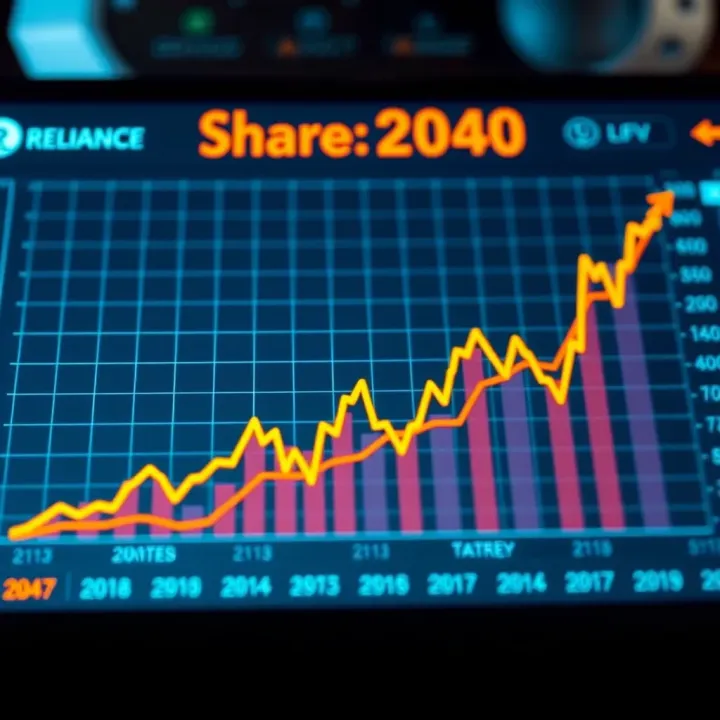
📈 Explore detailed forecasts of Reliance Industries' share price through 2040, analyzing market trends, economic factors, and company strengths for Indian investors.
📈 Explore detailed insights on Reliance Industries Limited's share price forecast up to 2030, analyzing growth drivers, market trends, and investment risks.
Based on 9 reviews