

Ripple Coin Price Forecast and Market Analysis
Explore Ripple (XRP) price trends 📈 with insights on tech updates, market sentiment, regulations & expert predictions for investors in India 🇮🇳 & worldwide.
Edited By
Sophia Bennett
Dot Coin has attracted considerable attention in India's cryptocurrency market as investors seek clarity on its future price movements. Understanding its price prediction means evaluating several key factors, including historical price trends, market sentiment, technological developments, and regulatory environments.
Since its launch, Dot Coin has shown notable volatility, often reflecting shifts in global crypto markets and domestic demand. Traders who tracked its performance observed spikes linked to broader crypto rallies, but also sharp dips during regulatory crackdowns or technical glitches on trading platforms.

Market experts highlight the role of adoption in predicting Dot Coin’s price. For instance, increased integration with Indian payment systems like UPI or listings on popular crypto exchanges such as WazirX and CoinDCX can boost liquidity and investor confidence.
Additionally, technological updates to the Dot Coin protocol that improve transaction speed or reduce fees tend to be positively received, influencing price rallies. Conversely, concerns over scalability or security vulnerabilities can suppress valuations quickly.
Domestic and international regulatory moves loom large in price forecasts. RBI’s stance and potential Government of India rulings on cryptocurrencies still inject uncertainty, making cautious investors weigh risks carefully.
For investors in India, keeping a close eye on both tech innovation and policy changes is essential before committing funds to Dot Coin.
Here are the main factors that influence Dot Coin price predictions:
Market Demand: Growing interest from retail and institutional investors
Exchange Listings: Accessibility on major Indian crypto platforms
Regulatory Developments: Updates on GST, taxation, and RBI notifications
Technological Progress: Upgrades to blockchain infrastructure
Global Market Trends: Impact of Bitcoin and other large cryptocurrencies
This analysis aims to equip traders, investors, and analysts with practical insights grounded in current data. It emphasises realistic expectations, avoiding overly optimistic or pessimistic forecasts commonly seen in speculative crypto chatter.
By monitoring these elements, you can better position yourself to anticipate Dot Coin’s price trajectory in the coming months and make informed investment decisions.
Understanding the basics of Dot Coin and its standing in the cryptocurrency market is essential for investors aiming to make informed decisions. This section breaks down the core elements—from what Dot Coin actually is, to its current market strength, and how it compares with peer cryptocurrencies—to lay a solid foundation for deeper analysis later.
Dot Coin is a blockchain-based digital currency designed primarily for secure and efficient financial transactions. Built on a proof-of-stake consensus mechanism, it aims to reduce energy consumption compared to traditional proof-of-work coins like Bitcoin. Dot Coin also supports smart contracts and decentralised applications (dApps), which widen its uses beyond simple payments. An example of its practical application is its integration with online platforms enabling peer-to-peer transactions in India, leveraging UPI-like speed.
As of now, Dot Coin holds a market capitalisation of approximately ₹2,500 crore, placing it within the mid-tier of cryptocurrency valuations. Its daily trading volume averages around ₹150 crore on popular exchanges, reflecting relatively healthy liquidity suitable for active traders. This trading activity ensures investors can enter or exit positions without significant price slippage, which is crucial for day traders and larger institutional players alike.
When stacked against established players like Bitcoin and Ethereum, Dot Coin offers lower transaction fees and faster confirmation times, making it attractive for regular transactions. However, compared to newer DeFi-focused tokens such as Polygon (Matic), Dot Coin's ecosystem is still growing. Its unique selling point lies in balancing energy efficiency with functional versatility. For instance, while Bitcoin remains a 'store of value', Dot Coin actively caters to transactional needs and smart contract deployment, positioning itself differently in the crowded crypto market.
Investors should consider both technological features and market metrics like liquidity and adoption while evaluating Dot Coin. The coin’s particular mix of energy-conscious design and growing use cases suggests potential but also demands close attention to evolving trends.
This overview offers a clear entry point into Dot Coin's fundamentals, helping traders and analysts gauge where it stands today and what to watch for moving forward.
Dot Coin's price depends on a mix of technical, regulatory, and market-driven factors. Investors aiming to predict its value must keep these elements in mind, as they directly influence price trends and volatility. Understanding them helps in making informed decisions and managing risks effectively.

Innovations and updates in Dot Coin's underlying technology can significantly impact its value. For example, if Dot Coin integrates faster transaction speeds or enhanced smart contract features, it is likely to attract more users and developers. Consider how Ethereum's upgrade to Ethereum 2.0 boosted investor confidence due to improved scalability and energy efficiency. Similarly, any major protocol upgrades by Dot Coin, such as introducing interoperability with other blockchains or reducing transaction costs, can trigger positive price movement by increasing its practical use and appeal.
Regulatory clarity plays a big role in the price action of cryptocurrencies, including Dot Coin. If governments in major markets like India, the United States, or the European Union decide to impose strict compliance requirements or ban certain activities, it can cause sharp price dips. On the other hand, regulator-friendly policies, such as clear guidelines from bodies like the Securities and Exchange Board of India (SEBI) or Reserve Bank of India (RBI), tend to boost investor confidence. For instance, when India announced potential regulatory frameworks for crypto, it influenced market sentiment towards greater stability. Since Dot Coin’s adoption depends partially on legal acceptance, investors should monitor global and regional regulatory changes closely.
The wider the adoption of Dot Coin, the stronger its market demand tends to become. Adoption by payment platforms, financial institutions, and even government projects increases real-world utility, which usually translates to price growth. Take the example of how UPI's introduction boosted digital payments in India, creating an ecosystem that encouraged smartphone and app usage. If Dot Coin gets integrated into India’s digital infrastructure or gains acceptance for remittances, it will benefit from heightened demand. Also, investor enthusiasm and social media buzz can lead to short-term price surges, though these are often followed by corrections. Hence, careful analysis of adoption across sectors and user base growth is essential.
Keeping an eye on technical improvements, regulatory signals, and adoption patterns provides a clearer picture of possible price directions for Dot Coin. Ignoring these factors usually leads to missed opportunities or unexpected losses.
By balancing your understanding of these three factors, you can better anticipate Dot Coin's price movements and position your investment strategy accordingly.
Historical price analysis provides a solid foundation for understanding how Dot Coin has behaved in the past, offering vital clues for predicting its future trajectory. This section breaks down the coin's price moves since launch, significant market events that swayed its valuation, and its volatility patterns—each aspect helping investors and traders make informed decisions based on concrete historical data rather than speculation.
Since its launch, Dot Coin has displayed a range of price movements that signal both opportunity and caution. Initially priced at a modest level, a surge was noticed within the first few months, likely driven by heightened media coverage and partnerships announced by its development team. For instance, during the launch quarter itself, it climbed from ₹50 to around ₹1,200, providing early investors with sizeable gains. However, such rapid growth came with pullbacks, especially when the broader cryptocurrency market faced bearish phases. Tracking these movements helps investors understand typical growth cycles and entry–exit points.
Dot Coin’s price closely reflects broader market sentiments, responding sharply to regulatory announcements, macroeconomic developments, and major industry updates. For example, when a leading exchange in India temporarily suspended Dot Coin trading in mid-2023 over compliance checks, its price dipped nearly 15% within days. Similarly, the introduction of upgraded protocols or partnerships with fintech startups has sparked positive momentum, pushing prices higher. Recognising such event-driven fluctuations is essential for traders looking to time their market actions effectively.
Understanding the context behind price swings, rather than just the price itself, gives you an edge in anticipating market sentiment shifts.
Dot Coin exhibits significant volatility, a character trait shared by many cryptocurrencies. Analyses of daily price charts show recurring spikes followed by sharp corrections. These swings often result from speculative trading, news cycles, or triggered stop-loss orders. Such volatility can yield quick profits but also heightened risk, necessitating disciplined risk management for investors. Awareness of these patterns enables traders to set appropriate stop-loss limits and adjust position sizes to safeguard capital while capitalising on price swings.
In summary, a clear grasp of Dot Coin's historical price movement, market event impact, and its volatility helps investors and traders gauge potential risks and rewards. With this information, they can better position themselves to navigate the ups and downs of the crypto market confidently.
Expert analysis and market sentiment play a significant role in shaping decisions for traders and investors keen on Dot Coin. These insights provide guidance on what to expect in terms of price movements, backed by data and industry experience. For instance, cryptocurrency analysts use technical indicators and market trends to forecast price swings, helping investors decide when to buy or sell.
Cryptocurrency analysts rely on chart patterns, trading volumes, and broader market trends to assess Dot Coin's future potential. For example, during times of positive network upgrades or partnership announcements, analysts might predict a price uptick based on historical correlations. Conversely, if market indicators point to overbought conditions in popular exchanges like WazirX or CoinDCX, experts often caution about possible price corrections. Analysts also keep a close eye on global crypto regulations, which can directly affect sentiment and valuations.
Community views form an informal yet powerful influence on Dot Coin’s price. Active discussion forums on platforms like Telegram and Twitter expose investor optimism or fear. When the majority anticipate a surge due to upcoming protocol improvements or increased adoption by Indian fintech firms, this collective sentiment can fuel buying activity. On the other hand, scepticism or rumours about security concerns can trigger sell-offs even without concrete news. Listening to these grassroots opinions helps traders gauge short-term market moods alongside technical data.
Predicting precise prices remains challenging given cryptocurrency volatility, but experts and communities provide a range to prepare investors. In the short term (next 3-6 months), predictions often vary based on current market momentum, with forecasts ranging from modest gains of 10-15% to sharper rises if bullish trends hold. For example, if Indian crypto regulations ease, Dot Coin could see an accelerated rise.
In the long term (1-3 years), projections become wider, factoring in broader adoption and technological advancements. Analysts generally expect Dot Coin’s value to stabilise with gradual growth unless disrupted by intense competition or policy shifts. A balanced estimate might place price targets anywhere from 3-5 times the current value, provided the network sustains development and user interest.
Expert and community insights both guide investors by highlighting risks and opportunities, making them essential tools alongside fundamental and technical analysis.
Together, these perspectives offer a practical framework for understanding Dot Coin’s price trajectory. Traders and investors can better time their moves and manage risk when leveraging expert forecasts and community sentiment.
Investing in Dot Coin carries distinct risks and challenges that every investor should carefully consider. Understanding these factors helps manage expectations and equips investors with better strategies to navigate the unpredictable cryptocurrency market.
Dot Coin’s price tends to be highly volatile, reflecting the broader crypto market's nature. Sharp price swings can result in sudden losses, especially for those trading on short-term movements. For example, during global market shocks like the 2022 crypto crash, Dot Coin's value plunged steeply within days, wiping out significant paper gains. Price corrections often follow hype-driven rallies, which can trap uninformed investors. Staying alert to volume changes and using stop-loss orders could help mitigate risks here.
The cryptocurrency sector in India and worldwide remains subject to shifting regulatory frameworks. Dot Coin investors face uncertainties as governments might impose stricter rules or sudden bans, impacting market liquidity and accessibility. For instance, the Reserve Bank of India (RBI) has periodically flagged cryptocurrencies, creating waves of uncertainty leading to market reactions. Unlike traditional assets regulated under clear guidelines, cryptocurrencies like Dot Coin operate in grey areas, making regulatory risk a persistent challenge for investors.
Dot Coin competes with numerous blockchain projects offering innovative features or greater adoption. Projects like Ethereum, Solana, and Cardano continuously push technological boundaries, which can overshadow Dot Coin's relevance. New entrants often attract developer communities and investors, diverting attention and capital. This competition affects Dot Coin’s market share and potential price appreciation. Investors should monitor advancements and ecosystem growth of competing projects to assess Dot Coin’s standing over time.
Investors must weigh these risks carefully and integrate them into their investment decisions. Diversifying portfolios, following regulatory updates closely, and understanding market sentiment can provide a clearer path amid uncertainties around Dot Coin.
By recognising market volatility, regulatory ambiguity, and intense competition, investors get a realistic view of Dot Coin’s challenges. This insight helps avoid blind spots and contributes to more informed, confident investment strategies.
Investment in Dot Coin demands a clear strategy rooted in understanding personal risk appetite, analytical methods, and solid portfolio management practices. Considering the volatile nature of cryptocurrencies, especially niche ones like Dot Coin, investors should adopt a measured approach to safeguard capital and avail potential gains.
Determining your risk tolerance is the bedrock of any cryptocurrency investment plan. Some traders may handle large price swings and losses temporarily, while others need stable, lower-risk assets. For instance, if you rely on your investment income for daily expenses, a high-risk asset like Dot Coin may not suit you. Conversely, young professionals with longer investment horizons might accept greater volatility for a chance at higher returns. Establishing this tolerance helps avoid panic selling during downturns, ensuring better decision-making.
Applying both technical and fundamental analysis improves the quality of your trading decisions. Technical analysis uses price charts and volume patterns to predict short-term movements; for example, recognising support and resistance levels on Dot Coin's trading charts can help time entry and exit points. Fundamental analysis, on the other hand, evaluates broader factors like network upgrades, regulatory news, and adoption trends affecting Dot Coin's intrinsic value. Combining these approaches paints a clearer picture than relying on one alone. Tools such as moving averages, Relative Strength Index (RSI), and blockchain activity metrics can offer actionable insights.
Diversifying your cryptocurrency holdings reduces exposure to a single asset’s risks. Investing solely in Dot Coin can lead to significant losses if it faces a sudden downturn. Instead, balance your portfolio with other cryptocurrencies like Bitcoin, Ethereum, or stablecoins to spread risk. For example, allocating 40% to Bitcoin, 30% to Ethereum, and 30% to Dot Coin might suit moderate risk profiles. Regularly reviewing and rebalancing your portfolio ensures alignment with your investment goals and market developments. Additionally, setting stop-loss orders can limit potential losses on volatile assets.
Investing in Dot Coin requires not just enthusiasm but a disciplined approach. Understand your risk limits, study market signals, and diversify smartly to navigate the ups and downs confidently.
By focusing on these strategies, you make your investment in Dot Coin more controlled and potentially rewarding amid the unpredictable crypto market.
Explore Ripple (XRP) price trends 📈 with insights on tech updates, market sentiment, regulations & expert predictions for investors in India 🇮🇳 & worldwide.

📈 Explore Reliance share price predictions for 2030, analyzing market trends, company strengths, sector growth, and risks to guide investors wisely.

📈 Explore the future of Reliance Industries' share price by 2050, covering market trends, company strategy, tech advances, and economic shifts for investors.
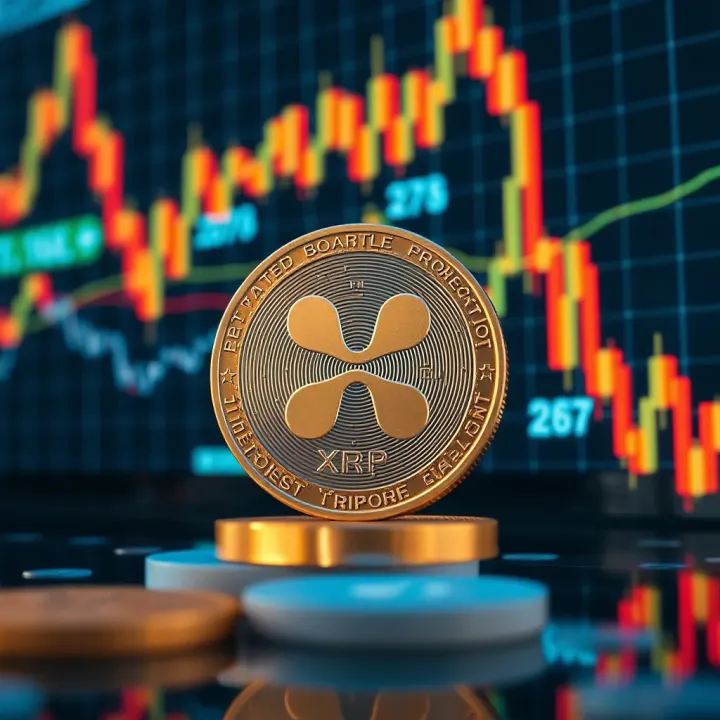
Explore Ripple XRP price predictions 📊 with in-depth insights on market trends, tech updates, regulations, and expert views shaping its future value globally.
Based on 11 reviews