
RBI Forex Broker List: What Indian Traders Need to Know
📊 Explore how the RBI forex broker list shapes currency trading in India 🇮🇳. Learn regulations, risks, and tips to trade confidently and safely.
Edited By
Liam Cooper
Forex trading operates around the clock, thanks to markets spread across different time zones. Each forex session corresponds to a major financial centre’s active hours, shaping price movements and volatility. For traders, especially those in India, understanding these session times is vital to plan trades strategically.
Three main sessions dominate the forex market: the Asian session, the European session, and the North American session. Each brings its own character and market behaviour, influenced by regional economic activities and news releases. Knowing when these sessions start and end helps traders identify the best hours to enter or exit trades and avoid periods of low liquidity.
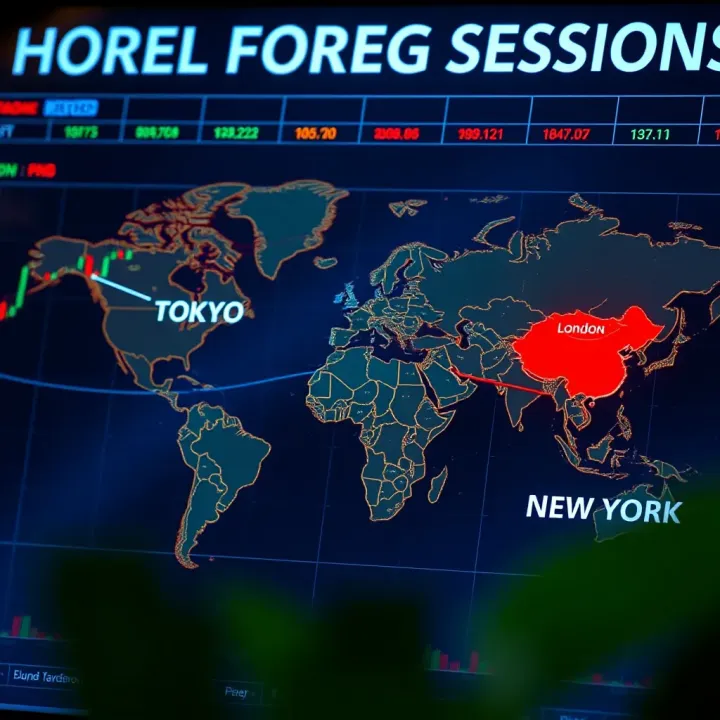
The Asian session, centred around Tokyo and including markets like Singapore and Hong Kong, kicks off overnight according to Indian Standard Time (IST). This session is typically less volatile but can present good trading opportunities during Japanese economic announcements. The European session, starting with London’s opening hours, usually sees a spike in trading volume and price swings. The overlap of London and New York sessions later in the day offers the highest liquidity and volatility, preferred by many day traders aiming for quick profits.
Trading during session overlaps increases market activity, improving price movement chances but also involves higher risk. Indian traders should balance this to optimise their strategies.
Understanding how these sessions align with Indian Standard Time is crucial. For instance, the London session opens around 3:30 pm IST and closes at 12:30 am IST, while the New York session follows from 6:30 pm IST to 3:30 am IST approximately. This means that late afternoons and evenings are packed with trading opportunities for Indian participants.
To maximise returns, Indian traders can focus on:
Trading during high-liquidity periods like London-New York overlap
Monitoring session-specific economic news that impacts currency pairs
Adjusting trade volumes based on expected volatility
Mastering forex session times won't guarantee profits, but it provides a firm groundwork to anticipate market behaviour and make informed trading decisions. Incorporating session knowledge into your routine helps manage risk and seize profitable moments effectively.
Forex trading runs round the clock, but it is not continuous everywhere at once. Instead, the market splits into sessions aligned to major financial centres around the world — such as Tokyo, London, and New York. Understanding these sessions helps traders anticipate market behaviour, spot good entry and exit points, and manage risks effectively.
For example, a forex trader in Mumbai who knows when the London session opens (2:30 pm IST) can prepare for heightened market activity affecting GBP or EUR pairs. Recognising such timing helps avoid low liquidity periods where spreads widen and slippage increases.
Forex sessions refer to specific periods during the 24-hour forex market when major financial centres are open for business. Each session corresponds to a particular time zone and its typical market hours. The market activity during these sessions shows distinct patterns in terms of price movements, volatility, and volume.
Practically, sessions are usually categorised into Asian, European, and North American blocks. Traders use this structure to strategise. For instance, the Asian session focuses on JPY and AUD pairs, while the London session sees a rush in EUR, GBP, and CHF.
Each session aligns with the working hours of the respective financial centre's local time. Because of differing time zones, forex trading starts in the Asia-Pacific region in the early hours of IST, shifts to Europe in the afternoon, and ends in North America at night.
For Indian traders, converting these times to Indian Standard Time (IST) is essential. Tokyo’s session runs roughly from 6:30 am to 3 pm IST, while London’s begins at 2:30 pm IST and New York’s starts at 7:30 pm IST. Awareness of these hours ensures traders are active during sessions relevant to their preferred currency pairs.
Not every hour in forex markets offers the same trading environment. Volatility, the extent of price swings, and liquidity, the ease of buying and selling currencies, fluctuate based on session timings.
For example, during the London-New York overlap (5:30 pm to 9:30 pm IST), the market experiences the highest liquidity and volatility. This period often creates good trading opportunities for day traders due to tighter spreads and strong price movements. On the other hand, late Asian sessions may show reduced activity, requiring cautious trading.
Currency pairs tend to show more action during their home sessions. Indian traders focusing on USD-INR should note increased volatility during New York hours when US economic data releases occur. Similarly, JPY pairs are more active during Tokyo hours.
Taking an example, if the Reserve Bank of India (RBI) announces policy changes, the INR pairs might move sharply during Indian market hours, but global sessions affect pairs like EUR/USD primarily when European or American markets are live.
Understanding session timing is key to synchronising your trades with market activity, reducing risks linked to illiquid hours, and improving timing for entering or exiting positions.
By integrating knowledge of forex sessions into trading plans, traders can avoid guesswork and increase the chances of success in the volatile forex market.
Understanding the details of major forex sessions is essential for traders aiming to time their trades effectively. Each session brings unique characteristics—different market hours, liquidity levels, and currency focuses—that influence trading strategies. For example, knowing when the Tokyo session operates relative to Indian Standard Time (IST) helps local traders plan around periods of increased volatility or calm.

The Tokyo session starts around 6:30 am IST and runs until about 3:30 pm IST. For Indian traders, this timing overlaps with early morning to afternoon hours, allowing them to catch market movements during the Asian trading window. Being aware of these hours lets you avoid trading during less active times or capitalise on movement around economic news from Japan or other Asian economies.
During the Tokyo session, currency pairs involving the Japanese yen (JPY), Australian dollar (AUD), and New Zealand dollar (NZD) see the most activity. For example, AUD/JPY often shows noticeable volatility as Asian markets react to regional economic data. This session generally has lower liquidity compared to European or US sessions but offers steady trends that some traders prefer for position trades.
The London session usually runs from 1:30 pm IST to 10:30 pm IST. This period covers a large chunk of the Indian afternoon and evening, making it a prime trading opportunity for local investors. With London as a major financial hub, this session experiences high liquidity and is often regarded as the busiest forex trading window.
The London session sees vast trading volumes, especially in major pairs like EUR/USD, GBP/USD, and USD/CHF. Indian traders focus on this window to engage in trades where tight spreads and high liquidity reduce slippage risks. For example, GBP/USD often experiences sharp moves during London market hours, influenced by UK economic reports or geopolitical developments.
The New York session opens around 7:00 pm IST and closes near 2:30 am IST. This timing aligns with Indian evenings and late night, offering traders an extended window beyond European hours to catch market shifts. The session overlaps partially with London, intensifying market volatility during that overlap.
During the New York session, the US dollar (USD) dominates trading activity. Currency pairs like USD/CAD and USD/JPY often show heightened volatility as economic data from the US and Canada release. For instance, the Non-Farm Payroll (NFP) report in the US frequently causes sharp price swings, creating trading opportunities and risks that demand close attention.
Knowing the exact trading hours and focus of each forex session allows you to tailor strategies to the most responsive markets and currency pairs, thereby improving the chances of profitable trades and effective risk management.
By synchronising your trading schedule with these major forex sessions, especially from an Indian time perspective, you reduce guesswork and respond swiftly to market dynamics. This understanding is the backbone of informed forex trading, whether you're day trading or holding positions for longer horizons.
Forex trading sessions sometimes coincide, creating overlap periods that attract heightened activity. These overlaps are crucial because they combine the liquidity and volatility of two major markets, offering better trading conditions and opportunities. Indian traders, in particular, can benefit by aligning their strategies with these overlaps to capture more reliable price movements and improved entry-exit timings.
The London-New York overlap occurs between 7:30 pm and 12:30 am IST. This is when two of the largest financial hubs are active simultaneously, resulting in the highest trading volumes and liquidity during the 24-hour forex cycle. For instance, currency pairs like EUR/USD, GBP/USD, and USD/INR show significant price swings during this period, providing more setup opportunities for intraday traders.
Because of the large market size and participant diversity during this overlap, spreads often tighten, and slippage reduces. Traders working from India can time their activities around this window to maximise chances of profitable trades given the increased market responsiveness.
This overlap is shorter and falls between 2:30 pm and 3:30 pm IST. While it is less prominent than the London-New York window, it still sees decent activity, especially in Asian and European currencies like JPY, AUD, and EUR. This timing can be useful for those focused on trading cross-currency pairs such as EUR/JPY or AUD/JPY, which often move more during this overlap.
For Indian traders, this shorter overlap provides an additional option outside of the main European and American working hours. It might be especially handy when seeking diversification or trading during off-peak times.
Market overlaps create a fertile ground for sharper price moves and stronger trends because of the surge in participants and order flow. Volatility and volume rise naturally when two major sessions intersect, which helps traders identify clearer breakout points or reversals. For example, during the London-New York overlap, momentum in USD pairs tends to accelerate, making range-bound periods less common.
This environment suits scalpers and day traders who rely on quick trades exploiting the liquidity spike. Using indicators like the Average True Range (ATR) or monitoring volume bars during overlaps can improve timing and confidence in trade decisions.
Although overlaps can boost profit potential, the accompanying rise in volatility also increases risk. Sudden price spikes or whipsaws can catch traders off guard if proper safeguards are missing. Hence, it is important to tighten stop-loss orders and reduce position sizes during these phases to manage risk effectively.
Moreover, having a disciplined exit strategy and avoiding over-leveraging becomes paramount. For example, during key economic news releases coinciding with session overlaps, traders should expect unpredictable swings and may prefer smaller trades or even stay out until volatility subsides.
Managing funds cautiously during session overlaps lets traders harness opportunities without exposing themselves to excessive losses.
Aligning trades with session overlaps enhances your edge by tapping into better liquidity and clearer price signals—but always balance this with a solid risk plan to protect your capital.
For Indian forex traders, picking the right trading hours is critical to optimise both returns and risk control. Since forex markets operate 24 hours across global sessions, matching these times with Indian Standard Time (IST) helps traders catch the most active and liquid periods. Choosing the best hours affects how well you can trade particular currency pairs, manage volatility, and execute timely entries and exits.
Most major forex centres like London and New York follow daylight saving time (DST), but India sticks to IST year-round. This difference means the trading hours for European and American sessions shift by about one hour when countries switch their clocks. Indian traders should keep track of these changes to adjust their trading schedules accordingly. For example, during British Summer Time, the London session opens at 1:30 pm IST rather than the usual 2:30 pm IST.
Staying aware of DST shifts prevents missed opportunities and improper timing in trades. Unlike in India, when DST starts or ends abroad, the overlap periods between sessions will also change, influencing volatility and liquidity.
Forex markets observe public holidays, though every region’s calendar differs. Indian traders need to check the holiday schedules of key markets like London, New York, and Tokyo to know when volumes may reduce or spreads widen. For instance, during Christmas or New Year’s Day in the US, the New York session might be closed or less active.
Being informed about such breaks avoids unexpected illiquid periods that can increase slippage or reduce trade execution efficiency. It’s better to pause or lower exposure during these times to manage risks effectively.
The Tokyo session is the main window for Asian currencies such as the Japanese yen (JPY), Australian dollar (AUD), and New Zealand dollar (NZD). Indian traders focusing on this session often trade pairs like USD/JPY or AUD/JPY, which see higher liquidity and clearer trends between 6:30 am and 3:00 pm IST.
Trading these pairs during the Tokyo hours allows smoother execution and less erratic price moves. For example, a trader spotting a yen trend during Tokyo session can act swiftly before volatility drops once the session ends.
The London and New York sessions cover European and American markets, making pairs like EUR/USD, GBP/USD, and USD/CAD highly active between 2:30 pm and 11:30 pm IST. These hours often show the highest volume and volatility, especially during the London-New York overlap.
Indian traders aiming for significant forex moves typically prefer this window to capture momentum and exploit larger price swings. However, increased volatility demands better risk management and sharper entry-exit strategies.
Knowing session timings helps choose better entry and exit points by aligning with highs in market activity. Entry during a session’s early active hours often leads to better trade execution due to higher liquidity. Similarly, recognising the close of a session can prevent holding positions in quieter, less predictable markets.
For example, a trader might plan to open a USD/INR position shortly after the London session starts and close it before the New York session winds down, capitalising on major moves while avoiding erratic post-session volatility.
Effective use of session times can improve trade timing, reduce slippage, and enhance overall profitability.
Several trading platforms and websites provide real-time forex market clocks adjusted for IST and show session overlaps clearly. Platforms like MetaTrader, TradingView, or forex-specific websites help traders monitor open sessions, upcoming market holidays, and daylight saving effects.
Using these tools, traders in India can plan the best trading hours without guesswork, receive alerts for key events, and track multiple time zones easily. This technological support becomes essential for timely decisions and maintaining a disciplined trading routine.
📊 Explore how the RBI forex broker list shapes currency trading in India 🇮🇳. Learn regulations, risks, and tips to trade confidently and safely.
Explore Rifa FX – a forex platform offering trading tools, insights, benefits & risks. Learn practical tips for smarter forex decisions amid market challenges 📊💹
Explore RBI's legal rules for forex trading in India 📊 Learn about authorized dealers, transaction types, compliance, and what happens if you don't follow the law 🇮🇳
Explore a detailed guide on Quotex forex trading for India 🇮🇳. Learn platform features, account setup, trading strategies, and smart risk management tips! 📈💡
Based on 5 reviews