

Understanding Qutex Trade - A Clear Overview
Explore Qutex trade in detail 📊 Learn how it works, benefits, risks, and get expert tips to trade confidently in India's market landscape 🇮🇳
Edited By
James Hargrove
Binance Coin (BNB) has grown into a popular digital asset, especially among Indian traders and investors looking to diversify beyond traditional stocks. Understanding its price in Indian Rupees (INR) requires more than just checking a conversion rate — it involves grasping how global crypto markets interact with INR-specific factors.
BNB is the native token of Binance, one of the world's biggest cryptocurrency exchanges. Its price in INR depends primarily on its USD value, which then converts using the prevailing USD to INR exchange rate. For example, if BNB trades at $300 and the USD/INR rate is ₹82, the approximate BNB price would be ₹24,600. However, this figure can fluctuate on Indian crypto platforms depending on liquidity, demand, and local trading volumes.
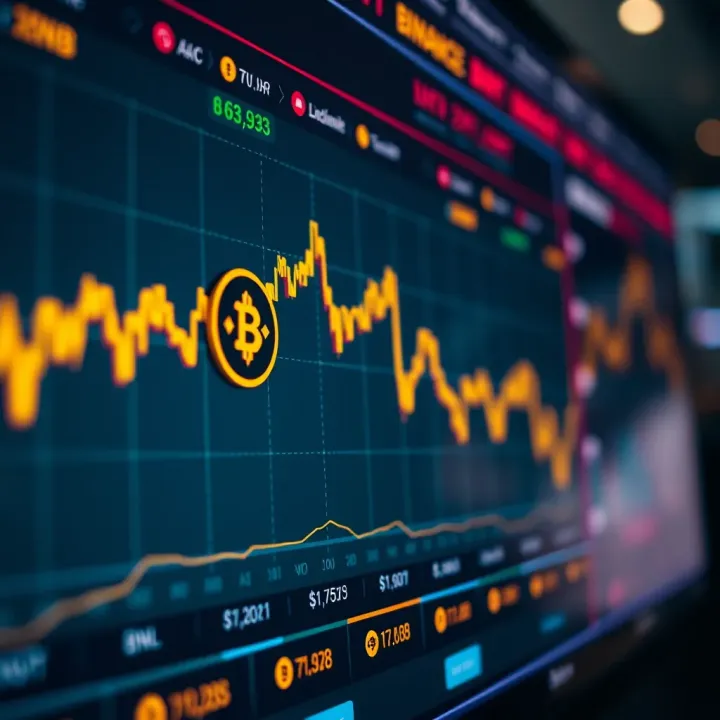
Tracking BNB price in INR isn't just about simple currency conversion; local market dynamics and crypto regulations also play a role.
Several key elements influence BNB's INR price:
Global market trends: Shifts in crypto markets worldwide impact BNB’s USD price.
INR-USD exchange rate: Changes here lead to direct INR valuation effects.
Indian crypto exchange spreads: Platforms like WazirX or CoinDCX may show slightly different prices due to trading spreads and liquidity.
Regulatory environment: News around crypto policies or RBI stances can cause price swings.
For practical monitoring, Indian traders use several methods:
Crypto exchanges: Platforms such as Binance, WazirX, and CoinDCX display BNB prices in INR directly, factoring in local demand.
Price aggregator websites: These sites provide live BNB-INR rates compiled from multiple Indian exchanges.
Forex rates: Tracking the USD/INR rate separately can help estimate BNB INR value when you know the BNB USD price.
Understanding these nuances helps traders and investors make informed decisions and manage risks better when dealing with such volatile assets in the Indian market context.
Understanding Binance Coin (BNB) is key for anyone involved in crypto trading or investment, especially when working with Indian Rupees (INR). BNB is more than just another cryptocurrency; it’s closely tied to Binance, one of the world's largest crypto exchanges, which makes it highly influential in the market.
BNB was launched in 2017 as Binance’s native token during the Initial Coin Offering (ICO). Originally designed to provide trading fee discounts on the Binance exchange, it quickly grew beyond a simple utility token. Over time, Binance expanded BNB’s use cases, making it an essential part of its ecosystem.
BNB’s history ties directly to Binance's rapid growth from a startup to a global crypto giant. This relationship itself impacts the coin’s value and stability—things to watch if you trade BNB against the rupee. For example, during periods of Binance platform upgrades or new feature launches, BNB prices often react accordingly.
BNB serves multiple practical purposes today. Traders use it to save on fees when buying and selling cryptocurrencies on Binance, leading to tangible cost savings. Beyond this, BNB powers various Binance Chain transactions and supports token sales on Binance Launchpad, making it a versatile token for investors and developers alike.
On the Binance platform, BNB acts as a utility token, giving holders benefits such as fee reductions across spot and futures trading. This utility has made it popular among Indian traders who prefer using BNB to optimise trading costs. Moreover, Binance periodically conducts "coin burns," where a portion of BNB tokens are permanently destroyed, reducing supply and potentially supporting the token’s price.
Besides Binance’s ecosystem, BNB plays an active role in the broader decentralized finance (DeFi) space and other exchanges. It powers smart contracts and DeFi projects on Binance Smart Chain (BSC), competing with Ethereum but offering faster and cheaper transactions. Indian investors eyeing DeFi projects often choose BNB for staking and yield farming on BSC due to low gas fees.
BNB’s dual role as both a utility token on Binance and a critical asset in DeFi gives it unique leverage in the crypto market, influencing its price against the INR directly through demand and platform usage.
This practical importance for trading savings and DeFi participation makes BNB a significant token for Indian traders who want exposure to multiple crypto arenas without constantly switching between tokens. It is not just a coin but a doorway to various crypto functionalities bolstered by Binance’s global reach.
Understanding how Binance Coin (BNB) price converts to Indian Rupees (INR) is essential for anyone trading, investing, or analysing this cryptocurrency within the Indian market. Since BNB is priced globally, primarily in US dollars (USD), its value in INR depends on two key factors: the BNB-USD exchange rate and the USD-INR conversion. This matters because investors want accurate, real-time pricing in their local currency to make informed decisions without confusion.
The primary exchange rate involved is BNB to USD. BNB trades on global crypto exchanges like Binance, Coinbase, and Kraken where prices fluctuate based on market demand and supply worldwide. When Indian traders see BNB prices quoted in INR, the platform typically converts the USD value into INR using the current USD-INR rate. Let’s say BNB is priced at $300 on Binance and the USD-INR rate is ₹82. The INR price for one BNB would roughly be ₹24,600 (300 × 82).
Market dynamics such as trading volume, liquidity, and investor sentiment affect how BNB’s USD price moves. This movement, combined with currency fluctuations, causes the INR price to shift throughout the day. So, when you check the BNB price in INR on Indian exchanges, expect real-time updates reflecting both crypto market trends and forex movements.
The USD-INR forex rate influences the INR value of BNB even if the USD price of BNB remains stable. This brings us to the next point.
Since BNB’s global price is typically set in USD, any change in the exchange rate between INR and USD directly moves BNB’s price in INR. For instance, if the USD strengthens against the INR (say from ₹82 to ₹84), BNB priced at $300 would become costlier in India by about ₹600 per coin. This means that merely forex market volatility can affect crypto investment returns, independent of crypto market behaviour.
Similarly, if INR gains strength against USD, the INR price of BNB will fall even if BNB’s dollar price stays flat. Traders in India must watch the USD-INR pair closely, especially during times of global uncertainty or RBI’s monetary policy announcements. This dual dependency illustrates why keeping tabs on both crypto exchange rates and forex rates is crucial.
Various Indian crypto platforms show BNB prices directly in INR for user convenience. Popular exchanges like WazirX, CoinDCX, and ZebPay offer real-time BNB price listings, backed by Indian banking infrastructure for easy deposits and withdrawals. Using these apps simplifies trading as you view prices in your native currency, avoid manual currency conversions, and pay with Indian payment methods such as UPI or net banking.
These exchanges pull live data from global markets and apply current USD-INR forex rates, updating BNB prices multiple times per minute. This ensures traders react quickly to price swings during volatile sessions. Also, such apps provide notifications and charts in INR, which makes technical analysis straightforward for Indian traders.
While Indian exchanges are the go-to choice for INR pricing, some global crypto platforms like Binance and CoinMarketCap offer INR as an option for price display. These platforms aggregate data from multiple exchanges worldwide, including Indian ones, giving a wider perspective on BNB prices across currencies.
International traders focusing on India can select INR to see realistic prices that reflect forex variability alongside crypto market moves. This helps institutional investors or analysts who track cross-border trends. However, they must remember the prices shown here combine data from diverse sources and might slightly differ from local exchange prices due to latency or liquidity differences.
For Indian traders, choosing platforms that list BNB prices in INR and updating in real time reduces confusion and enhances trading speed, especially in volatile markets.
Being aware of these conversion mechanics and platform options equips investors to better navigate the Indian crypto market and plan their trades with clearer currency context.
The value of Binance Coin (BNB) in Indian Rupees (INR) does not depend on a single factor. Instead, it’s shaped by a combination of market forces, government policies, and global trends. For traders and investors in India, understanding these factors helps in making informed decisions and managing risks effectively. This section breaks down the main influences behind BNB's price movements in the Indian context.
The simplest driver of BNB’s price in INR is supply and demand within the crypto market. When more investors want to buy BNB than sell it, the price tends to rise. Conversely, if many holders decide to cash out, the price drops. For example, if Binance announces new Binance Smart Chain projects, hype might push demand for BNB, since it’s needed as gas fees for transactions. In contrast, if there is uncertainty around the crypto market globally, investors might sell off BNB, reducing demand and lowering its INR value.
Local demand can also fluctuate based on Indian festivals or events when people might invest more, and market corrections. Traders should note that limited token supply, especially due to Binance’s periodic coin burns reducing total BNB circulating, often supports price appreciation.
India’s regulatory approach still remains cautious about cryptocurrencies, including BNB. The Securities and Exchange Board of India (SEBI) currently does not regulate crypto as traditional securities but monitors developments closely. The government has proposed tightening laws, but no clear ban exists yet. This uncertainty often leads to sharp price movements in INR as investors react to news—positive regulatory clarity can boost prices, while rumours of heavy restrictions make traders wary.
Crucially, if SEBI eventually classifies certain crypto tokens under securities law, it will change trading practices and investor protections in India dramatically. Until then, most Indian exchanges operate under self-regulatory frameworks and RBI advisories.
The Reserve Bank of India (RBI) banned banks from dealing with crypto exchanges between 2018 and 2020, causing a major shake-up. Though the Supreme Court lifted this ban in 2020, RBI continues to keep a close watch on crypto payments and warns against financial risks. Recently, RBI has proposed a Central Bank Digital Currency (CBDC), which could rival private cryptocurrencies like BNB.
This cautious stance by RBI means Indian investors face challenges like limited banking support and lack of insurance on crypto holdings. Therefore, BNB’s INR price partly reflects these regulatory uncertainties, as liquidity and ease of converting INR fluctuate with RBI’s policy signals.
BNB is closely tied to global crypto dynamics. For instance, when Bitcoin or Ethereum surges, many investors pull funds into altcoins like BNB, driving its price up. Similarly, technological upgrades on Binance Smart Chain or partnerships announced worldwide often sway prices.
Moreover, global regulations—such as restrictions in the US, Europe, or China—impact international investor sentiment. Since BNB trades globally, these factors indirectly affect its INR value by changing global buy-sell pressures. Indian traders watching these trends can anticipate price swings better and time their entry or exit.
Always remember that the BNB price in INR is a reflection of worldwide enthusiasm, local demand, and regulatory currents. Keeping an eye on these factors reduces surprises and improves trading outcomes.
In summary, understanding supply and demand, following the regulatory landscape in India, and observing global crypto movements together provide a clearer picture of BNB’s price shifts in INR. This approach helps traders and investors position themselves wisely in the volatile crypto space.
Buying, selling, and trading Binance Coin (BNB) with Indian Rupees (INR) is key for Indian investors looking to enter the crypto space using local currency. Understanding these processes helps you navigate the practical aspects of owning BNB—right from creating accounts on crypto platforms to seamless fund transfers and smart trading decisions.
To start buying BNB, you first need to open an account on an Indian cryptocurrency exchange like WazirX, CoinDCX, or ZebPay. These platforms comply with Indian regulations and offer INR trading pairs. The sign-up process typically involves providing your PAN card, Aadhaar details, and completing KYC (Know Your Customer) checks. Once verified, your account is ready to operate.
A smooth account setup ensures timely access to the market and reduces friction when handling transactions. For example, WazirX users can start trading INR directly after account activation, which is crucial during volatile market movements when speed matters.
After creating your exchange profile, the next step is to fund your wallet with INR. Most exchanges support multiple options like UPI, net banking, or NEFT/RTGS transfers. UPI payments are usually instantaneous and preferred for smaller amounts, while NEFT and RTGS are suitable for larger trades.
Timely deposit of INR is important to capitalise on favourable BNB prices. For instance, if BNB shows a sudden dip, having INR ready in your exchange wallet allows prompt buying without missing out due to transfer delays.
Selling BNB for INR involves placing a sell order on your chosen exchange. Once sold, the equivalent INR amount is credited to your exchange wallet. You can choose between market orders for faster completion or limit orders to sell at a specific price, depending on your strategy.
For example, if you expect BNB’s price to rise again, a limit order lets you set a target price, protecting you from hasty decisions amid market swings.
Withdrawing INR from your crypto exchange generally links to your bank account via UPI or net banking. Exchanges often charge a nominal withdrawal fee. These fees and withdrawal limits vary—WazirX might charge ₹5 per UPI withdrawal, while net banking can take longer but may have lower charges.
Understanding these charges helps you plan withdrawals efficiently and avoid unnecessary costs, especially when dealing with profits from multiple trades.
Trading BNB in India requires combining technical analysis with an awareness of local market dynamics and regulation. Indian traders often watch global crypto trends but also factor in RBI announcements or SEBI guidelines, which can impact sentiment sharply.
Day trading BNB using price patterns and volume signals works well during active market hours when liquidity is high on Indian exchanges. Alternatively, holding BNB through systematic investment plans (SIPs) on platforms offering crypto investments suits those who prefer a long-term approach, easing the risk of volatility.
Effective trading in BNB using INR hinges on swift account management, timely fund utilisation, understanding platform charges, and tailoring strategies to India’s unique crypto environment.
When trading or investing in Binance Coin (BNB) using Indian Rupees (INR), understanding the associated risks is vital. The volatile nature of cryptocurrencies, unclear regulation, and security threats can significantly impact your investments. Recognising these elements helps you make informed decisions and protect your capital.
BNB price movements often show sharp ups and downs within short spans. Such volatility arises from market sentiment, global crypto trends, and news events. For example, a sudden regulatory announcement can cause BNB prices to swing by several percentage points in hours. Traders relying purely on short-term gains face high risk, as prices can quickly reverse direction.
Besides market fluctuations, liquidity concerns can affect INR-BNB trading pairs on some smaller Indian exchanges. Thin volume may lead to larger price gaps between buy and sell orders, increasing trading costs. To manage risk, combining technical analysis with a well-planned exit strategy is advisable. Avoid over-leveraging, especially if unfamiliar with crypto market behaviour.
Profits from BNB trading fall under capital gains tax in India. If you hold BNB for over 36 months before selling, gains are treated as long-term capital gains (LTCG) and taxed at 20% with indexation benefits. For holdings under 36 months, gains are short-term capital gains (STCG) and taxed according to your income slab rate.
This tax setup means frequent traders may pay higher tax rates. Also, income from crypto is taxable even if you don’t convert it to INR but just exchange for another crypto. Keeping detailed records of all transactions, including date, price, and INR value at the time, is essential to file accurate returns.
The legal framework around cryptocurrencies in India remains fluid. SEBI and the government are yet to issue comprehensive guidelines, but RBI has expressed concerns about digital currencies' risks. You should follow current regulations like the requirement to disclose crypto holdings in Income Tax Returns (ITR).
Additionally, authorities may scrutinise large transfers or suspicious transactions involving crypto. Non-compliance could attract penalties. Staying updated with SEBI and Income Tax Department announcements helps avoid surprises and ensures compliance.
Protecting your BNB tokens from theft or loss is paramount. Using hardware wallets like Ledger or Trezor for cold storage keeps assets offline and secure from hacking. For active trading, reputable exchanges with strong security measures and two-factor authentication (2FA) are preferred.
Never share your private keys or seed phrases. These are the only way to recover your tokens if you lose access. A common mistake is storing keys digitally without encryption, which hackers can exploit.
Crypto scams are widespread, from fake investment schemes to phishing attempts. Newcomers often fall prey to offers promising guaranteed returns or exclusive token sales.
Always verify the legitimacy of the platform before investing. Stick to well-known Indian exchanges like WazirX or CoinDCX and follow official communication channels. Be cautious with unsolicited messages asking for your wallet details or promising fast profits.
Prudent risk management and compliance with security practices can save your investments from preventable losses.
Taking these considerations seriously while dealing with BNB in INR helps you navigate challenges and safeguard your crypto journey effectively.
Explore Qutex trade in detail 📊 Learn how it works, benefits, risks, and get expert tips to trade confidently in India's market landscape 🇮🇳

Explore Qutoex in depth 💡 Understand its features, functionalities, and practical uses, plus get answers to common queries for smarter decisions! 📊

Discover Qutex's key features🔍, practical applications⚙️, comparison📊 with similar tech, benefits✨ & challenges🔧 impacting industries today.

📊 Explore QX trading: key features, platforms, risks & benefits explained. Understand its role in financial markets for smarter investing decisions in India.
Based on 5 reviews