
Understanding Qutex Trade - A Clear Overview
Explore Qutex trade in detail 📊 Learn how it works, benefits, risks, and get expert tips to trade confidently in India's market landscape 🇮🇳
Edited By
Amelia Shaw
A demo trade account serves as a risk-free tool for traders to practice buying and selling securities without using actual money. This makes it invaluable for beginners who want to understand the mechanics of trading before committing real funds, as well as for experienced traders testing new strategies.
In India, where the stock market can be volatile and fast-paced, a demo account helps users familiarise themselves with platforms like Zerodha Kite, Upstox, or ICICI Direct. It replicates live market conditions, allowing users to place orders, track price movements, and evaluate how their strategies perform.
Zero financial risk: Since no real money is involved, traders can make mistakes without facing losses.
Realistic market experience: Most demo platforms mirror live market data, enabling a practical understanding of order types and trade execution.
Strategy refinement: Traders can adjust and improve their methods based on simulated results, avoiding costly errors in live markets.
For Indian traders, utilising a demo account can provide a solid foundation before moving to a live account, especially given the complexities of taxes, brokerage charges, and market regulations.
Demo accounts also feature virtual balances, often starting with ₹1 lakh or more, to simulate trading capital. While these accounts give a good feel of trading, they miss emotional factors like fear or greed that impact live decisions.
Overall, a demo trade account is not just a beginner's playground but a valuable tool for continuous learning and strategy testing. It offers a hands-on way to build confidence without risking your hard-earned money.
A demo trade account serves as a practice platform where traders can buy and sell securities using virtual money. It's like a rehearsal stage before stepping onto the real market floor. This tool is especially important for anyone new to trading, as well as experienced investors wanting to test new strategies without putting their capital at risk.
A demo trade account closely mimics a real trading account, providing users with access to the same market data and trading instruments but without involving actual money. Its main goal is to help traders understand how markets work, practise order placement, and experiment with trading techniques. For example, a novice trader in Mumbai might use it to learn how to buy shares on the NSE without worrying about losses due to mistakes.
These accounts replicate live market conditions by delivering up-to-date price feeds, charts, and order book data. When you place an order in a demo account, the system processes it under the same rules as a live account, including factors like bid-ask spreads and order execution speed. However, some differences exist, such as limited slippage or no emotional pressure from real money stakes, but the core environment remains quite realistic.
For instance, a demo platform might simulate how a sudden market news event affects stock prices so that users can observe price fluctuations and respond accordingly, just as they would in a live market.
Anyone interested in trading can benefit. Beginners must use demo accounts to grasp the basics of market orders, limit orders, and stop-losses before risking capital. Active traders can also test new strategies or indicators without financial exposure. Even financial analysts or brokers might engage with demo accounts to understand client platforms better.
To put it plainly, if you're thinking of trading stocks, commodities, or currencies, starting with a demo account helps you avoid common pitfalls and prepares you for live trading.
Remember: Treat the demo account as seriously as a real one; practice disciplined decision-making so that the transition to live trading goes smoothly.
In India, numerous brokers like Zerodha, Upstox, and ICICI Direct provide demo accounts, making it accessible for traders from metro cities to smaller towns to hone their skills effectively and safely.
Demo trade accounts offer several practical benefits that make them indispensable for traders at all levels. They create an environment where users can familiarise themselves with trading mechanics without facing real financial risks. This is especially helpful in the Indian context, where novice investors often hesitate to step into live markets due to fear of losses.
The primary advantage of demo accounts is the risk-free space they provide. Traders get virtual capital to practise buying and selling stocks, commodities, or forex without worrying about losing actual money. For instance, a beginner trying out the National Stock Exchange (NSE) platform can experiment with order types, check margin requirements, and observe how market orders execute. This hands-on exposure to trading basics builds foundational knowledge and prevents costly mistakes when moving to live trading.
With a demo account, you can trial various trading strategies in real-time market conditions. Whether you want to test intraday scalp trading techniques on Nifty futures or longer-term positional trades on blue-chip shares like Reliance Industries, the simulated environment lets you evaluate performance without pressure. For example, a trader might explore how moving average crossovers affect entry and exit points or how stop-loss settings influence risk management. This opportunity to refine tactics improves decision-making before placing live bets.
Many traders delay entering live markets because of psychological barriers. Demo accounts help by boosting confidence. As you witness your strategies succeeding or failing without financial consequences, you develop discipline and emotional control. This familiarity with market ups and downs reduces anxiety. In fact, experienced brokers often recommend using demo accounts to build trading temperament before allocating actual funds.
Demo trading also helps you get comfortable with the interface and tools of popular trading platforms like Zerodha Kite, Upstox, or Angel Broking. These platforms offer charting capabilities, technical indicators, and order execution features that can overwhelm new users. Practising on a demo account allows smoother transitions to live trading. Knowing how to place bracket orders (BO) or use trailing stops on these platforms becomes second nature, reducing chances of errors during actual trades.
Embracing a demo trade account system is like learning to drive in a simulator before hitting the busy roads — it prepares you for twists, turns, and traffic without the risk of accidents.
Overall, demo trade accounts give you a playground to sharpen trading skills, understand market rhythms, and prepare mentally. This foundation can be a game-changer when you eventually trade in real markets, particularly in rapidly evolving Indian financial ecosystems.
When choosing a demo trade account, certain features stand out for their ability to offer a true-to-life trading experience. These elements help traders, especially those new or experimenting, to understand the market dynamics closely and build skills that transfer well to live trading.
A demo account should mirror real market data as closely as possible. This means prices, volatility, and spreads should reflect what is happening in the actual markets. For example, if you use a demo account with outdated or static prices, your learning curve flattens because you don’t experience how prices change rapidly during volatile sessions, like the first hour after market opening on the NSE or BSE. Additionally, order execution matters. Some demo accounts delay orders or execute them perfectly without any slippage. In real trading, orders might sometimes fill partially or at slightly different prices, especially for large volumes or less liquid stocks. It's better when the demo platform mimics these conditions so you can prepare for real challenges.
Traders should have the option to trade across a broad range of instruments, from equities and commodities to derivatives and currencies. A demo account offering access only to a limited set of instruments limits your ability to practise diversifying your portfolio or testing strategies like hedging with options. For instance, if you’re eyeing intraday trades in banking stocks and also want to try trading crude oil futures, your demo account should support both. This broad access improves your familiarity with different market segments and products under the Securities and Exchange Board of India (SEBI) regulations.
Even if the demo account is feature-rich, a complicated interface can discourage consistent use. It's vital for the trading platform to have an intuitive layout where placing orders, checking charts, or using indicators is straightforward. Think of platforms like Zerodha Kite or Upstox, which provide clean dashboards that both beginners and pros appreciate. Also, look for demo accounts backed by good customer support and educational resources such as tutorials or FAQs. They help resolve issues quickly and deepen your practical understanding.
Some demo accounts restrict usage to a few days or weeks, which might pressurise new traders to rush their learning. Ideally, the demo account should offer prolonged access with options to reset your virtual funds. This flexibility lets you explore several trading styles without real financial stress. Longer-term use is particularly helpful for understanding market behaviour over different economic cycles or earnings seasons, giving you a more rounded practise experience.
Choosing a demo account with these features not only sharpens your trading skills but also ensures you’re better prepared when stepping into the live market.
Ultimately, the goal is to pick a demo trade account that feels as close to reality as possible, supports your trading goals, and helps you adapt to the real market’s pace and quirks.
While demo trade accounts offer a valuable risk-free space to learn trading, they also come with several limitations that traders must keep in mind. Recognising these pitfalls helps you avoid developing overconfidence or false expectations before moving to live markets.
The mental pressure of trading with real money cannot be replicated fully by a demo account. When you trade with virtual funds, you often remain calm and detached, but in actual trading, fear and greed affect decision-making heavily. For example, hesitation to book profits or cutting losses may vanish in a demo environment but surface immediately when real money is involved. This psychological gap can be the biggest hurdle for fresh traders who find loss-making trades in live markets far harder to handle despite flawless demo performance.
Demo accounts typically simulate ideal market conditions, where every order executes at the quoted price instantly. However, in real markets, liquidity varies throughout the day and across instruments, especially in Indian stocks or small-cap securities. Slippage — the difference between expected and actual trade price — can make a material impact on returns. For instance, during volatile sessions on the NSE or BSE, orders may get filled at less favourable prices, a scenario rarely mimicked by demo platforms. This creates a gap between demo results and real-life outcomes, sometimes leading traders to underestimate transaction costs and market impact.
Relying entirely on demo account results can be misleading. Success in a simulation might not translate into the same in live trading due to the absent psychological stress and market nuances. Traders sometimes develop strategies that appear profitable on paper but struggle when real money is at stake. An example is a day trader who finds a scalping method working well on a demo but fails to execute in real-time due to latency issues or emotional impulses. It is vital to treat demo outcomes as indicative, not definitive, and use them primarily to test methods and familiarise yourself with trading tools rather than as a guarantee of future profits.
Understanding the limitations of demo trade accounts helps traders set realistic expectations and prepare better for live market challenges.
Keeping these factors in mind ensures that demo trading remains a practical step towards more informed and resilient live trading, rather than a misleading comfort zone.
A demo trade account offers a safe playground where you can sharpen your trading skills without losing real money. However, just opening one isn't enough. You must approach it with clear goals and a structured plan to get the most out of it. Let’s explore how to use demo accounts wisely to prepare for live trading.
Start by deciding what you want to achieve with the demo account. Are you practising stock trading, testing options strategies, or getting familiar with forex? Define measurable goals, like executing ten trades a day or trying specific techniques such as swing trading or scalping. For example, if you want to master intraday trading on the NSE, you might aim to study the price movement of Reliance Industries over various sessions before placing trades.
Setting a strategy also helps. Instead of random buys and sells, plan entry and exit points based on technical or fundamental analysis. Remember, treating the demo account like a real one teaches discipline and sharpens decision-making.
One big mistake beginners make is ignoring risk management in demo trading. Use the virtual funds to practise stop-loss orders, position sizing, and diversification. For example, if your demo balance is ₹5 lakh, don’t invest more than 10% (₹50,000) in one trade.
This approach trains you to protect your capital, a habit that becomes vital when real money is at stake. Also, try different risk-to-reward ratios and analyse which suits your trading style best.
Keeping a detailed record of your trades is essential. Note down entry price, exit price, the rationale behind the trade, profit or loss, and emotions felt. Such a trading journal helps identify patterns in your decision-making.
For example, you may find that you often exit trades too early or hold losing trades hoping they’ll rebound. Tracking performance over weeks shines light on these tendencies, enabling better discipline and adjustment.
Demo accounts can give you confidence, but bear in mind the emotional aspect shifts once real money is involved. Use demo trading to familiarise yourself with the trading platform's nuances and order execution so you don’t fumble when going live.
Switch gradually by starting live trades with smaller amounts or partial positions you tried in the demo. This helps bridge the psychological gap and reduces the shock of real market volatility.
Treat your demo trade account as a training ground with serious focus, not just practice — this will prepare you better for the real market's challenges.
In short, discipline, risk control, and record-keeping are key to using demo accounts effectively. This practice turns random trading into a thoughtful process, making your eventual live trading much smoother and more profitable.
Explore Qutex trade in detail 📊 Learn how it works, benefits, risks, and get expert tips to trade confidently in India's market landscape 🇮🇳

📊 Explore QX trading: key features, platforms, risks & benefits explained. Understand its role in financial markets for smarter investing decisions in India.
📱 Discover the key features, benefits, and user insights of real trade apps popular in India. Learn how to choose and use them securely for smarter trading.
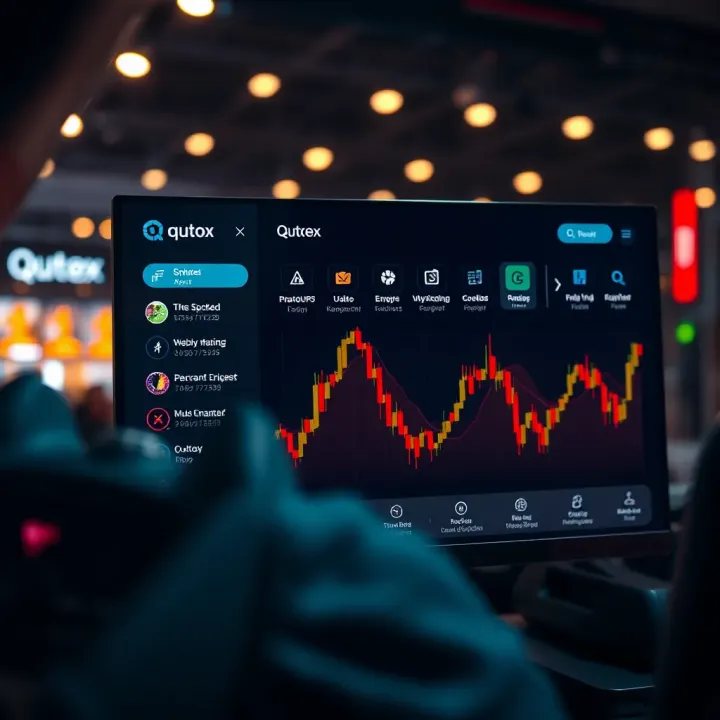
Explore Qutoex in depth 💡 Understand its features, functionalities, and practical uses, plus get answers to common queries for smarter decisions! 📊
Based on 6 reviews