

Understanding QX Trading Explained
📊 Explore QX trading: key features, platforms, risks & benefits explained. Understand its role in financial markets for smarter investing decisions in India.
Edited By
Charlotte Hughes
Forex demo accounts serve as a valuable tool for traders who want to understand currency trading without risking actual money. These accounts simulate real forex market conditions using virtual funds, allowing users to experiment freely and gain hands-on experience. For Indian traders, demo accounts provide a practical environment to test strategies, learn market behaviour, and familiarise themselves with trading platforms like MetaTrader 4 or 5.
Unlike live accounts, demo trading involves no financial risk. This means you can try out various currency pairs – for instance, trading USD/INR or EUR/USD – and observe how market events impact prices, all without worrying about losses. Popular brokers such as Zerodha, Upstox, and ICICI Direct offer demo accounts with easy access.
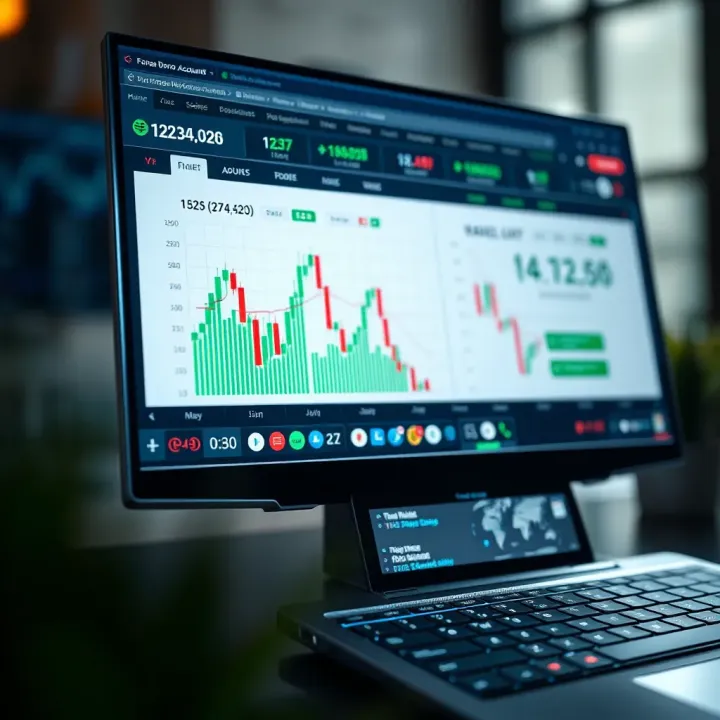
Using demo accounts effectively requires discipline: treat it as real trading to build genuine skills rather than taking reckless positions since there is no real capital at stake.
Demo accounts bring several benefits:
Familiarity with trading software, charts, and tools
Opportunity to develop and backtest trading strategies
Understanding of order types (limit, stop-loss, market orders)
Practice placing trades quickly in volatile market conditions
However, they also have limitations. Since there’s no real money involved, emotional factors like fear and greed are muted, which play an important role in live trading. Additionally, some brokers may offer slightly different execution speeds or spreads in demo versus live modes.
In the Indian context, demo accounts also help traders navigate regulatory aspects such as complying with Securities and Exchange Board of India (SEBI) norms or understanding tax implications before moving to the live forex markets.
Overall, the smarter use of a forex demo account builds confidence and sharpens trading acumen. The next part of this guide will explore how both beginners and seasoned traders can make the most of these accounts, eventually transitioning smoothly to live trading environments.
A forex demo account acts as a virtual trading environment that allows traders to practise buying and selling currencies without risking real money. This hands-on tool is particularly useful for beginners who need to grasp market movements and test strategies before entering live trading. For example, an Indian trader curious about trading the USD/INR pair can use a demo account to understand how fluctuations impact their potential profits or losses without any financial risk.
Simply put, a demo account is a free practice account offered by forex brokers. It comes preloaded with virtual funds, enabling traders to execute trades on a simulated platform identical to live trading. The primary purpose is to offer a risk-free setting to learn the mechanics of the forex market, practise trading skills, and experiment with different tactics without financial stress.
Demo accounts mimic live trading conditions by providing real-time price quotes and allowing users to place market and limit orders. However, since the funds are virtual, there’s no actual financial gain or loss. The trading experience includes the same charts, indicators, and execution speeds, although market slippage or liquidity constraints might not be fully replicated. For instance, while real markets might experience sudden volatility driven by RBI announcements or geopolitical events, demo accounts may not reflect the exact slippage that would occur.
Demo accounts offer the closest experience to live trading, except for the emotional aspect and real financial risk.
Virtual Capital: Traders get a fixed amount of fake money, say ₹1,00,000, to start practising.
Real-Time Market Data: Updated price feeds ensure traders see current market rates.
Access to Trading Tools: Technical indicators, multiple order types, and leverage options are available for realistic practise.
No Financial Risk: Since nothing real is invested, mistakes have no monetary consequences.
Platform Familiarity: Demo accounts allow users to navigate broker platforms like Zerodha’s Kite or ICICI Direct comfortably.
In essence, forex demo accounts serve as a bridge between understanding theory and applying it practically. They help traders gain confidence and refine their approach before committing real capital in the volatile forex space.

Forex demo accounts offer several clear advantages, especially for those new to forex trading or even experienced traders wanting to try new methods. The key benefits revolve around learning safely, testing strategies, and getting comfortable with trading platforms before risking real money.
The main appeal of a forex demo account is the chance to learn how currency trading works without risking your capital. Since the money in a demo account is virtual, you can place trades, experience market fluctuations, and understand order types without fears of loss. For example, a fresher from Delhi trying forex for the first time can spend weeks honing skills to spot trends or understand leverage effects without a single rupee at stake. This risk-free environment encourages experimentation and builds confidence gradually.
Another practical use of forex demo accounts is testing new trading strategies under simulated market conditions. Traders can use technical indicators, chart patterns, or automated bots on the demo account to check how these methods perform. Imagine a Mumbai-based trader wanting to explore scalping or carry trade strategies; the demo account lets them apply these tactics without suffering real losses due to flawed execution or market volatility. This helps refine techniques, make mistakes quietly, and learn what works before shifting to live trades.
Forex platforms today come with various features, tools, and customisation options that can be overwhelming initially. A demo account allows users to get familiar with the dashboard, order placement methods, risk management tools, and chart displays. For instance, someone in Bengaluru trying out MetaTrader 5 or ThinkMarkets’ platform can understand navigation, set stop-loss or take-profit limits, and explore market news sections easily. Familiarity prevents costly errors during real trading, thus improving overall readiness.
Practising on a forex demo account offers hands-on experience, removes fear of loss, and helps traders adapt to the trading environment quickly.
To sum up, demo accounts serve as an essential bridge for Indian traders between theory and live forex markets. Whether it's learning basics, trying new strategies, or simply getting the hang of complex trading platforms, using a demo account builds the skills and confidence required in the real world of forex trading.
Forex demo accounts offer great learning opportunities but come with certain drawbacks traders should not ignore. Understanding these limitations helps set realistic expectations and prepares you better for live market conditions.
Demo accounts simulate the market using virtual funds, but they don't fully replicate real trading conditions. For instance, execution speed in a demo might be faster because there’s no actual liquidity risk or order slippage. In reality, especially during volatile sessions like RBI policy announcements, you might face delays or partial order fills. Also, while spreads in demo accounts are often fixed and tight, live account spreads can widen unexpectedly, affecting profitability. This gap can mislead beginners into underestimating trading costs and overestimating ease.
Trading with virtual money lacks the emotional pressure real money induces. Demo trading doesn’t trigger the same fear or greed that live markets do. For example, losing ₹50,000 from a demo account won't affect your mindset like losing that in a live account. This difference makes it tough to build psychological resilience solely through demo trading. Managing stress and controlling impulses are critical skills you develop only after facing real financial risks. Hence, emotional preparation remains a hurdle when shifting to live trading.
Traders often feel overly confident after performing well on demo accounts and jump into live trading prematurely. This complacency can lead to significant losses when the unpredictability of real markets hits. It's common to see novice traders treat demo success as proof of readiness, ignoring important aspects such as money management and emotional discipline. Regularly reviewing mistakes made during demo runs and maintaining humility are necessary to avoid this pitfall.
Demo accounts are useful learning tools but should not be mistaken for a full replica of live forex trading. Awareness of their limitations ensures better preparation and smoother transition.
By recognising these challenges, you can use demo accounts effectively without unrealistic expectations. Practise with patience, treat demo trading as a stepping stone, and prepare for the emotional and technical complexities of live forex markets.
Forex demo accounts offer a practical way for Indian traders to learn and practise currency trading without risking real money. These accounts simulate live forex trading using virtual funds, allowing you to understand market dynamics and test strategies in a risk-free environment. The use of demo accounts is especially relevant for Indian traders, given the complexity of global currencies and the specific local regulatory framework.
Choosing the right broker and trading platform is a key step when using a forex demo account. Indian traders should prioritise brokers regulated by trustworthy authorities, such as the Securities and Exchange Board of India (SEBI) or international regulators recognised globally. Platforms like MetaTrader 4, MetaTrader 5, and broker-specific apps such as those from ICICI Direct or Zerodha offer user-friendly interfaces and robust features suitable for demo trading.
It’s wise to check if the broker supports Indian payment methods like UPI or net banking for a smooth transition when you move to live trading. Also, platforms that provide real-time data and market news tailored for Indian markets enhance your trading experience, helping mimic conditions more closely to what you will face in live trading.
Forex trading in India is subject to strict rules. The Reserve Bank of India (RBI) permits forex trading only in currency pairs involving the Indian Rupee (INR), and trading in pairs like USD/EUR is restricted. When choosing a demo account, ensure the broker complies with these regulations to avoid issues later.
Practising on demo accounts linked to SEBI-registered brokers can be safer and provide a regulatory shield. Additionally, awareness of tax implications for forex gains under Indian tax laws, including the need to report income appropriately, should be part of your preparation.
Using demo accounts that offer INR currency pairs brings familiarity with the actual trading conditions you will face. Trading in USD/INR or GBP/INR allows you to track spread, volatility, and liquidity that reflect the Indian market environment.
Some brokers also provide features localised for Indian traders, such as market timings aligned with Indian Standard Time (IST), headset support in multiple Indian languages, and tutorials covering local tax and compliance matters. These localisation aspects make practising on demo accounts more relevant and effective for Indian traders.
Practising on a forex demo account with Indian regulatory compliance and INR pairs helps build confidence, control risk, and prepare better before stepping into the live market.
In summary, Indian traders must approach forex demo accounts strategically. Selecting reputable brokers, understanding the regulatory framework, and focusing on INR pairs provide a strong foundation to learn forex trading effectively with minimum hassles.
Making the leap from demo trading to live trading marks a key phase in any forex trader’s journey. While demo accounts provide a safe environment to test strategies and get comfortable with trading platforms, live trading exposes you to real financial risks and emotional challenges. Understanding when and how to make this transition helps Indian traders avoid common pitfalls and build a sustainable forex trading career.
Switching to live trading should come only after consistent profitability and confidence with your demo trades. For example, if you've recorded steady profits on your demo account over two or three months using the same trading strategy without major losses, it might be a sign to try real money. Equally crucial is ensuring you understand your broker’s live trading conditions—spreads, commissions, and slippage often differ from demo accounts. Additionally, start with a small capital amount you can afford to lose, such as ₹10,000 or ₹20,000, to limit financial risk initially.
Handling emotions is tougher in live trading because real money is at stake. Fear and greed can cloud judgement leading to impulsive decisions unlike in demo where losses don't matter. Implement strict risk management rules to protect your capital. For example, limit each trade risk to 1-2% of your trading capital. Also, maintain a trading journal to document emotional reactions and decisions—this helps identify patterns like overtrading or hesitation. Remember, losses are part of live trading and learning to accept them without panic is vital.
Setting achievable goals keeps trading sustainable. Expecting huge profits overnight sets the stage for frustration and risky behaviour. Start targeting modest returns like 3-5% monthly growth in your trading capital. Break down your goals into daily and weekly check-ins to track progress. It’s also wise to plan for occasional losing streaks and not let them derail your overall strategy. Balancing ambition with realism helps maintain a healthy mindset and encourages disciplined trading.
Transitioning smoothly requires treating live trading as a gradual skill development rather than a quick money-making option. Traders who adjust their strategies and mental outlook accordingly are more likely to succeed.
Making the move from demo to live trading is not about rushing but about preparing thoroughly—through steady practice, disciplined risk control, and realistic goal-setting. When you balance all these factors, you put yourself on a much stronger footing to handle the forex markets effectively.
📊 Explore QX trading: key features, platforms, risks & benefits explained. Understand its role in financial markets for smarter investing decisions in India.

Explore a detailed guide on Quotex forex trading for India 🇮🇳. Learn platform features, account setup, trading strategies, and smart risk management tips! 📈💡
Explore RBI-approved forex brokers in India 🇮🇳, understand rules, risks, and latest updates to safely trade forex and choose trusted brokers wisely 💼📊.
Learn about RBI approved forex brokers in India 🇮🇳, why their rules matter, and get tips to pick safe, legal trading partners for your forex journey 💸
Based on 5 reviews