

AUD to USD Forecast: Key Trends and Market Outlook
📈 Discover the AUD to USD forecast! Explore key economic indicators and market trends shaping the exchange rate for traders, investors, and businesses alike.
Edited By
Oliver Bennett
The AUD/USD currency pair is one of the most actively traded in the forex market, reflecting the economic interplay between Australia and the United States. Understanding its movement requires a close look at key economic indicators, geopolitical events, and technical trends shaping this pairing.
Australia’s economy often depends heavily on commodities like iron ore and coal, making its currency vulnerable to global demand shifts. Meanwhile, the US dollar remains a global reserve currency, influenced by factors like Federal Reserve policies, inflation rates, and domestic economic data such as employment figures and GDP growth.
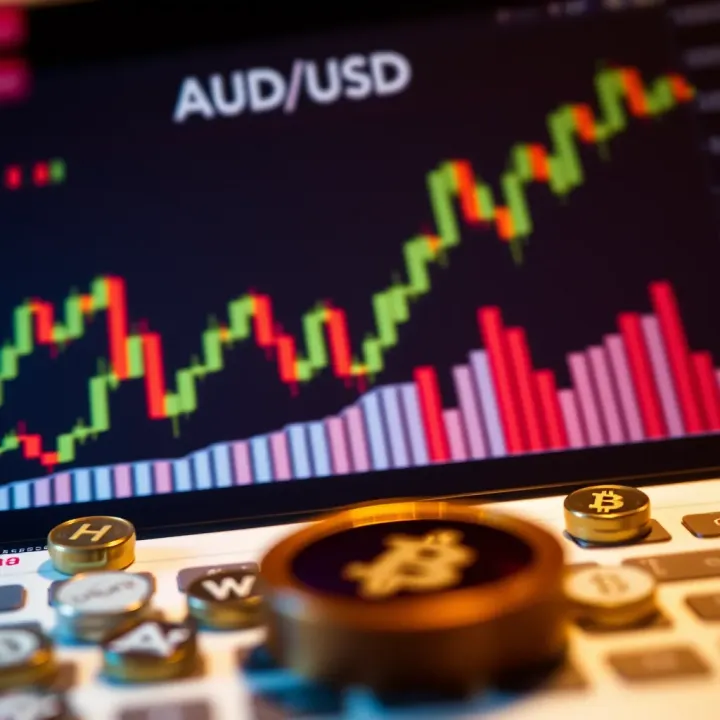
For traders and investors, keeping a keen eye on these dynamics helps in predicting the AUD/USD exchange rate more accurately and can guide entry or exit decisions.
Commodity Prices: Rising iron ore or coal prices typically strengthen the AUD, as Australia is a major exporter. Conversely, falling commodity prices tend to weaken it.
Interest Rate Decisions: The Reserve Bank of Australia (RBA) and the US Federal Reserve’s interest rates directly impact this pair. Higher rates can attract capital inflows, boosting the respective currency.
Inflation and Employment Data: These provide clues on the economic health of each country, influencing monetary policy expectations and currency valuation.
Trade relations, especially between China (Australia’s largest trading partner) and the US, heavily affect AUD/USD. Tensions or easing in trade policies often cause immediate market reactions. Additionally, global risk sentiment—whether investors prefer riskier assets or seek safe havens like the USD—plays a significant role.
Technical analysis helps interpret market sentiment through chart patterns, support and resistance levels, and moving averages. For instance, a break above a well-established resistance could signal a bullish trend in AUD/USD, suggesting a buy opportunity.
Traders should combine fundamental analysis with technical signals to make well-rounded decisions. Using stop-loss orders and position sizing can manage risk effectively.
Monitoring these factors continuously will empower traders and investors to navigate the AUD/USD market in line with shifting economic realities and market psychology.
The AUD/USD currency pair represents the exchange rate between the Australian dollar and the US dollar. This pair is closely watched by traders and investors worldwide due to its sensitivity to both local economic factors in Australia and wider global market movements involving the US. Understanding this pair provides practical insights into how shifts in the economies of two major nations influence currency markets.
Among the most actively traded pairs, AUD/USD benefits from high liquidity and substantial daily trade volumes. This liquidity ensures narrow bid-ask spreads, reducing trading costs for participants. For example, during Asian and US trading hours, the pair sees increased activity, offering ample opportunities for traders to enter or exit positions quickly without significant price impact.
High liquidity also means the pair reacts efficiently to market news and economic data, making it attractive for day traders and institutional investors alike. When economic releases from Australia or the US emerge, volatility spikes, which experienced traders can use to their advantage.
The Australian economy's strong reliance on commodity exports, especially metals like iron ore and coal, links AUD/USD closely to commodity price movements. When prices of these commodities rise, the Australian dollar usually strengthens against the US dollar, reflecting improved trade balances and economic outlooks.
For instance, a surge in iron ore prices due to increased demand from China tends to push AUD higher. Traders often watch commodity indices and reports from commodity exchange platforms to anticipate currency moves. This connection allows traders to combine commodity market analysis with forex strategies for better decision-making.
Differences in official interest rates set by the Reserve Bank of Australia (RBA) and the US Federal Reserve heavily impact the AUD/USD rate. Higher Australian interest rates relative to the US attract capital inflows seeking better returns, strengthening the AUD.
Conversely, if the Fed signals rate hikes while the RBA holds rates steady or cuts, the US dollar gains against the Australian dollar. Traders track central bank announcements and economic forecasts closely to anticipate such shifts, as even small changes in rates influence carry trades involving AUD/USD.
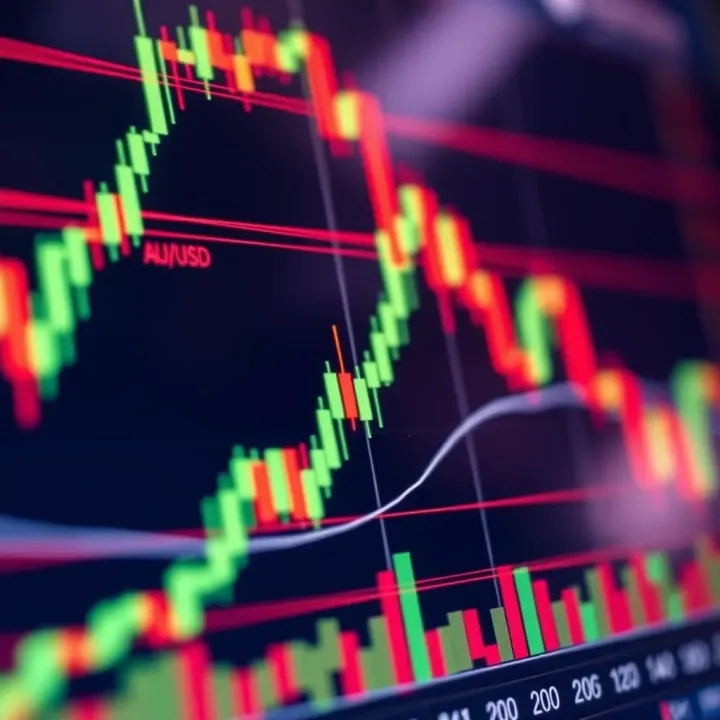
Monetary and fiscal policies in both countries can sway the pair’s exchange rate. For example, stimulus measures by the Australian government or any changes in taxation policy could affect investor confidence and currency demand.
Similarly, US economic policies, including trade tariffs or infrastructure spending, can alter risk perceptions and capital flows, indirectly impacting AUD/USD. Investors monitor policy shifts as they can rapidly change the outlook for growth and inflation, thereby influencing currency moves.
The AUD is often considered a risk-sensitive currency; it tends to appreciate when global markets are optimistic and investors seek higher yields. On the other hand, during times of uncertainty or risk aversion, the US dollar acts as a safe haven, strengthening as investors flock to it.
For example, during global financial tensions or geopolitical worries, the AUD/USD may decline as traders move away from riskier assets. Recognising this sentiment-driven pattern helps traders adjust their positions based on broader market moods rather than just economic data.
In summary, understanding the AUD/USD pair requires looking beyond just numbers—it means keeping an eye on interest rates, policies, commodity trends, and overall market risk appetite. This multi-layered perspective aids traders and investors in navigating the complexities of this widely traded currency pair.
Economic indicators provide a snapshot of the health and direction of the Australian and US economies, which ultimately drive the AUD/USD exchange rate. Traders rely heavily on these figures to anticipate currency movements, as stronger economic data generally strengthens the respective currency. Monitoring these indicators helps investors make informed decisions rather than guessing market sentiment.
Gross Domestic Product (GDP) growth is a key measure showing the total economic output of Australia. It reflects the pace at which the economy is expanding or contracting. For example, if Australia reports GDP growth of 3% annually, it signals a healthy economy, likely boosting the Australian dollar as investors seek exposure to a growing market. Conversely, sluggish growth or contraction can weaken the AUD as investors shift capital elsewhere.
Employment figures and labour market reports offer insight into the country's job market strength. Higher employment rates and rising wage growth usually indicate stronger consumer demand and economic activity, leading to greater confidence in the AUD. For instance, Australia's monthly labour force survey revealing lower unemployment and job gains often results in an uptick in AUD/USD. Poor labor market stats, on the other hand, may reduce the pair’s value as concerns grow over economic slowdown.
Commodity exports and trade balance matter significantly because Australia is a major exporter of resources like iron ore, coal, and natural gas. Fluctuations in commodity prices directly influence export revenues and the trade surplus or deficit. A strong trade surplus supported by rising commodity prices generally strengthens the AUD. For example, when iron ore prices surge due to demand from China, the AUD tends to gain against the US dollar. A trade deficit or falling commodity prices can hurt the AUD's value.
Federal Reserve monetary policy and interest rates serve as major drivers for AUD/USD. When the US central bank raises interest rates, it often makes the US dollar more attractive to investors seeking higher yields. This usually causes the AUD/USD pair to fall as capital moves into USD assets. Traders should watch Federal Reserve announcements and meeting minutes closely for clues on interest rate direction.
Inflation reports such as the Consumer Price Index (CPI) indicate rising or falling prices in the US economy. Persistent inflation may prompt the Federal Reserve to hike rates, strengthening the USD and pushing AUD/USD down. Conversely, low inflation could encourage rate cuts, weakening the dollar and lifting the AUD/USD pair. For example, if US CPI rises beyond 4%, markets might price in more aggressive rate hikes.
Non-farm payrolls and consumer spending are among the most watched US economic figures. Strong job creation seen in payroll reports signals robust economic growth, often boosting the dollar. Meanwhile, consumer spending, which accounts for about 70% of US GDP, shows the economy's real demand strength. Rising consumer spending can support the USD, leading to downward pressure on AUD/USD, while weak numbers usually have the opposite effect.
Keeping a close eye on these economic indicators is vital for anyone trading AUD/USD. They not only reveal the underlying economic health but also guide expectations about future central bank actions and market sentiment.
By understanding these factors and their typical influence on the exchange rate, traders can better navigate the ups and downs of the AUD/USD pair.
Global political events and economic shifts directly affect AUD/USD movements, making them critical for traders to watch. Since Australia's economy leans heavily on exports, especially to China, any geopolitical tension impacts not just trade flows but also market sentiment. Understanding these influences helps traders anticipate currency shifts amid uncertainty.
Trade tensions and tariffs between the US and China have a notable impact on AUD/USD. When tariffs are imposed or negotiations become tense, Chinese demand for Australian commodities often slows, hitting Australia’s export revenues. This weakens the Australian dollar against the US dollar. For instance, during the US-China trade war, AUD/USD showed increased volatility as markets reacted to tariff announcements and retaliatory measures.
Supply chain disruptions tied to US-China relations also shape AUD/USD trends. Given how integrated China and Australia are in global supply chains, delays in shipments or restrictions on key imports ripple through the Australian economy. This can suppress investor confidence, weakening AUD against the US dollar. Traders who track container freight indices or shipping delays can get early signals about potential pressure on the Australian dollar.
Iron ore and coal prices directly influence the AUD/USD rate since Australia supplies a large portion of the world's demand. Rising iron ore prices boost Australia's trade surplus and reinforce the AUD. A case in point: when iron ore prices jumped due to supply issues in Brazil, the Australian dollar gained strength, reflecting increased export revenues.
Conversely, coal price fluctuations affect regions relying on thermal coal exports. Sudden dips can harm Australia’s trade balance, dragging the AUD lower. Traders should monitor contract prices on commodity exchanges as these often lead currency movements by days or weeks.
Oil price swings add another layer of complexity. Although Australia is a net importer of oil, changes in oil prices affect inflation and monetary policy decisions. If oil prices rise sharply, inflation may increase, pushing the Reserve Bank of Australia (RBA) to reconsider interest rates, which in turn impacts AUD/USD. Conversely, lower oil prices can ease inflation, potentially weakening the AUD as rate hikes become less likely.
Tracking geopolitical events alongside shifts in commodity prices offers a dual perspective on AUD/USD. This approach helps traders form a more rounded view and tailor their strategies accordingly.
Such analysis is vital for those looking to navigate the currency pair sensitively, especially amid today's interconnected global economy.
Technical analysis plays a key role in forecasting the AUD/USD currency pair. While economic indicators and geopolitical factors provide fundamental insights, technical tools help traders and analysts interpret price movements and market sentiment effectively. By examining historical price data and market behaviour, traders can spot patterns and levels that often impact future price action.
Recent price trends and chart patterns help pinpoint where the AUD/USD has historically found buying or selling interest. For example, if the pair repeatedly bounces back from a certain price, that level becomes a support zone. Conversely, prices stalling or reversing near a higher level indicate resistance. Recognising patterns like double tops, head and shoulders, or channels can give clear entry or exit signals. For instance, a double bottom near 0.70 often signals a bullish reversal, prompting buying opportunities.
Moving averages and Fibonacci retracements offer additional structure to price analysis. Moving averages smooth out short-term fluctuations, revealing the pair's underlying trend. The 50-day and 200-day moving averages are widely watched; crosses between these lines often confirm trend shifts. Meanwhile, Fibonacci retracement levels mark potential retracement zones during corrections—say the 38.2%, 50%, and 61.8% levels. If AUD/USD pulls back to these and finds support, it can signal a good spot to enter long positions.
The Relative Strength Index (RSI) measures whether the pair is overbought or oversold, indicating possible momentum reversals. An RSI above 70 suggests the currency is overbought and may see a drop soon, while below 30 hints at oversold conditions and possible bounce-back. For example, when the AUD/USD RSI hits 75 during an uptrend, traders often anticipate a near-term correction.
The MACD (Moving Average Convergence Divergence) indicator helps track momentum and trend strength by comparing short-term and long-term moving averages. A bullish crossover—when the MACD line crosses above the signal line—can hint at upward momentum, while a bearish crossover suggests the opposite. Traders use these signals to time their entries and exits precisely, especially during volatile market sessions.
Volume analysis confirms the strength behind price moves. Rising volume alongside price increases shows genuine buying interest, giving confidence to long positions. Conversely, price moves on low volume might lack conviction and risk reversal. For instance, a breakout above a resistance level on high volume is more reliable than the same move on thin volume.
Combining these technical tools offers a clearer picture of AUD/USD’s near-term prospects. Traders who integrate price patterns, indicators, and volume tend to improve their decision-making and risk management.
By focusing on these elements, you can stay ahead of market moves and position yourself better in the AUD/USD forex market.
Traders dealing in AUD/USD must have solid practical strategies to manage the pair’s inherent volatility and respond to rapidly changing market conditions. The exchange rate is influenced by numerous factors—from economic data to geopolitical news—and without a clear trading plan, losses can add up quickly. This section focuses on actionable techniques like risk management and timing trades around key events, helping traders protect capital and capitalise on opportunities.
Setting stop-loss and take-profit levels is essential for managing risk in AUD/USD trading. A stop-loss order automatically closes a trade to limit losses if the market moves against the position. For example, if you buy AUD/USD at 0.7300 and set a stop-loss at 0.7250, your loss stops at 50 pips. Take-profit orders lock in gains by closing positions once a certain profit target is reached. This approach prevents emotional decisions—like holding onto losing trades or exiting too early—and helps maintain consistent trading discipline.
Position sizing based on volatility is another key risk control method. AUD/USD can swing widely when economic announcements or geopolitical news hit markets. Adjusting the size of your trades according to recent volatility protects your capital. For instance, on days with high average true range (ATR), smaller positions help absorb price swings without risking too much. Conversely, when the market is calm, you can take slightly larger positions. This dynamic sizing keeps your risk per trade stable despite market ups and downs.
Earnings reports and economic calendars offer vital clues for timing trades in AUD/USD. Being aware of scheduled announcements—such as Australian GDP releases or US non-farm payrolls—allows traders to prepare for sharp moves. For example, the Reserve Bank of Australia’s policy statement often triggers volatility in the pair. Looking at the economic calendar daily helps spot these events and plan entry and exit points accordingly.
Reaction to geopolitical announcements also shapes AUD/USD price action. This pair reacts strongly to US-China relations given Australia’s trade links with China and the US dollar’s global role. Suppose new tariffs are introduced or diplomatic talks stall; traders might see rapid AUD/USD swings reflecting risk-off sentiment or capital flows moving to safer assets. Monitoring these geopolitical developments helps traders anticipate sudden market shifts and adjust positions proactively.
Good risk management and precise timing based on market-moving news are the cornerstones of successful AUD/USD trading. Without these, even the best market forecast may not translate into profits.
Practical trading requires understanding these strategies and applying them consistently to navigate AUD/USD markets effectively.
📈 Discover the AUD to USD forecast! Explore key economic indicators and market trends shaping the exchange rate for traders, investors, and businesses alike.

📊 Stay updated with today's EUR/USD forecast including key economic data from the Eurozone & US, market trends & expert views shaping currency moves.

📉 Explore the EUR USD forecast with expert take on economic data, geopolitical risks, and monetary moves shaping this currency pair's trend. Trade smarter!
📊 Discover how economic indicators, market mood, and analysis techniques shape EUR/USD trends. Practical tips help traders forecast this key forex pair confidently.
Based on 9 reviews