

Choosing the Best Trading Apps for Indian Investors
Explore top trading apps for Indian investors 📱 Find how to choose the best platform with security, features, user experience and investment goals in mind.
Edited By
Emily Bradford
Converting $10,000 to Indian Rupees (₹) may seem straightforward, but the reality involves careful attention to exchange rates and transaction fees. The dollar-to-rupee exchange rate fluctuates daily due to market forces, RBI policies, and global economic factors. Traders, investors, and financial analysts must stay updated to make smart forex decisions.
As of today, if the exchange rate is ₹83 per $1, then $10,000 converts to ₹8,30,000. However, this figure can vary by a few rupees either side, which matters when dealing with large amounts or frequent conversions.

Understanding the forex rate alone isn’t enough. The method of exchange affects the final amount you receive. Banks, forex dealers, and online platforms each apply their own margins, making real-world rates less favourable than the interbank or market rate you see online.
Remember, a slight variation of even 0.5% in the exchange rate or fees can change your ₹ amount by thousands, so choosing the right channel is as vital as timing your transaction.
Here are practical points to keep in mind:
Check live rates regularly: Markets shift quickly based on policies, geopolitical events, or RBI interventions.
Compare providers: Banks like SBI or HDFC may have different charges than fintech apps like Wise or BookMyForex.
Watch transaction costs: Includes transfer fees, currency conversion fees, and GST where applicable.
Know regulatory limits: RBI imposes rules on outward remittances (e.g., $250,000 per financial year under Liberalised Remittance Scheme).
For traders and investors, tracking these nuances ensures better forex cost management. Whether repatriating profits, funding investments, or conducting business payments, having clarity on these aspects prevents surprises.
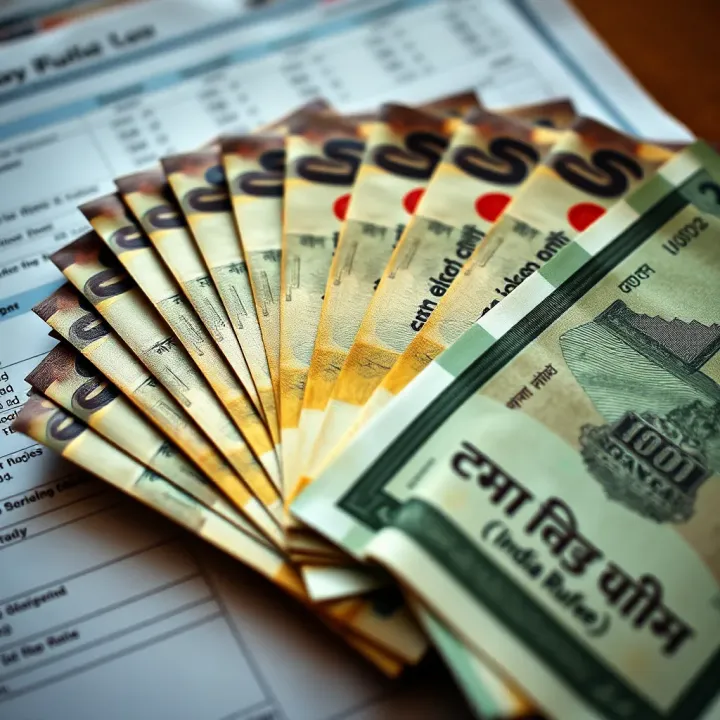
In the following sections, we explore how to find the best rates, the role of currency market trends, and step-by-step guidance to converting $10,000 into Indian Rupees efficiently and securely.
Getting a clear idea of the current exchange rate is key when converting $10,000 to Indian Rupees. Exchange rates can swing quite a bit, affecting how much you actually get. For a trader or an investor, a change of even a few paise per rupee can mean a difference of thousands in final value. Knowing the rate helps you make timely decisions rather than leaving money on the table.
The USD to INR rate depends on various factors, including inflation, interest rates, trade balance, and political stability. For example, when India’s inflation is higher than the US, the rupee tends to weaken against the dollar. Similarly, if the US Federal Reserve hikes interest rates, capital might flow back to the US, strengthening the dollar and pushing the rupee down. Even global commodity prices and geopolitical developments can sway this rate, making it essential to keep an eye on these economic indicators.
The Reserve Bank of India (RBI) plays a significant role in stabilising the rupee through interventions in the forex market. If the rupee’s value dips sharply, the RBI might sell dollars from its forex reserves to support it. Conversely, it may buy dollars to curb excessive appreciation. Market forces like demand and supply from exporters, importers, foreign investors, and traders also influence the exchange rate. Despite RBI's efforts, rates remain sensitive to market sentiment, especially during periods of high volatility.
To get an accurate picture of the current USD to INR rate, make use of official sources like the RBI website or reliable forex platforms such as XE, OANDA, or Reuters. Banks and authorised forex dealers typically follow these rates with minor margins. Watching live feeds helps traders and businesses avoid surprises when converting money or pricing goods and services.
Foreign exchange markets can move on news, policy decisions, or global events in minutes. For example, if the US announces stronger job figures, the dollar might firm up quickly, impacting the rupee's value. Market volatility means the rate you see in the morning might change by the afternoon. For conversions involving large sums like $10,000, even small fluctuations can cause significant differences, so timing and awareness of market conditions can save or cost you a good deal.
Always monitor live exchange rates close to the time of conversion, especially when dealing with large amounts, to ensure you get the most favourable value for your dollars in rupees.
Knowing how much $10,000 amounts to in Indian Rupees (INR) is essential for investors and traders who want to make informed decisions. Whether you're moving money between accounts, investing in Indian stocks, or planning business transactions, accurate calculation ensures you gauge the true value you receive after conversion. Given the fluctuations in exchange rates, plus various charges, straightforward conversion isn’t always the full picture.
The simplest way to calculate the INR equivalent is to multiply the dollar amount by the current exchange rate. The formula is:
Amount in INR = Amount in USD × Exchange Rate (USD to INR)
For instance, if the rate is ₹82 for $1, then $10,000 equals ₹8,20,000. This formula works fine as a quick estimate but doesn’t include hidden costs that could reduce the final amount you get.

Consider you are checking rates on a forex platform or an authorised bank website; just take the USD-INR rate they publish and run this calculation. It helps when comparing rates offered by different providers. That way, you get an immediate sense of value before taking currency exchange further.

#### Example Calculation Using Current Rate

Let’s say the live rate today is ₹81.75 per dollar. Converting $10,000 would mean:

- $10,000 × 81.75 = ₹8,17,500

This number is a baseline. When planning investments or forex trades, knowing this helps set expectations. As rates change even by a few paise, the total in INR can vary by thousands. Regularly checking the current value is useful before any large conversion.

### Considering Charges and Fees

#### Bank and Currency Exchange Margins

Most banks and forex dealers do not offer the exact market exchange rate. They add a margin, which acts like their profit or buffer against rate fluctuations. This margin might be 0.5% to 2% typically, which might reduce ₹8,17,500 to about ₹8,00,000 in your account.

For example, if the margin is 1%, the effective rate becomes ₹81.75 - 1% = ₹81.54. Then $10,000 converts to ₹8,15,400 instead of ₹8,17,500. Even small margins can impact large sums, so always compare margins across service providers.

#### Additional Fees to Watch Out For

Besides margins, watch for extra charges such as:

- **Transfer fees:** Some services charge flat amounts or percentage fees per transaction.
- **GST or service tax:** On forex fees, GST might be applicable.
- **Commission for online payments:** Using cards or digital wallets sometimes incur charges.

These fees can chip away at your converted amount, especially for big or frequent transactions. For example, a ₹500 transfer fee on ₹8 lakh is a noticeable cost. Factoring in all these helps you pick the most economical option.

> Always request a full cost breakdown from the provider before finalising large forex exchanges, so you know the exact INR value arriving in your account.

In short, calculating $10,000 into rupees involves more than multiplication. Understanding how exchange rates, margins, and fees play together ensures you don’t lose money unknowingly. Traders and investors should stay alert and check all these aspects to get the best value while converting currencies.

## Best Practices for Converting Dollars to Rupees in India

Choosing the right method to convert dollars to rupees can save you a significant amount of money and hassle. It’s not just about finding the best rate, but also about understanding fees, security, and convenience. This section highlights the most effective practices for converting $10,000 to ₹, aimed especially at traders, investors, and financial professionals who often deal with forex.

### Using Banks Versus Forex Services

#### Comparing Exchange Rates and Fees
Banks traditionally offer reliable forex services but often at a higher margin than specialised currency exchange providers. For instance, State Bank of India might offer a conversion margin of around 1%, while independent forex bureaus or online platforms like BookMyForex or Thomas Cook could provide better rates with margins sometimes below 0.5%. However, these rates can vary based on the transaction size and regulatory compliance.

Besides margins, service fees matter. Banks may levy fixed or percentage-based service charges, especially for amounts like $10,000, which can reduce the effective rupee amount you receive. By contrast, forex services often advertise "zero commission" deals but might embed their charges within the conversion rate itself. Always calculate the total cost, not just the stated rate.

#### Security and Convenience Factors
Banks benefit from established infrastructure and higher perceived security, which many traders and investors prefer, especially for large sums. A large transaction through SBI or HDFC Bank can provide peace of mind with traceability and updates via net banking.

However, forex services offer agility and sometimes quicker turnaround, particularly in metros and tier-1 cities. Some also provide doorstep delivery of currency or digital transfers, which ease the process. That said, it’s crucial to pick licensed and RBI-approved forex dealers to avoid scams or regulatory hassles.

> Always confirm the forex dealer’s credentials and check if the bank or service is regulated by the Reserve Bank of India before proceeding.

### Timing Your Conversion

#### Monitoring Rate Trends
Exchange rates fluctuate due to global and domestic factors—including economic data releases, geopolitical tensions, and RBI announcements. Keeping an eye on the USD-INR trends can help decide when to convert. Financial tools like NSE India or Moneycontrol provide historical data and alerts.

For example, if the rupee is depreciating against the dollar, delaying the conversion might bring better rupee value later. Conversely, if the rupee is strengthening, converting sooner could lock in gains. Technical charts and expert analyses add value here, especially for traders managing significant sums.

#### Avoiding Unfavourable Market Periods
Certain times tend to witness higher volatility or unfavourable rates. Around end-of-financial-year periods or during RBI policy announcements, forex markets might tighten rates or increase margins.

Also, avoid converting on national holidays or weekends when banks and forex markets are closed, as rates might be set unfavourably by dealers during these periods. Being patient and planning conversions around stable market conditions minimises risks and gets you a better deal.


Making an informed choice between banks and forex services, while timing your conversion carefully, can enhance the effective value you get from your $10,000 conversion. These best practices protect both your money and your peace of mind.

## Applications of $10, Conversion for Individuals and Businesses

Converting $10,000 to Indian Rupees (₹) serves various practical uses for both individuals and businesses. Individuals often send money home from abroad or use forex services for education and travel expenses. Businesses manage cross-border payments, supplier settlements, or export proceeds. Understanding the nuances in these transactions helps optimise costs and compliance.

### Sending Money to India

#### Remittance Processes and Limits

Sending money to India involves choosing between formal channels like banks, money transfer operators (MTOs) such as Western Union or MoneyGram, and digital platforms that offer quicker transfers at competitive rates. The Reserve Bank of India (RBI) sets [guidelines](/articles/guide-to-qutex-trading-for-indian-investors/) on transaction limits and mandatory disclosures for inward remittances. Currently, there is no fixed ceiling for receiving remittances in India, but money laundering checks may require source documentation for amounts above ₹10 lakh.

Individuals sending $10,000 (roughly ₹8 lakh, depending on rates) overseas must check for daily or monthly limits imposed by public and private banks. Some banks charge a fixed fee plus a margin on the exchange rate, so comparing costs can save thousands of rupees. For example, someone sending money from the UAE to India might use UPI-linked services or bank transfers depending on convenience and fees.

#### Regulatory Guidelines by RBI

RBI's Liberalised Remittance Scheme (LRS) allows resident Indians to remit up to $2.5 lakh per financial year for permitted transactions. However, foreign nationals or non-resident Indians (NRIs) can send money without many of these constraints, provided they furnish valid KYC documents.

RBI monitors inward remittances to safeguard against fraud and money laundering. Banks must report transactions above specified thresholds under the Prevention of Money Laundering Act (PMLA). This means individuals and businesses should keep clear records of fund sources and invoices related to such transfers, especially when converting larger sums like $10,000.

### Receiving Payments in Indian Rupees

#### Invoice Settlements and Forex Management

For businesses receiving $10,000 from overseas clients, timely invoice settlement is critical. Firms often face foreign exchange risk due to currency fluctuations between invoice issue and payment receipt. Hedging products offered by banks, such as forward contracts or options, help lock in favourable rates, thus avoiding losses.

Effective forex management reduces risk and improves cash flow visibility. For instance, an export company getting paid in dollars might convert $10,000 based on spot rates or negotiate with banks for better terms on certain remittance channels. Keeping track of exchange rate trends also helps in deciding the best conversion time.

#### Taxation and Reporting for Cross-Border Transactions

Income received in foreign currency, when converted to rupees, is subject to scrutiny by the Income Tax Department. Businesses must report these in their Income Tax Returns, including details like Foreign Inward Remittance Certificate (FIRC) to confirm receipt of funds.

Tax deduction at source (TDS) provisions apply in some cases, especially when payments relate to royalties, technical services or consultancy fees. Compliance with Goods and Services Tax (GST) rules also comes into play, requiring proper invoicing and documentation. Without proper reporting, businesses may face penalties or delays in tax clearances.

> Clear documentation and adherence to RBI rules ease the process of converting $10,000 to rupees, ensuring smoother financial and regulatory operations for individuals and enterprises alike.

In summary, whether sending or receiving $10,000, understanding remittance channels, regulatory norms, forex management, and taxation helps make informed financial decisions while operating within India’s legal framework.

## Future Outlook and Factors Affecting USD to INR Conversion

Understanding the future outlook and key factors influencing the USD to INR conversion allows traders, investors, and financial analysts to make informed decisions. The exchange rate does not move randomly; it depends on a handful of economic indicators and policy shifts, both domestic and global. Watching these elements closely can help anticipate rate swings, manage risks, and plan forex transactions effectively.

### Economic Indicators to Watch

#### Inflation, Interest Rates, and Trade Balance

Inflation and interest rates profoundly impact currency strength. If India’s inflation rises faster than that of the US, it can erode the buying power of the rupee against the dollar. Conversely, higher interest rates in India often attract foreign capital seeking better returns, supporting the rupee. For example, when the Reserve Bank of India (RBI) hikes rates to curb inflation, it can indirectly strengthen the INR by making investments in India more lucrative.

The trade balance—the difference between exports and imports—also plays a crucial role. A persistent trade deficit means India imports more than it exports, increasing demand for foreign currency like the US dollar. This can weaken the rupee if not balanced by other capital flows. For instance, a spike in crude oil prices (a major import) tends to widen India’s trade deficit, pressuring the INR downward.

#### Impact of Global Events on Currency Value

Global events shape investor sentiment and capital flows, impacting the USD/INR rate. Political unrest, changes in US Federal Reserve policies, or geopolitical tensions can cause sudden shifts. Take the US Federal Reserve raising its policy rate; this usually strengthens the dollar globally as investors seek higher returns, causing the INR to weaken.

Similarly, global crises like the COVID-19 pandemic or conflicts affecting oil supply can trigger volatility. Indian businesses and exporters watch these events closely to decide the timing of forex transactions, reducing exposure to sudden rate drops or spikes.

### Government Policies and Foreign Investment

#### RBI Interventions and Forex Reserves

The RBI actively manages the forex market to prevent excessive INR volatility. It intervenes by buying or selling dollars from its forex reserves to smooth out sharp fluctuations. Large reserves, currently above $570 billion, provide a buffer to stabilise the rupee against sudden shocks.

For example, during periods of rapid INR depreciation, the RBI may sell dollars to meet demand and support the rupee. This helps maintain investor confidence and ensures that businesses relying on imports or foreign loans aren’t caught off guard by wild swings.

#### Policy Changes Affecting Currency Stability

Changes in government policies regarding foreign investment, trade tariffs, or capital controls can also influence currency stability. Liberalising foreign direct investment (FDI) rules tends to attract more inflows, supporting the INR. On the other hand, tightening forex regulations or imposing capital controls can dampen market confidence, causing volatility.

A practical case was the government’s move to ease FDI norms for sectors like defence and retail, which helped improve foreign investment sentiment. Monitoring announcements from the Ministry of Finance and the RBI’s policy shifts is essential for anyone converting significant dollar amounts to rupees or vice versa.

> Keeping an eye on these economic indicators and policy moves helps you decide when and how to convert dollars to rupees with minimum risk and optimal returns. Traders and businesses benefit from proactive strategies rather than reactive decisions.Explore top trading apps for Indian investors 📱 Find how to choose the best platform with security, features, user experience and investment goals in mind.

Explore QXBroker.con for Indian traders 📊: detailed insights on accounts, platforms, fees, regulations, and support to help you trade wisely and securely.
Explore crypto trading essentials for Indian investors 🇮🇳. Understand trading methods, regulatory landscape, risks, and practical tips to navigate the crypto market confidently.

Explore Binary.com, an online trading platform offering price-based contracts across financial markets. Learn features, trading tips, safety, and its fit for Indian traders 📈🇮🇳
Based on 15 reviews