
Choosing the Best Trading Apps for Indian Investors
Explore top trading apps for Indian investors 📱 Find how to choose the best platform with security, features, user experience and investment goals in mind.
Edited By
Isabella Hughes
Demo trading apps let you experience stock market trading without putting real money on the line. They simulate live market conditions, showing live prices, charts, and order books just like actual trading platforms. This gives Indian investors, traders, and analysts a risk-free environment to practise strategies, understand market behaviour, and gain confidence.
Demo apps typically use virtual funds, allowing users to buy and sell stocks, commodities, or derivatives without financial loss. You can experiment with day trading, swing trading, or long-term investing without fear. For instance, if you want to try intraday trading on Nifty or Bank Nifty, the demo app gives you realistic data to test your timing and decision-making.
These platforms come with a range of tools like technical indicators, real-time charts, and order types to help hone your skills. Some popular Indian apps, such as Zerodha's Kite and Upstox Pro, offer demo modes that replicate live markets closely. They are especially useful for freshers before moving to real money trading, reducing costly beginner mistakes.
Practising on demo apps can save you from unnecessary losses while building your trading discipline and strategy.
It's important to pick a demo app that mirrors the Indian stock market’s nuances, including trading hours, brokerage fees, and product offerings. This ensures the practice feels authentic and prepares you for real trading on exchanges like NSE and BSE.
In the next sections, we'll explore key features of these apps, how to evaluate them, and tips to optimise your demo trading experience, so you can trade Indian markets wisely.
Knowing what a demo trading app is and how it functions lays a strong foundation for anyone looking to enter stock market trading in India. These apps mimic live market scenarios without risking real money, helping users familiarise themselves with trading basics or advanced strategy testing in a risk-free setting.
Demo trading apps offer a simulated market environment that replicates real stock exchanges like NSE (National Stock Exchange) and BSE (Bombay Stock Exchange). The prices, market movements, and order book depth closely follow actual market data, albeit with minor delays or adjustments. This setup helps users experience realistic trading conditions without the fear of monetary loss. For example, if Sensex falls by 2% in a day, the demo platform reflects a similar movement in virtual equity prices.
Users trade using virtual money credited to their demo accounts. This practice capital allows experimenting with portfolio balancing and asset allocation without financial pressure. Managing virtual funds helps beginners understand how to diversify across stocks, derivatives, or commodities. Simulated profits or losses glue learning directly with market dynamics, shaping the user’s approach for future real investments.
Demo trading apps let you place trades with various order types—market, limit, stop-loss, and more—mirroring real trading platforms. Execution speed and order confirmation are designed to resemble live experiences. This hands-on practice on order types equips traders to handle real situations confidently, recognising how different orders behave during volatile market phases.
For newcomers, demo apps act as training wheels. By practising buy/sell orders and tracking virtual portfolios, beginners grasp market mechanics without risking their savings. For example, a student preparing for a career in equity research might test trading strategies on a demo app to understand price movements and technical indicators before moving to real funds.
Seasoned traders use demo platforms to experiment with fresh approaches or tweak existing ones. This helps avoid costly errors when applying a strategy live. Imagine a day trader wanting to test an intraday breakout strategy during the volatile monsoon season; they can simulate the trades on a demo app and assess profitability without putting capital on line.
Institutions and training centres use demo trading apps as vital teaching tools. They provide hands-on market exposure to students or clients while explaining how stock markets work. A coaching class for CA final students may integrate demo trading sessions to reinforce theoretical concepts of market instruments and trading workflows.
A demo trading app bridges the gap between theory and real market action, making market participation accessible, safe, and educational for all levels of users.
Understanding these elements equips Indian investors with the knowledge to select the right demo trading app and use it effectively before venturing into live trading.
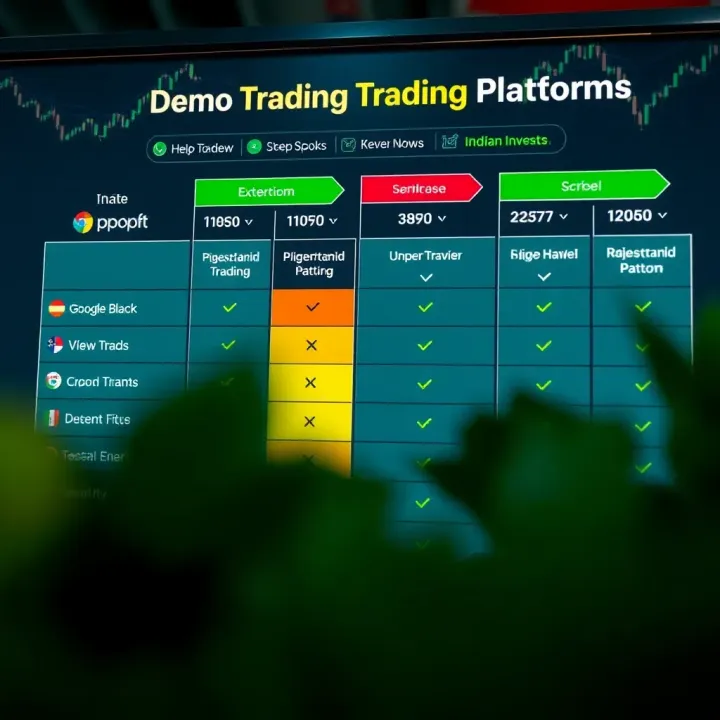
Demo trading apps offer Indian investors a safe environment to practise stock market operations without risking real money. This risk-free practice allows beginners and seasoned traders alike to finesse their techniques, explore different strategies, and understand market behaviours before committing actual funds.
A key advantage of demo trading apps is the ability to 'learn by doing' without losing capital. Indian investors new to equities or derivatives often hesitate to jump into live markets due to potential losses. Demo platforms simulate real-time trading with virtual money, enabling users to place orders, monitor price changes, and manage portfolios just like in the actual market. For example, a fresher using Zerodha's kite trading simulator can experiment with stock intraday strategies without fear of loss. This hands-on experience builds foundational skills effectively.
Demo apps expose users to the fast-moving nature of Indian stock exchanges like NSE and BSE, along with trading tools common on platforms such as Upstox and ICICI Direct. By interacting with live price feeds and order books, users grasp concepts like bid-ask spreads, order types (market, limit, stop-loss), and margin trading. Such familiarity helps traders interpret market signals and volatility. For instance, recognising how a sudden spike in volume affects price can sharpen decision-making in real markets.
Stepping into live trading can be daunting, especially when facing real losses. Practising on a demo app builds trader confidence by enabling trial and error without financial consequences. Many Indian investors use this phase to develop personal trading discipline, such as sticking to stop-loss limits or position sizing. Once comfortable, traders transition gradually to actual markets, reducing panic and impulsive decisions.
Practising on demo trading apps can prevent costly mistakes and give you the confidence to handle market ups and downs calmly.
In summary, demo trading apps empower Indian investors to learn trading basics, understand sophisticated market mechanisms, and build the mental resilience needed for live trading. This makes them essential stepping stones for anyone aiming to trade or invest wisely in India’s dynamic stock markets.
Picking the right demo trading app can make a big difference in how effectively you learn and practice trading. It’s not just about simulating trades but having the right tools and environment to understand market movements, try strategies, and build confidence before risking real money.
A simple and intuitive interface allows you to focus on trading rather than figuring out the app itself. Look for apps where the dashboard clearly displays essential information such as your virtual portfolio, charts, and order book without clutter. For example, Zerodha Kite’s demo platform is known for a clean design that eases beginners into trading, while also supporting advanced charting if you want to explore deeper analysis. When the app is responsive on both mobile and desktop, it suits traders who want flexibility and speedy navigation.
A good demo app should cover a variety of trading instruments to mimic real market conditions. Trading only stocks might limit your learning if you intend to move into derivatives such as futures and options or commodities like gold and crude oil. For instance, Upstox’s demo platform allows users to practise with equity, F&O, and commodities, giving a closer experience to live markets. This range helps you understand how different instruments behave under various market events.
Since your real trades will likely happen on Indian exchanges, demo apps must provide accurate market depth and pricing for the National Stock Exchange (NSE) and Bombay Stock Exchange (BSE). This integration means you get hands-on experience with actual order types, trading hours, and real-time market data. ICICI Direct’s virtual trading closely simulates NSE/BSE environments, helping investors familiarise themselves with Indian market regulations and trading practices.
Simulated market data that updates in real time is critical to keep your practice relevant and effective. Lagging or outdated prices can mislead decision-making and create bad habits. A demo app that replicates the speed of order execution found in live markets also prepares you for conditions where timing matters, such as day trading or scalping. Look for platforms that clearly show order status and slippage during busy market times.
Besides tools for trading, the best demo apps provide learning materials like tutorials, webinars, and guides specific to the Indian market context. For example, Zerodha Varsity offers in-depth articles and videos alongside its demo platform, enabling learners to combine theory with practice. Easy-to-access customer support also helps if you face technical issues or need guidance on app features.
Choosing a demo trading app that combines a user-friendly interface, wide market access, real-time data, and solid educational backing equips you well before stepping into actual investing.
Choosing the right demo trading app matters a lot for Indian investors, especially since market conditions and trading instruments vary widely here. Popular apps each bring their own strengths in terms of usability, real-time market data, and educational resources. Knowing these differences helps you pick a platform that fits your trading style and learning goals.
Zerodha's Kite trading platform paired with Varsity’s educational modules offers an integrated experience. Varsity walks you through basic and advanced trading concepts, while the Kite simulator lets you test these concepts without risking money. It supports stocks, futures, and options on Indian exchanges like NSE and BSE. The simulator reflects live market data closely, making it a favourite for traders wanting authentic practice. Plus, Zerodha’s low brokerage means familiarising yourself with their platform early helps smooth your transition to real trading.
Upstox delivers a user-friendly demo trading experience primarily geared toward active day traders and beginners. Its platform is known for fast trade executions and access to commodities, equities, and currencies in Indian markets. The demo setup replicates real-time prices and order flow, allowing you to practise spot and derivative trades efficiently. Integration with Upstox’s mobile app is also handy for on-the-go traders. With regular updates and beginner-centric tutorials, this platform suits investors looking for a hands-on approach.
ICICI Direct's virtual trading platform is ideal for users familiar with traditional banking and investment interfaces. It provides a comprehensive market experience covering equities, mutual funds, and derivatives with real-time data. The platform’s simulator lets you place orders and test strategies, making it easier to explore complex products like futures and options. ICICI Direct supports fund transfers and portfolio tracking, so you can compare demo performance alongside your actual investments in one place.
Apart from the top three, apps like 5Paisa and Groww also offer demo features worth exploring. 5Paisa’s demo mode emphasises affordability with minimal charges, suitable for cost-conscious investors who want to start cautiously. Groww, while primarily known for mutual funds, now includes stock trading simulators reflecting NSE market trends, ideal for beginners easing into equity trading.
Picking a demo trading app that matches your learning style and target markets can save you from costly mistakes when trading live. Always prioritise platforms offering real-time data, easy navigation, and thorough educational support.
Knowing the strengths and specific focus areas of these apps will help you practice smartly, giving you confidence before you commit real money to the markets.
Demo trading apps are valuable for practising without risking real money, but their benefits multiply when used thoughtfully. You need specific strategies to gain maximum advantage. This section explains how setting realistic goals, tracking performance, and planning your step into live trading help you sharpen skills and build confidence.
Start by defining clear, achievable targets for your demo trades. For example, aim to test a specific trading strategy or understand how order types like stop-loss work rather than chasing unrealistic profits. This approach keeps your focus sharp and prevents discouragement from inevitable simulated losses.
Set daily or weekly limits, such as the number of trades or a percentage change in your virtual portfolio. These limits mimic the discipline required in real markets and stop you from haphazard trading. For instance, decide to trade not more than 10 times a day or risk only up to 5% of your virtual capital in a single trade. Such self-imposed boundaries teach risk management early, especially important for Indian investors observing volatile markets in NSE or BSE.
Consistently record your trades, including entry and exit points, reasons for each trade, and outcomes. Use spreadsheets or the journal features some demo apps offer. This habit helps identify patterns—such as repeatedly selling too early or ignoring stop-loss rules.
After reviewing your trades, pinpoint mistakes and successes. Suppose you notice your strategy works well on blue-chip stocks like Reliance but falters on mid-cap stocks. This insight guides adjustments without losing real money.
Learning from simulated failures strengthens decision-making. It also conditions your mind against emotional errors—such as panic selling on small dips—that are common among new traders.
Switching from demo to live trading needs careful planning. Avoid the temptation to jump in with all you have in real markets. Instead, start small with a limited amount of capital, treating your initial live trades as an extension of your demo practice.
For example, if your demo portfolio was ₹10 lakh, begin live trading with ₹50,000 to ₹1 lakh. This reduces financial stress and helps you adjust emotionally to real losses or gains.
Remember, market conditions in a live environment can differ—orders might execute slower, and slippage can occur. Gradually increasing your investment as you get comfortable preserves capital and helps internalise lessons learned from the demo phase.
Practising with a demo trading app is not just about making virtual profits but about building a thinking process, discipline, and realistic expectations that smoothen your live trading experience.
By following these tips, Indian investors and traders can turn demo trading from a simple practice tool into a stepwise journey towards confident, informed market participation.
Explore top trading apps for Indian investors 📱 Find how to choose the best platform with security, features, user experience and investment goals in mind.

📈 Explore demo share market apps to practise trading risk-free, master strategies, and get familiar with Indian market trends before investing real money. 💹

Choose the best trading sites for equities, commodities & currencies with our practical guide for Indian investors 🔍 Compare features, fees, security & support effectively.
Explore the best trading apps in India 📱, comparing features, fees, and ease of use to find the right fit for beginners and experienced investors alike 📈.
Based on 12 reviews