
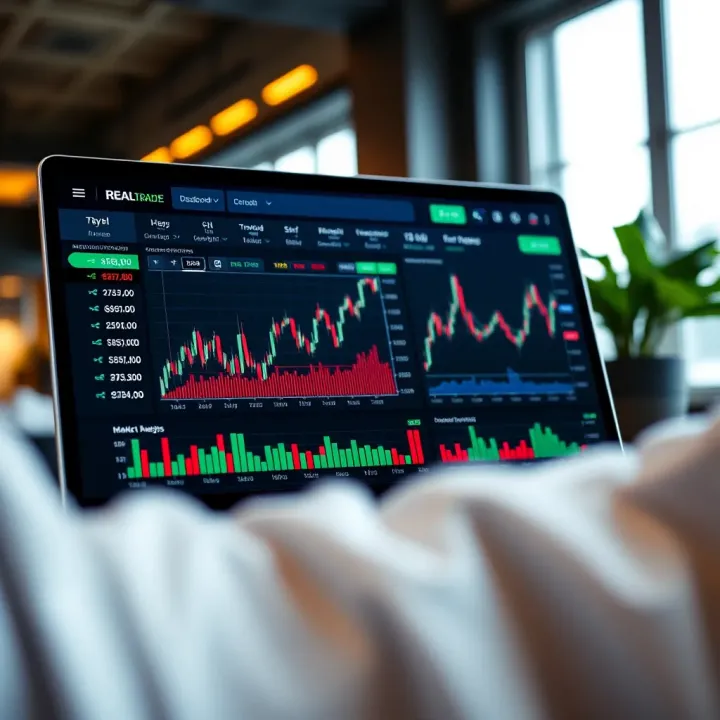
Understanding Real Trade Apps: Features & Benefits
📱 Discover the key features, benefits, and user insights of real trade apps popular in India. Learn how to choose and use them securely for smarter trading.
Edited By
Henry Dawson
Forex trading apps have transformed the way traders engage with the currency market, especially in India where timely access to real-time data is vital. These apps let you buy, sell, and monitor currency pairs right from your mobile device, making trading more flexible and accessible than ever.
Such apps typically combine a range of tools—live price charts, technical indicators, and news feeds—that help you make informed decisions quickly. For example, if you follow the USD/INR pair, instant updates on price movements can be critical to capitalise on small market shifts.
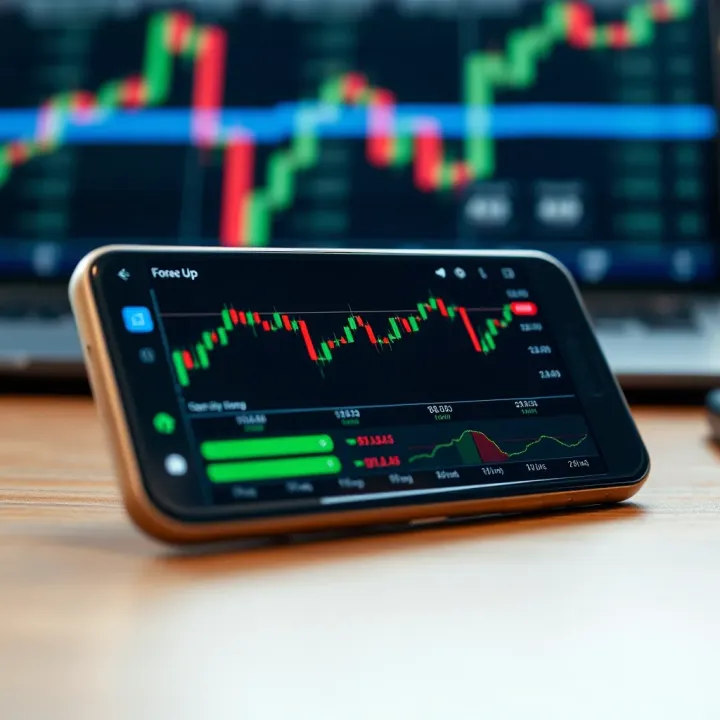
The convenience of trading on-the-go means you no longer have to be tied to a desktop or brokerage office. Many Indian traders now prefer apps to capture intraday opportunities or hedge against currency fluctuations ahead of forex market hours.
Besides ease of use, these apps often offer features like one-click order execution, risk management settings, and customised alerts. Traders can integrate Indian payment gateways or UPI (Unified Payments Interface) for smooth fund transfers.
That said, forex trading through apps also carries risks—volatile markets, fluctuating spreads, and potential connectivity issues may lead to losses if you're not cautious. Hence, understanding app reliability, regulation compliance, and security measures is crucial.
In this article, we'll explore what makes forex trading apps tick, what benefits they bring, and how you can pick the right one that matches your trading style and risk appetite. We will also spotlight popular apps known for serving Indian forex traders effectively.
Grasping the basics of forex trading and understanding how mobile platforms fit into this landscape is key for any trader aiming to navigate currency markets confidently. Mobile apps have transformed trading by making currency exchange accessible on-the-go, but knowing how the forex market operates remains the foundation.
How currency trading works: Forex trading involves exchanging one currency for another in a global market that operates 24 hours a day from Sunday evening to Friday night (IST). Traders aim to profit from changes in currency exchange rates driven by economic events, geopolitical developments, or market sentiment. For example, an investor might buy US dollars against the Indian rupee if they expect the dollar to strengthen due to positive US economic data. Understanding this basic mechanism helps traders strategise their entries and exits.
Major currency pairs and market hours: Currency pairs like EUR/USD (Euro vs US Dollar), USD/JPY (US Dollar vs Japanese Yen), and GBP/USD (British Pound vs US Dollar) dominate forex trading worldwide. These pairs are highly liquid and react quickly to global news. Market hours matter because currency markets open first in Asia (around 5:30 pm IST), then Europe, and finally the US, making certain trading times more volatile. Indian traders might prefer active hours aligned with London or New York sessions for better trading opportunities.
Forex market participants and factors affecting currency values: Key players include central banks, commercial banks, hedge funds, corporations, and retail traders. Central banks, like the Reserve Bank of India (RBI), influence currency values through monetary policy and interventions. Factors like interest rates, inflation, political stability, and economic indicators directly impact currency strength. For instance, a hike in RBI’s repo rate can cause the rupee to strengthen against other currencies.
Shift from desktop to mobile trading: Traditionally, forex trading was limited to desktop platforms requiring fixed setups and high-end hardware. The rise of smartphones has changed this, allowing traders to buy and sell currencies anytime, anywhere. This shift suits India’s growing mobile internet penetration, giving traders the flexibility to act swiftly during market movements without being tied to a desk.
Role of apps in increasing market accessibility: Forex trading apps bring real-time data, user-friendly interfaces, and instant order execution to users’ fingertips. Features like push notifications for price alerts or economic news help traders stay updated and seize opportunities quickly. This accessibility widens participation from seasoned traders to new investors who might find desktop platforms complex or intimidating.
Growth of forex trading in India through mobile platforms: India’s forex market is expanding, partly driven by retail traders exploring currency trading as an alternate income source. Mobile apps from Indian brokers provide compliance with SEBI (Securities and Exchange Board of India) and ease in fund transfers through UPI or net banking, simplifying access. With growing awareness and technology adoption, mobile forex trading is steadily gaining traction across metropolitan and tier-2 cities alike.
Mobile apps have reshaped forex trading in India by blending convenience with powerful tools, but solid knowledge of market basics remains essential for success.
This section lays the groundwork for understanding forex trading mechanics and how mobile platforms amplify trading possibilities in today’s market environment.
A reliable forex trading app serves as the backbone for traders aiming to execute their strategies smoothly from their mobile devices. Given the fast-paced nature of forex markets, apps must pack practical features that not just simplify trading, but also provide critical data and security. This section outlines those essential features traders should seek to make informed choices.
An intuitive design in a forex app allows even beginners to navigate complex currency charts and trading options without getting lost in technical jargon. For instance, a clean layout with clearly labelled buttons helps prevent costly mistakes like placing wrong trade orders. This ease of navigation becomes especially crucial during volatile market hours when speed matters.
Customisable charts and layouts add flexibility by letting traders tailor the view to their own strategies. A trader focusing on short-term scalping might want to display candlestick charts with specific timeframes, while a swing trader could prefer line charts highlighting weekly trends. The ability to rearrange charts and store presets improves efficiency and reduces the time spent setting up before making decisions.
Forex markets can shift within seconds, so live price feeds and up-to-date market news included in the app ensure that traders react to changes promptly. For example, apps that stream news related to RBI policies or geopolitical events impacting the rupee allow Indian traders to stay ahead.
Notification settings for trade opportunities enable users to configure alerts for specific price levels or technical signals. Instead of constantly monitoring the screen, traders receive immediate prompts, such as when the EUR/USD pair hits a resistance level. This proactive approach reduces missed opportunities and supports timely reactions.
The variety of supported order types, such as market, limit, stop-loss, and take-profit orders, lets traders execute their strategies with precision. For example, placing a stop-loss order automatically cuts losses if the market moves unfavourably, which is vital for risk management.
Speed and reliability in trade execution mean minimal delay between pressing 'buy' or 'sell' and order completion. Apps that experience lag or downtime risk slippage, affecting profitability. Top-performing apps prioritise stable servers and quick execution even during market surges.
Encryption and data protection safeguard sensitive information like bank details and trading history from hackers. For instance, multi-factor authentication strengthens login security, protecting against unauthorised account access.
Regulatory approvals and licensing from authorities such as SEBI certify that the app complies with Indian laws. Traders should always verify broker credentials to avoid platforms with no proper authorisation, which might pose legal and financial risks.
Technical indicators, such as RSI or Bollinger Bands, integrated within the app help traders analyse market trends and identify entry or exit points without relying on external software. Interactive chart analysis tools enhance strategy accuracy.
Educational resources, including tutorials and articles embedded within the app, support traders in sharpening their skills. Novices can quickly learn terms like ‘pips’ or ‘leverage’, while seasoned traders can refine advanced techniques, all within the same platform.
Choosing a forex trading app packed with these features not only empowers traders in India to trade effectively but also safeguards their investments in a highly dynamic market environment.
Forex trading apps have transformed how investors access currency markets, offering both notable advantages and some challenges. Understanding these helps traders make informed decisions about relying on mobile platforms for forex trading.
Convenience and accessibility are the standout features of forex apps. You no longer need a desktop setup or to be tied to a specific location. Whether you're travelling across India or even juggling daily chores at home, you can check live currency rates and place trades from your smartphone. For example, a trader in Pune might monitor the USD/INR pair while on the go, seizing opportunities that arise even during extended market hours.
Apps also provide faster decision-making and trade execution. In forex markets, where prices can shift within seconds, being quick is essential. Mobile apps typically send real-time alerts on price swings, letting you act promptly without the delay that might come with traditional desktop platforms. This responsiveness is particularly useful during volatile times, like central bank announcements, helping you enter or exit positions swiftly.
Another perk is lower costs compared to traditional platforms. Mobile forex trading apps often come with minimal or zero account maintenance charges, and tighter spreads. Many Indian brokers offer apps with low transaction fees, making it affordable even for small traders. For example, apps from brokers like Zerodha or ICICI Direct make trading more accessible by trimming some of the customary brokerage costs found in manual trading.
Despite these benefits, there are inherent risks. Market volatility and leverage risks remain significant concerns. Forex trading involves leverage, meaning you can control large amounts with small capital. While this can amplify profits, it equally magnifies losses. A sudden rupee depreciation or geopolitical event can quickly turn trades against you, especially if you over-leverage without proper safeguards.
Technical problems like connectivity issues and app crashes also affect trading reliability. Mobile networks in some areas might be unstable, causing delays or failed order executions. Imagine trying to close a losing position only to find your app stuck or disconnected—this can lead to bigger losses. Hence, having a backup internet connection or desktop option can be a safety net.
Security concerns and fraud risks are another challenge. With forex scams occasionally surfacing in India, it's vital to use apps from regulated brokers. Personal data, bank details, and transaction info are vulnerable if the app lacks strong encryption or proper regulatory oversight. Always check for licence credentials from SEBI or RBI and user reviews to avoid falling prey to phishing or unauthorised access.
Choosing a forex trading app means balancing convenience with risks. Awareness and careful selection of trustworthy apps help you use mobile trading effectively and safely.
Understanding these advantages and challenges helps traders adopt mobile forex trading with confidence, making the most of available features while managing its risks.
Selecting the right forex trading app can significantly impact your trading success and ease of use. It's not just about picking the trendiest or most popular app; your choice should align with your trading style, risk tolerance, and the features crucial to your approach. For example, a day trader might prioritise fast execution and detailed charts, while a beginner may prefer educational resources and straightforward navigation.
Apps vary widely in functionality, security, costs, and customer support. Understanding these differences helps you avoid pitfalls like hidden fees, unreliable trade executions, or poor regulatory compliance that could jeopardise your investments.
India has clear guidelines from the Securities and Exchange Board of India (SEBI) and the Reserve Bank of India (RBI) concerning forex trading apps. SEBI monitors investment platforms to protect traders from fraud and malpractice, while the RBI sets currency trading limits and rules. Choosing an app that follows these regulations assures your trading activity is legal and protected.
Many apps that offer forex trading abroad operate outside SEBI's jurisdiction, which might expose users to unregulated brokers and increased risks. It's crucial to verify that the app complies with RBI's forex trading rules, including restrictions on currency pairs Indian residents can trade.
Checking broker credibility is another vital step. Licensed brokers registered with SEBI usually maintain transparency and have safeguards like client fund segregation. User reviews and industry reputation provide clues about the broker’s reliability, but always cross-check with official SEBI listings.
Without proper licences, brokers might delay withdrawals or manipulate pricing. For instance, platforms like Zerodha and ICICI Direct, offering forex trading services within regulatory frameworks, provide added trust and legal protection.
Your trading goals should steer your choice of app features. Active traders will need real-time data, advanced charting tools, and various order types. Meanwhile, casual investors might value simple interfaces and educational support.
For example, an app like Upstox offers comprehensive charts and fast execution suited for active trading, whereas Groww is more beginner-friendly with easy navigation and informative tutorials.
User reviews and expert ratings provide valuable insights about an app's strengths and issues, such as bugs or customer service quality. Checking multiple sources ensures you get a thorough picture beyond marketing claims. Apps with consistent positive feedback for reliability and smooth operation usually serve traders better.
Trading costs directly affect your profitability. Look closely at transaction fees, spreads (the gap between buy and sell prices), and commissions. Lower spreads reduce your breakeven point, crucial for intraday or high-frequency traders.
Some apps might offer zero commission but widen spreads, which still raises your costs. Be aware of these nuances— apps like Angel Broking provide competitive pricing suited for smaller investors.
Customer support availability matters, especially if trading in volatile markets. Quick, knowledgeable assistance can save you from costly mistakes. Indian traders often prefer apps offering multiple support channels like phone, chat, and email, with prompt resolutions even during off-market hours.
Choosing a forex app that balances compliance, features, cost, and support tailored to your needs helps build confidence and control in your trading journey. Take time to research and test apps, using demo versions when possible, before committing your capital.
For traders in India, choosing the right forex trading app is more than just picking one that looks good or promises low fees. It's about finding a platform that matches your trading style, offers reliable features, and complies with Indian regulations. The Indian forex market has seen a surge in mobile platforms, making it easier for retail investors and day traders to access global currency markets anytime, anywhere.
When talking about top forex trading apps used in India, platforms like Zerodha Kite, Upstox Pro, and Angel Broking Mobile App come to mind. These apps stand out due to their user-friendly interfaces, real-time market data, and robust charting tools that cater to both beginners and experienced traders.
For example, Zerodha's Kite app offers advanced charting with over a hundred technical indicators and seamless order placement. Similarly, Upstox Pro is known for its lightning-fast trade execution and intuitive navigation, which traders find handy during volatile market hours.
Compatibility is another key factor. These leading apps support both Android and iOS devices, ensuring most Indian users can access them. Besides mobiles, many offer browser-based platforms, allowing traders to switch devices without losing workflow. For instance, Angel Broking's app and web version sync your watchlists and trade history, which adds convenience.
When evaluating pricing and commissions, it's essential to look beyond just zero or low brokerage claims. Zerodha typically charges ₹20 per executed order for intraday trades but offers free equity delivery trades. Upstox has similar pricing but may charge extra for access to certain advanced features or data packs. Traders should consider their trading frequency and style when choosing, as costs can add up differently.
Security remains a top concern. These apps use two-factor authentication and bank-grade encryption to protect user data. Regulatory compliance with SEBI (Securities and Exchange Board of India) guidelines ensures that brokers behind these apps maintain accountability. Traders should prefer apps from SEBI-registered brokers to avoid fraud.
Educational resources and customer support vary too. Zerodha, for one, runs Varsity—an extensive online learning portal integrated within their app, which helps newcomers grasp forex nuances. Angel Broking offers proactive customer service through chat and call centres, which comes handy when resolving technical difficulties or trade disputes. Strong support and learning materials are vital to build trader confidence and competence.
Choosing a forex trading app in India boils down to balancing feature needs, cost, security, and learning support. A well-rounded app can help you react quickly to market changes while managing risks effectively.
Ultimately, understanding the offerings of popular forex trading apps in the Indian market can save you time and money. It helps you trade confidently with the right tools, backed by solid support and regulatory safety nets.
Trading on mobile forex apps demands more than just picking the right platform; it requires solid strategies to manage risks and stay updated. Successfully navigating forex markets hinges on skills like managing losses, adapting quickly to market shifts, and using built-in tools efficiently.
Using stop-loss and take-profit orders is key for risk management. A stop-loss order automatically closes your position when the price hits a certain point, limiting your losses if the market suddenly turns against you. On the other hand, a take-profit order locks in profits by closing your trade once it reaches your target price. For example, if you buy the USD/INR pair at ₹75 and set a stop-loss at ₹74.5, the app will sell automatically to prevent further loss if the price drops. This approach helps prevent emotional trading decisions when markets move fast.
Limiting leverage exposure also plays a vital role in trading safely on mobile. Leverage lets you control larger amounts of currency with a smaller capital outlay, but it amplifies both gains and losses. Indian regulators and brokers often recommend beginners to use low leverage, say 1:10 or less, to avoid wiping out their capital quickly. Overusing leverage can lead to margin calls or forced closure of trades, especially when volatility spikes. Staying within comfortable leverage limits protects your portfolio and keeps stress manageable.
Following market news and economic indicators is essential to anticipate currency trends. Forex prices respond heavily to events such as RBI interest rate decisions, inflation figures, or geopolitical developments. Many apps integrate live news feeds and economic calendars, helping you track key reports like India's GDP growth, CPI inflation, or US nonfarm payroll data. Staying alert to these updates prevents surprises and lets you adjust your trades based on fundamental factors.
Utilising app notifications effectively ensures you don’t miss critical market moves. You can set alerts for price levels, news events, or order executions, ensuring timely actions even when you’re away from your phone. For instance, getting a notification when EUR/USD hits your target price can prompt you to close the trade and secure profits. Customising alerts adds convenience and sharpens your responsiveness.
Simulated trading through demo accounts provides a risk-free environment to learn forex basics and test strategies. These accounts use virtual money, allowing you to experience how market orders, charting, and executions happen without risking real capital. Many Indian traders start here to build confidence and understand price movements before engaging with live trades.
Besides practising trades, demo accounts help you learn app features thoroughly. Forex apps often have several tools, settings, and chart options that might overwhelm new users. Exploring these in demo mode familiarises you with interface layouts, order types, and analytics. This hands-on experience makes live trading smoother and less prone to costly errors.
Consistent practice, risk control, and staying updated form the backbone of successful mobile forex trading. Taking advantage of app tools wisely can significantly improve your trading outcomes.
📱 Discover the key features, benefits, and user insights of real trade apps popular in India. Learn how to choose and use them securely for smarter trading.
Explore RBI-approved forex trading apps in India 🇮🇳 Learn how to trade safely, understand legal guidelines, and pick the right platform with ease 📱💰
Discover how RBI approved forex trading apps in India ensure safe, legal currency trading 💱, their top features, benefits, and key compliance tips 🔒.
Explore RBI-approved forex trading apps 🇮🇳 for Indian traders. Learn the rules, find safe platforms, and trade currencies confidently and legally 💹.
Based on 10 reviews