

EUR USD Forecast: Trends and Expert Outlook
📉 Explore the EUR USD forecast with expert take on economic data, geopolitical risks, and monetary moves shaping this currency pair's trend. Trade smarter!
Edited By
Charlotte Hughes
The EUR/USD currency pair ranks as the most traded forex pair globally, representing the exchange rate between the Eurozone's euro and the United States dollar. Understanding its over-the-counter (OTC) live chart offers traders and financial analysts a unique window into real-time price movements outside formal exchanges like forex futures markets.
Unlike standard exchange-traded platforms, the EUR/USD OTC market operates chiefly through decentralized, bilateral transactions between banks, brokers, and institutional players. This results in a live chart that captures actual demand and supply dynamics more directly, reflecting broker-specific quotes and interbank activity. For instance, a large Indian bank's forex desk monitoring the OTC EUR/USD chart will see price changes based on their liquidity pools rather than aggregated exchange data alone.
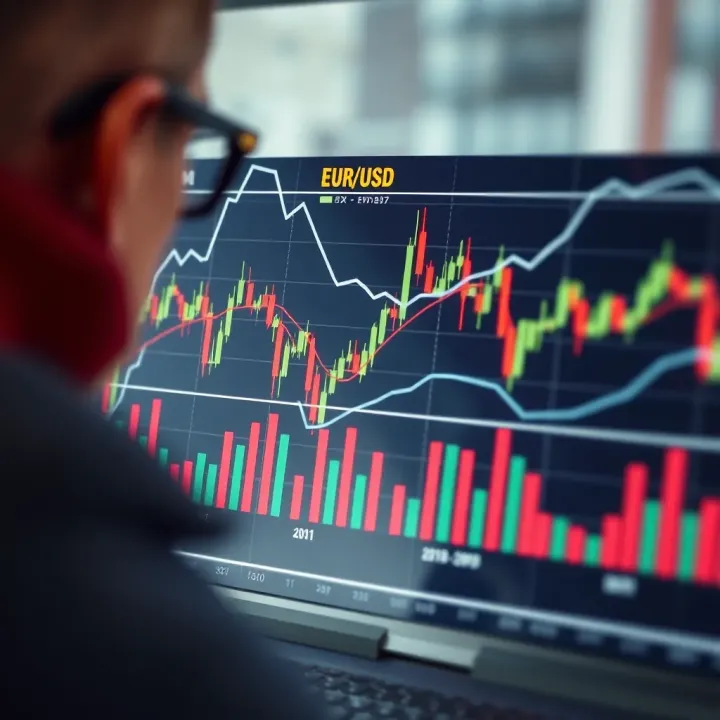
OTC charts typically show slightly different pricing and volume patterns due to this decentralisation, making them invaluable for traders seeking a comprehensive picture beyond exchange order books.
Key factors driving the EUR/USD OTC live chart include interest rate decisions by the Reserve Bank of India (RBI) and the U.S. Federal Reserve, Eurozone economic indicators, geopolitical developments, and market sentiment shifts. Traders tracking these can spot subtle price shifts ahead of broader exchange-traded market reactions.
To make the most of the EUR/USD OTC chart, focus on:
Price trends and support-resistance zones visible on real-time tick data
Volume patterns signalling liquidity surges or drops
Correlations with major Indian economic events like RBI policies and trade balance updates
By analysing these elements, day traders and investors alike can refine entry and exit points, manage risk better, and align trades with prevailing market flows. Especially in volatile sessions around global economic releases, the OTC live chart provides on-the-ground price action that may not yet register fully on exchange-traded platforms.
In summary, the EUR/USD OTC live chart serves as a powerful tool for traders who want to deepen their insight into forex price movements rooted in the real-world flow of funds. With a clear grasp on its workings, you can enhance decision-making in this globally significant currency pair.
The EUR/USD OTC live chart offers a real-time snapshot of the price at which the Euro and US Dollar are traded over the counter (OTC). Unlike exchange-traded data, this chart reflects prices negotiated directly between participants such as banks, hedge funds, and large corporations, without a central exchange. For traders, understanding this chart is vital as it shows true market sentiment and liquidity that might not always be visible on exchange-traded platforms.
The Euro (EUR) and the US Dollar (USD) are two of the most widely used currencies in the world. The Euro serves as the common currency for 20 European countries under the Eurozone, while the US Dollar is the primary reserve currency globally. Their pairing reflects transactions between these economic zones, making it a dominant currency pair in forex trading. For example, an Indian importer paying a European supplier might monitor the EUR/USD rate closely to optimise timing on payments.
The EUR/USD pair is the most actively traded in global forex markets, accounting for roughly 20% of all forex volume. Its high liquidity means tight spreads and lower transaction costs, crucial factors for day traders and investors alike. Even small price fluctuations can impact portfolios significantly, warranting continuous observation through live charts for timely decisions.
Foreign exchange trading happens mainly in two venues: exchange-traded and over-the-counter (OTC). Unlike exchange-traded currencies, which operate on structured exchanges like the Chicago Mercantile Exchange (CME), OTC trading occurs directly between parties. In the OTC market, trades are customised, flexible, and can happen 24/5, unlike exchange-traded ones that adhere to fixed hours and standard contracts.
For the EUR/USD pair, the OTC market forms the bulk of trading volume. Banks and financial institutions trade enormous sums of EUR/USD OTC, influencing global liquidity and price movements. This market allows traders to access more flexible pricing and size options, which is especially useful for institutional investors who demand large orders. Hence, the EUR/USD OTC live chart reflects this deep and dynamic market, providing a practical tool for understanding actual trading flows outside formal exchanges.
The EUR/USD OTC live chart essentially puts you in touch with the real-time pulse of the forex market beyond exchange walls, helping you gauge pricing that involves major global players directly.
In summary, grasping what the EUR/USD OTC live chart represents helps traders interpret price movements accurately and make informed trading choices based on how the largest FX market segment behaves.
The EUR/USD OTC live chart offers traders and analysts a window into the continuous, dynamic price action occurring outside formal exchanges. Understanding its key features helps you track real-time changes and make informed decisions in a market that never truly sleeps. This live chart is tailored to capture the unique behaviours of the over-the-counter (OTC) forex market, where transactions happen between participants directly rather than through an exchange.
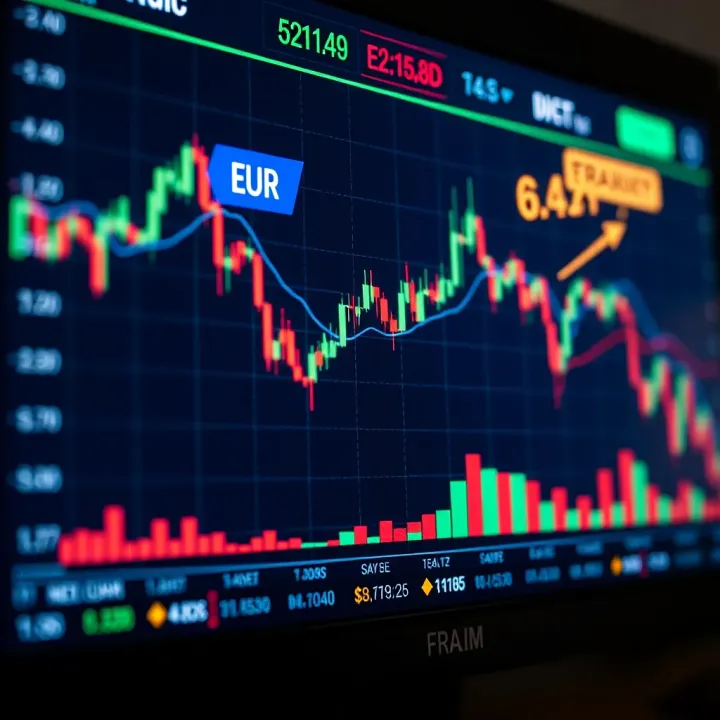
Understanding bid, ask, and last prices is essential for interpreting the live chart. The bid price shows what buyers are willing to pay for the euro against the US dollar, while the ask price indicates what sellers want. The last price reflects the most recent transaction. For example, if the bid is ₹87.50 and the ask is ₹87.52, you know the spread is ₹0.02, which tells you about the liquidity and trading costs. Traders use this info to decide entry or exit points with greater precision.
The live chart updates prices throughout the trading day, reflecting market changes as they happen worldwide. Since the OTC forex market operates 24 hours between global financial centres like London, New York, and Singapore, price feeds refresh almost instantly. This continuous updating enables day traders and scalpers to react quickly to news or sudden shifts in sentiment. A delay of even a few seconds may mean missing a trading opportunity in such a fast-moving environment.
Common chart styles in OTC forex trading typically include line, bar, and candlestick charts. Candlestick charts are popular among Indian traders because they provide detailed price action, showing open, high, low, and close values in a compact visual form. This helps in easily spotting patterns such as bullish engulfing or doji candles, which hint at potential reversals or continuations.
Choosing the right time frame is equally crucial. Short-term traders usually rely on 1-minute to 15-minute charts to catch tight moves, while swing traders monitor hourly or daily charts for broader trends. For instance, a trader might use a 5-minute candlestick chart for scalp trades during Mumbai’s peak trading hours but switch to a 4-hour chart to evaluate bigger trends during quieter times. Selecting the right timeframe depends on your trading strategy and the kind of moves you want to capture effectively.
Knowing these key features allows you to interpret EUR/USD OTC live charts like a pro, improving your timing and confidence when trading this major pair.
Understanding the differences between OTC (over-the-counter) charts and exchange-traded market charts helps traders and investors make better decisions when analysing the EUR/USD currency pair. Each type reflects distinct market mechanisms and trading conditions, which influence price movements and liquidity. Knowing these nuances is key to interpreting the data correctly and choosing the right platform for your trading strategy.
Liquidity plays a big role in determining price spreads on both OTC and exchange platforms. In exchange-traded markets, such as those on the CME or Euronext, liquidity tends to be higher due to the concentration of buyers and sellers, leading to tighter bid-ask spreads. For example, during peak trading hours, the spread on EUR/USD futures might be as low as 0.5 pips. In contrast, OTC markets often have wider spreads because liquidity depends on individual broker-dealer relationships and the volume they handle. This can mean paying a higher cost to enter or exit positions.
Price discrepancies between OTC and exchange data also exist because the OTC market is decentralised. While exchange data reflects transactions on a centralised electronic system, OTC prices come from a network of banks, brokers, and market makers. For instance, a small price difference can arise if a bank quotes a EUR/USD rate slightly above or below the official exchange due to its inventory or risk appetite. Traders relying solely on exchange prices might miss these subtle differences, which can impact their decision on the best time to trade or hedge positions effectively.
OTC markets operate almost 24 hours, starting from the Asia-Pacific sessions through to the US close, which allows continuous trading across time zones. Exchange trading hours, however, are limited and usually follow strict opening and closing times. For EUR/USD futures on the CME, trading typically pauses overnight except for electronically enabled sessions. This means OTC charts can provide uninterrupted price information, which suits active day traders or those in different time zones looking to react quickly to news.
Transparency and regulation mark another distinction between the two. Exchanges are highly regulated and provide centralised clearing and reporting, which means price discovery and trade execution are generally verifiable and consistent. OTC markets, being decentralised, vary in transparency depending on the dealer or platform. This can lead to differences in reported prices and volumes, making it essential for traders to use reliable data sources. For example, a trader using a respected OTC platform with robust reporting standards might gain a clearer picture of market depth than one relying on a less transparent broker.
Accurate interpretation of EUR/USD OTC charts requires understanding these differences, especially liquidity, timing, and transparency aspects. This knowledge helps traders choose the market type that aligns with their trading style and risk tolerance.
In summary, while both OTC and exchange-traded charts provide valuable insights, their features cater to different needs. Exchange-traded charts offer tighter spreads and regulated environments but limited hours. OTC charts offer round-the-clock access with potentially wider spreads and variable transparency, but with flexibility ideal for global participants.
Movements on the EUR/USD over-the-counter (OTC) live chart react primarily to a mix of macroeconomic data, geopolitical developments, and trader sentiment. Understanding these factors can help traders anticipate volatility and identify potential entry or exit points. Since the OTC market is less regulated and more fragmented than exchange-traded forex, price reactions can sometimes be more pronounced, making careful attention to these drivers essential.
Economic reports such as Gross Domestic Product (GDP), inflation rates, and employment data significantly impact EUR/USD pricing. For instance, a stronger-than-expected US non-farm payroll report typically boosts the USD against the euro, causing the exchange rate to decline on the OTC chart. Similarly, if Eurozone inflation rises sharply, it may push the euro higher as investors anticipate tighter monetary policy.
Central bank decisions also play a vital role. The Reserve Bank of India (RBI) holds no direct influence here, but the European Central Bank (ECB) and the US Federal Reserve decisions shape market sentiment worldwide. Announcements of interest rate hikes or cuts lead to swift price moves on the OTC chart. Geopolitical events, such as EU political developments or US trade tensions, add further unpredictability, causing sudden spikes or dips as traders react to changing risk perceptions.
Trader sentiment can sway OTC prices beyond fundamental values. For example, during a risk-off period caused by global uncertainty, investors might flock to the US dollar as a safe haven, pushing EUR/USD lower even if no new data emerges. On the flip side, optimism about Eurozone economic recovery can support the euro.
Technical analysis tools help traders interpret the live OTC chart to make informed decisions. Indicators like moving averages smooth out short-term fluctuations and highlight trends, while Relative Strength Index (RSI) shows overbought or oversold conditions. Spotting chart patterns such as head and shoulders or double bottoms can provide clues about potential reversals or continuations. Using these alongside awareness of market sentiment offers a more rounded approach to trading EUR/USD in the OTC space.
Keeping an eye on both economic signals and market psychology equips you to navigate the often volatile EUR/USD OTC market with greater confidence.
By combining news awareness with technical study, traders can better understand and anticipate movements on the EUR/USD OTC live chart, improving their timing and risk management.
Using the EUR/USD over-the-counter (OTC) live chart effectively can make a real difference in your trading decisions. This chart captures price movements in the absence of an exchange, reflecting real-time quotes from diverse market makers. For traders, it provides a more flexible, sometimes more immediate picture of the market, especially during hours when exchanges might be closed or less liquid.
One of the most practical skills when working with the EUR/USD OTC live chart is recognising key trends. An upward trend, marked by a series of higher highs and higher lows, suggests buying strength. Conversely, a downward trend signals selling pressure. Support levels act like floors where price tends to stop falling and bounce back, while resistance levels are ceilings where price often stalls or reverses. Spotting these levels on the live chart helps traders set entry and exit points effectively.
For example, if EUR/USD drops near a historical support level of 1.10 and shows signs of holding, a trader might consider buying, expecting a bounce. If the pair breaks below this support decisively, it might signal further downside. Such pattern reading can be especially useful in the OTC market, where price swings can be sharp and timing precise.
Indicators add a layer of analysis beyond pure price action. Moving averages smooth out price fluctuations and help identify the direction of the trend. For instance, if the 50-period moving average crosses above the 200-period moving average (a ‘golden cross’), it can indicate a bullish trend developing.
The Relative Strength Index (RSI) measures momentum and flags overbought or oversold conditions. RSI above 70 typically suggests the pair is overbought and may face a pullback, while RSI below 30 indicates oversold conditions, possibly signalling a rebound. Combining these indicators lets traders filter noise from the OTC chart and make informed decisions.
The effectiveness of your trading relies heavily on the quality of live data. Market participants in India often turn to platforms like MetaTrader 4 (MT4), MetaTrader 5 (MT5), and TradingView, which offer access to EUR/USD OTC live charts with reliable feeds. Forex brokers regulated by authorities such as the Securities and Exchange Board of India (SEBI) or internationally recognised bodies tend to provide more accurate and timely OTC data.
Choosing a platform that aggregates data from multiple liquidity providers reduces the chances of price gaps or misleading quotes, which are common pitfalls in OTC trading. For instance, using a broker-backed platform that pulls prices from several banks and dealers ensures you see a comprehensive picture.
In OTC forex markets, even slight delays or inaccuracies in price data can lead to missed trades or losses. It’s crucial to pick sources with low latency feeds — this means price updates come through quickly after trades happen.
Verify the platform’s update frequency and check if it offers alerts or notifications for rapid shifts. Many advanced charts also allow visualising volume alongside price, helping detect unusual activity or potential reversals. Before trusting any live chart, compare it with benchmark sources, such as exchange-traded EUR/USD quotes or NSP dashboards (for Indian context), especially during major economic announcements.
Reliable, real-time data and clear chart interpretation together make the EUR/USD OTC live chart a powerful tool for traders aiming to capitalise on forex market moves confidently and promptly.
📉 Explore the EUR USD forecast with expert take on economic data, geopolitical risks, and monetary moves shaping this currency pair's trend. Trade smarter!

📊 Stay updated with today's EUR/USD forecast including key economic data from the Eurozone & US, market trends & expert views shaping currency moves.
📊 Learn how Quotex fits into the OTC market, its trading features, risks, and benefits. Get key insights for Indian traders eyeing OTC assets safely.

📈 Discover the AUD to USD forecast! Explore key economic indicators and market trends shaping the exchange rate for traders, investors, and businesses alike.
Based on 8 reviews