

Understanding Derivation: Meaning and Uses
Explore derivation's role in language, maths, science & engineering 🧪📐. Learn practical methods and examples tailored for India’s curious minds and professionals.
Edited By
George Bennett
Derivatives are financial contracts whose value depends on an underlying asset like stocks, commodities, interest rates, or currencies. They serve as tools for managing risk, speculating on price movements, and improving market efficiency. In India, derivatives trading primarily happens on recognised stock exchanges like the National Stock Exchange (NSE) and Bombay Stock Exchange (BSE).
Understanding derivatives involves grasping their structure, types, and practical uses. Unlike outright buying or selling of assets, derivatives allow exposure with less capital, often through leverage, which can magnify both profits and losses. This makes derivatives essential not just for institutional investors but also for traders and brokers who seek to optimise their strategies.
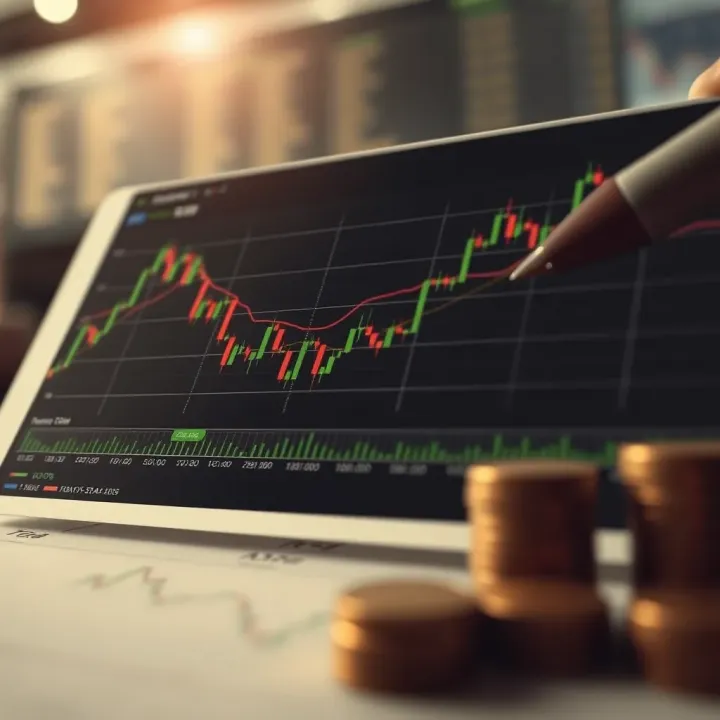
Derivatives act as financial safety nets—enabling market participants to protect themselves against price fluctuations while offering opportunities to capitalise on market movements.
Risk Management: Businesses like exporters use currency futures to hedge against forex volatility.
Price Discovery: Futures contracts help establish fair prices for commodities such as crude oil or gold.
Liquidity: Derivatives bring more participants into the market, aiding volume and price stability.
Futures: Agreements to buy or sell an asset at a predetermined price on a future date.
Options: Contracts granting the right, but not the obligation, to buy or sell assets within a set timeframe.
Swaps: Arrangements to exchange cash flows or liabilities, popular among banks and corporations.
This article will explore these instruments in depth, showing how traders and investors use them within India’s regulatory framework. We will also examine challenges including market volatility, regulatory compliance under SEBI (Securities and Exchange Board of India), and risks involved in derivative trading.
Having a clear grasp of derivatives is indispensable for anyone involved in financial markets, especially as India’s derivative industry grows steadily, linking domestic markets to global trends.
Understanding financial derivatives is vital for traders, investors, and financial analysts because these instruments allow managing risks and speculating effectively in volatile markets. Derivatives derive their value from an underlying asset, such as stocks, commodities, currencies, or indices. They help participants lock in prices, hedge against losses, or gain exposure to specific markets without owning the actual asset.
A derivative is a financial contract whose price depends on the value of an underlying asset. It itself holds no independent value but tracks the performance or price movement of something else. Common examples include futures, options, swaps, and forwards. These contracts enable buyers and sellers to manage exposure to price changes, whether protecting a farmer from falling crop prices or an investor betting on currency moves.
The primary difference lies in ownership and risk exposure. When you buy shares of a company, you own a piece of that company and bear the associated rights and risks. In contrast, a derivative contract only reflects price changes without conferring ownership of the actual asset. For instance, purchasing a futures contract on gold means you have the right and obligation to buy or sell gold at a future date but don’t possess the physical gold until settlement.
Derivatives operate through standardised or customised contracts between two or more parties. These contracts specify terms like quantity, price, expiry date, and the underlying asset. For example, in a currency forward contract, two parties agree today to exchange a specific amount of one currency for another at a future date, locking in the exchange rate. This helps businesses avoid surprises in fluctuating forex markets.
Settlement occurs either by delivering the actual underlying asset (physical settlement) or by paying the difference in cash (cash settlement). Commodity futures, like wheat or crude oil, often involve physical delivery if contracts are held till expiry. On the other hand, index futures on Nifty or Sensex typically settle in cash to avoid logistics. Cash settlement simplifies trading and is popular among financial market participants who prefer not to handle the physical asset.
Understanding these basics empowers you to use derivatives wisely, balancing risk and opportunity tailored to your investment or trading objectives.
Derivatives link to underlying assets but don’t involve direct ownership.
Contracts define clear terms ensuring enforceability and clarity.
Settlements can be physical (actual goods) or cash-based, depending on the instrument and market norms.
This foundational knowledge sets the stage for exploring the various types of derivatives and their specific applications in the coming sections.
Understanding the common types of derivative instruments is key to navigating financial markets effectively. These contracts allow traders, investors, and businesses to manage risk, speculate on price movements, and optimise returns. The main categories are futures, options, swaps, and forwards—each with distinct features and uses.
Futures contracts are standardised agreements to buy or sell an asset at a predetermined price on a specific future date. The standardisation allows them to be traded on organised exchanges like the National Stock Exchange (NSE) or Multi Commodity Exchange (MCX) in India. Traders benefit from transparency, liquidity, and centrally cleared settlement, reducing counterparty risk.
The daily mark-to-market process means gains and losses are settled every day until contract expiry. This aspect requires traders to maintain margin accounts to manage exposure, which can amplify profits or losses. Futures are ideal for market participants who want to lock in prices or speculate without owning the underlying asset.
In commodities, farmers or processors use futures to hedge against price fluctuations. For example, a wheat farmer can sell futures to lock in the selling price ahead of harvest, protecting against a price drop. Financial market participants use index futures such as Nifty futures to hedge equity portfolio risks or gain leveraged exposure to the market.
Banks and corporates also use futures for interest rate risk management. Futures on government bonds help manage exposure to changing interest rates, critical for institutions managing large debt portfolios or investments.
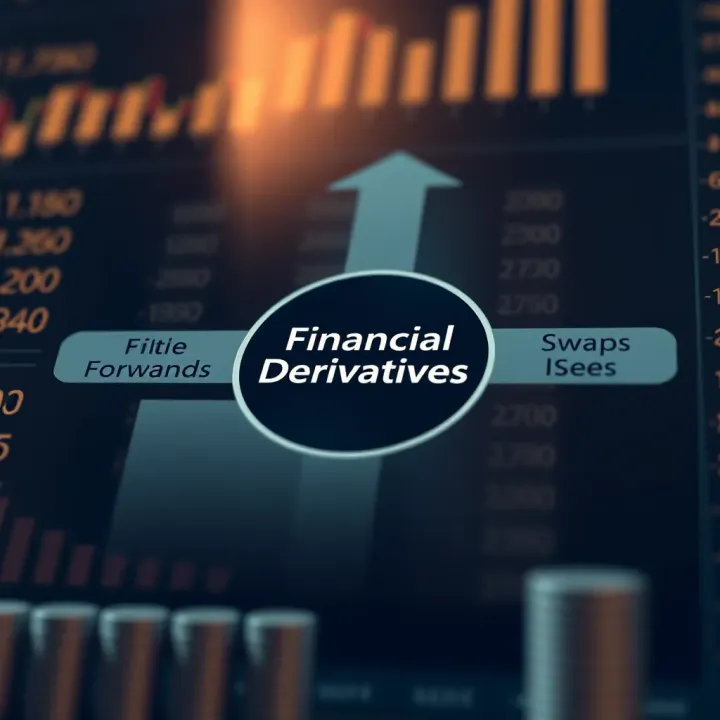
Options give the holder the right—but not the obligation—to buy (call option) or sell (put option) an asset at a specified strike price before or on expiry. Unlike futures, options have asymmetric risk: buyers risk only the premium paid, while sellers face greater potential losses.
For example, if you buy a call option on Reliance Industries at ₹2,500 strike price, you can profit if the stock price rises above this level, minus the premium paid. Put options serve as insurance against price declines.
Buying options offers limited risk with potentially high returns, suitable for speculators or hedgers wanting downside protection. Selling options can generate income through premiums but exposes one to higher risk, especially if the market moves unfavourably.
In India, retail investors often buy call or put options to hedge stock holdings or speculate during earnings season. Traders who sell options must carefully manage margin and understand the obligation to fulfil the contract if exercised.
Swaps are customised agreements between two parties to exchange cash flows over time. Currency swaps help companies manage foreign exchange exposure without entering the spot market frequently—for example, an Indian firm borrowing in dollars might swap interest payments with a US counterpart.
Interest rate swaps allow institutions to switch between fixed and floating-rate debt, reducing financing costs or adjusting risk profiles. These are OTC instruments, negotiated privately to suit specific needs.
Forwards are non-standardised contracts to buy or sell an asset at a set price on a future date, usually traded OTC. Unlike futures, forwards are customised for quantity, quality, and delivery terms.
Indian exporters commonly use forward contracts to lock in exchange rates for their receivables, protecting against rupee fluctuations. Forwards also find use in commodities and interest rate exposures where tailored contract specifics are necessary.
Derivative instruments serve various practical needs—from price protection to investment strategies. Choosing the right type depends on risk appetite, transaction size, and market objectives.
Understanding these common types equips traders, investors, and financial professionals to apply derivatives more effectively in India’s evolving financial landscape.
Derivatives play a significant role in managing risk and seizing trading opportunities in financial markets. For investors and traders, they offer a way to protect against price swings while also creating chances to profit from market movements. Understanding these uses is key for anyone dealing with derivatives in Indian markets.
Hedging with derivatives helps businesses and investors safeguard against unexpected changes in prices. For example, a manufacturing company dependent on steel can lock in costs by entering into futures contracts. This action prevents losses incurred through sudden price jumps, ensuring stable budgeting and cost control.
In the finance world, portfolio managers use derivatives like options to protect investments during volatile market conditions. Buying put options on stocks, for instance, provides insurance against sudden market drops, allowing investors to limit potential losses.
Farmers in India often face price uncertainty for their crops due to monsoon variations or global demand shifts. Using commodity futures, they can secure prices ahead of harvest. Suppose a maize farmer agrees to sell maize at a fixed price today via futures; this shields against price declines at harvest time, aiding financial planning.
Similarly, financial institutions hedge currency risks to manage foreign exchange exposure. For example, an exporter receiving payments in US dollars might enter into a currency forward contract to fix the exchange rate, reducing unpredictability in rupee inflows.
Derivatives also provide avenues to speculate, enabling traders to bet on price movements without owning the actual assets. Speculators might buy call options expecting prices to rise or sell futures anticipating a fall. This can generate substantial profits if their market views are correct.
Arbitrage involves exploiting price differences for the same asset across markets or formats. Traders use derivatives to quickly capture these gaps, such as buying a commodity in the spot market while simultaneously selling futures if futures prices are higher, locking in risk-free returns.
Speculation carries risks, including the potential for heavy losses, especially when leverage is involved. Derivative contracts magnify price movements, so an incorrect prediction can lead to losses exceeding the initial investment.
Additionally, speculative trades can increase market volatility. Traders must understand contract terms fully and implement risk controls, such as stop-loss orders, to avoid unchecked exposure.
Effective use of derivatives requires both understanding their risk management benefits and recognising the dangers of aggressive speculation.
Overall, derivatives serve dual roles: hedging instruments to protect against uncertainty, and speculative tools for profit-making. Balancing these uses carefully is crucial for investors and traders navigating Indian financial markets.
Understanding derivatives trading also means recognising the regulatory framework governing these instruments in India. Regulators aim to ensure market stability, protect investors, and maintain transparency. For traders and investors, knowing these rules avoids surprises and helps in managing risks better.
The Securities and Exchange Board of India (SEBI) and the Reserve Bank of India (RBI) jointly regulate derivative trading in India. SEBI oversees equity and commodity derivative markets, setting rules that govern how these contracts are traded on exchanges like NSE and BSE. For example, SEBI enforces daily price limits and circuit breakers to curb excessive volatility.
RBI plays a crucial role in regulating currency derivatives, given that currency movements impact overall economic stability. It restricts the kinds of currency pairs that domestic participants can trade and sets guidelines to prevent misuse of these instruments for speculative purposes beyond permissible limits.
Position limits and margin requirements are another key part of the regulatory landscape. Position limits cap the maximum number of derivative contracts a trader can hold to avoid market manipulation or excessive risk exposure. SEBI sets these limits based on the open interest in the underlying asset and market conditions, making sure no single player can dominate the market.
Margin requirements, meanwhile, act as a security deposit to cover potential losses. Both initial margin (paid upfront) and mark-to-market margin (daily settlement) ensure that traders have enough skin in the game. Exchanges calculate margin amounts dynamically depending on volatility and the asset class. For instance, during high volatility in the Nifty 50 futures market, margin percentages often rise, protecting both the trader and the market from sudden shocks.
Disclosure norms require brokers and issuers to provide clear, full information about derivative products. This includes contract specifications, settlement mechanisms, and risk factors. Transparent disclosures help investors understand what they're getting into rather than sign up blindly. For example, all brokers must share risk disclaimers prominently before executing a futures or options trade.
Besides disclosures, educating traders is crucial. Regulators mandate risk warnings and training programmes to raise awareness about derivatives' complexities. Market participants often encounter educational campaigns by SEBI and exchanges, emphasising the potential for significant losses due to leverage and price swings.
Strong investor education combined with clear disclosures forms the bedrock of a safer derivatives market. It equips traders to make informed decisions and avoid pitfalls common in speculative derivatives trading.
Together, these regulatory measures foster a fair and stable derivatives market in India, supporting both seasoned players and new entrants to participate with greater confidence and safety.
Understanding the challenges involved in using derivatives is essential for traders and investors to avoid unnecessary pitfalls. These financial instruments can be powerful tools but also carry risks that require careful management. This section covers key issues such as market risks, leverage, complexity, and transparency, which directly affect how effectively derivatives can be used.
Potential for significant losses: Derivatives can amplify both gains and losses. For example, a trader using futures contracts on crude oil might expect price rises but if prices fall sharply, the losses can be much larger than the initial margin. This exposure arises because derivatives often involve leveraged positions — a small adverse move in the underlying asset can wipe out your investment or lead to margin calls.
This risk is especially relevant during volatile market periods like geopolitical tensions affecting commodity prices or sudden regulatory changes impacting stock indices. In such scenarios, derivative users in India, such as commodity traders or equity speculators, must remain vigilant and continuously monitor market conditions.
Managing leverage prudently: Leverage allows you to control a large position with a comparatively small amount of capital. While this can boost returns, it also increases the chance of losses escalating quickly. Suppose an investor purchases Nifty futures with 10x leverage; a 2% downward movement in the index might lead to a 20% loss on invested capital.
Prudent leverage management involves keeping margins comfortable, using stop-loss orders, and avoiding overexposure. Many brokers in India offer margin calculators and risk management tools; leveraging them helps prevent sudden liquidation and financial strain.
Understanding contract terms: Derivative contracts vary in complexity depending on type and structure. Traders often need to grasp strike prices, expiry dates, premium payments (in options), and settlement procedures. For instance, without fully understanding the Asian option’s averaging feature versus a plain vanilla option, investors risk misjudging potential payouts.
Failure to comprehend these details can lead to costly mistakes. Experts recommend studying contract specifications carefully and, when possible, simulating trades or paper trading before committing real capital.
Risks of opaque derivative products: Some derivative instruments, especially customised over-the-counter (OTC) contracts, lack transparency. These products may not have standardised terms or active secondary markets, making it hard to assess fair value or liquidity. In India, this opacity surfaced during events like the NBFC crisis, where complex credit derivatives added layers of risk difficult for many participants to assess.
Opaque products can mask hidden costs and risks that only become apparent under stress. Investors should prioritise exchange-traded derivatives or those with clear disclosures, especially if they’re relatively new to the market.
Being alert to these challenges helps traders and investors use derivatives smartly rather than blindly chasing gains. Clear knowledge, risk controls, and cautious leverage use serve as shields against the potentially harsh realities of derivative markets.
The derivatives market in India is poised for significant growth, driven by evolving investment needs and advancing technology. Understanding this future helps traders and investors prepare for new opportunities and challenges ahead. As the market matures, fresh derivative products and broader participation will enhance liquidity and price discovery, crucial for efficient trading.
Innovation in derivative instruments is making the market more versatile. For instance, beyond traditional equity futures and options, we are seeing growth in interest rate futures, weather derivatives, and commodity options. These instruments provide Indian businesses and investors more precise tools for managing sector-specific risks like monsoon uncertainty in agriculture or fuel price volatility. For example, farmers and agro-based firms can hedge against uncertain rainfall patterns using weather derivatives, which were not available earlier.
Technological change has notably accelerated the introduction and accessibility of these evolving derivatives. Platforms backed by India Stack and UPI are enabling seamless fund transfers and faster settlements, reducing costs and barriers. Digital trading interfaces combined with real-time data analytics on platforms like NSE and BSE empower traders to make better-informed decisions quickly. This trend is evident with mobile apps offering futures and options trading tailored for retail users in tier 2 and tier 3 cities, who previously had limited access.
Education and awareness form the foundation for safely expanding retail participation. Market players and regulators have launched webinars, workshops, and content to demystify complex derivatives concepts. Initiatives by SEBI and exchanges help investors grasp risks and rewards clearly, reducing chances of missteps. For example, post-COVID, many retail investors in India started options trading, supported by educational campaigns explaining margin requirements and expiry dynamics.
Regulatory support ensures participation stays safer and market integrity is upheld. SEBI’s frameworks mandate transparent risk disclosures, position limits, and dispute redressal mechanisms. These rules protect investors from exposure beyond their capacity and flag irregular practices. Also, recent norms make onboarding quicker and safer by enhancing KYC processes via Aadhaar and DigiLocker verification, thus supporting a steady inflow of genuine investors.
The future of Indian derivatives hinges on combining innovative products with technology and safeguarding retail investors through education and clear regulations.
Overall, these trends suggest a derivatives market growing not only in size but in sophistication, catering both to seasoned traders and cautious retail participants alike.
Explore derivation's role in language, maths, science & engineering 🧪📐. Learn practical methods and examples tailored for India’s curious minds and professionals.
Explore Qutoex in depth 💡 Understand its features, functionalities, and practical uses, plus get answers to common queries for smarter decisions! 📊
Discover how Quotext works📚, its key uses🔑, and practical benefits across sectors🏢, with clear examples to boost your understanding💡.

Discover what Quotx is, its key uses, and benefits. Learn practical tips to use Quotx effectively in various scenarios for better outcomes. 📊💡
Based on 9 reviews