

Inside Radhakishan Damani's Investment Portfolio
Explore Radhakishan Damani's investment portfolio 📊, key sectors 🔍, top companies 🏢 & how his strategy shapes the Indian stock market 🇮🇳.
Edited By
Sophie Bennett
Advanced Micro Devices (AMD) has once again grabbed investors' attention with its recent earnings report. For traders and analysts tracking the semiconductor industry closely, this update offers concrete insights into the company's financial health and market strategy.
The report highlights AMD’s revenue surge driven by strong demand in both its computing and graphics segments. Specifically, the Ryzen processors and Radeon graphics units have shown impressive growth, which contributes heavily to the company’s top line. This information allows investors to gauge AMD’s competitive positioning against rivals such as Intel and Nvidia.
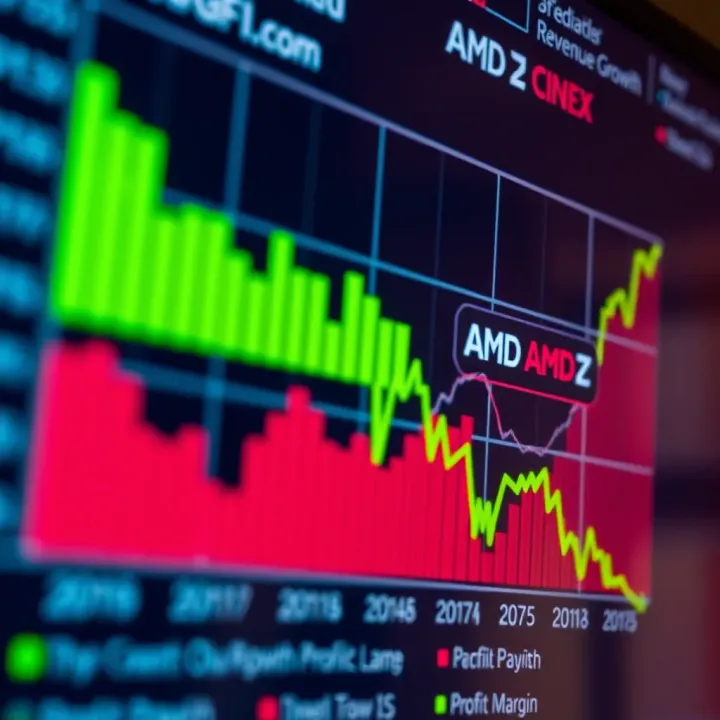
Moreover, AMD’s diversified revenue streams showcase resilience amid global supply chain challenges. The earnings reflect gains not only in PC and gaming markets but also in data centres and enterprise solutions. These sectors are crucial for sustainable growth as digital transformation continues across India and other key markets.
AMD’s earnings reveal how product innovation and strategic market penetration fuel its expanding market share in the semiconductor space.
Some key takeaways from the report include:
Revenue figures: AMD posted revenue growth above market expectations, signalling strong consumer and enterprise demand.
Profit margins: Despite inflationary pressures, operating margins held steady due to cost optimisation and improved product mix.
Guidance: The company’s forward-looking statements indicate cautious optimism, factoring in geopolitical tensions and supply disruptions.
For investors and stock brokers, this report underlines AMD’s robust fundamentals and growth potential. It also flags risks prevalent in semiconductor cycles and global trade that warrant close monitoring.
Overall, AMD’s earnings provide a detailed snapshot of where the company stands today and its trajectory for the coming quarters. Understanding these points helps market participants make informed decisions amid a volatile economic backdrop.
Understanding AMD's recent earnings is key to grasping how the company is performing amid a highly competitive semiconductor market. This overview dissects financial outcomes, market reactions, and underlying factors, offering traders and investors a complete picture of what drives AMD's valuation and future prospects.
AMD’s revenue figures are a direct indicator of growth momentum. Comparing the latest quarter to previous ones reveals whether sales are accelerating or slowing, which in turn helps investors judge the demand cycle for AMD’s products. For example, if revenue jumps sharply, it likely signals rising market acceptance of new CPUs or GPUs, or expanded enterprise sales.
Net profit and earnings per share (EPS) show how much the company earns after expenses and the profitability per share. A rising EPS is especially important for stockholders since it generally translates to higher dividends or share price appreciation. It also reflects operational efficiency, so a dip may warrant closer scrutiny of costs or market pressures.
Examining key cost and expense highlights adds another layer. Rising manufacturing costs or increased R&D expenditure can reduce short-term profits but might support long-term innovation. If operating expenses increase disproportionately, investors should assess whether AMD’s growth strategy justifies this spending or risks margin erosion.
The immediate impact on AMD’s share price following the earnings announcement is a fast indicator of market confidence. A positive earnings surprise often results in a quick share price hike, suggesting investors trust AMD’s path forward. Conversely, disappointing results can trigger a selloff, even if fundamentals remain strong.
Investor sentiment and analyst commentary provide broader context. Analysts’ target price revisions and opinions influence retail and institutional investors alike. Positive remarks from well-known analysts can boost market interest, while cautious views signal potential challenges ahead. Reading these expert evaluations alongside the raw numbers helps gauge AMD’s standing within the semiconductor sector.
Tracking both financial metrics and market responses after each quarter provides a sharper edge in trading decisions and portfolio management, especially in volatile tech markets.
By paying close attention to these aspects of AMD’s earnings, traders and investors can make informed calls, balancing the company’s reported performance with broader market sentiment and risk factors.
Breaking down AMD's revenue streams offers valuable insight into which product segments are fuelling the company's growth. Understanding these streams helps investors and analysts identify where AMD holds strengths and where challenges might lie. For example, while the Computing and Graphics segment is traditionally the biggest earner, the Enterprise, Embedded, and Semi-Custom segment is rapidly gaining ground, especially with India's growing data centre demand.
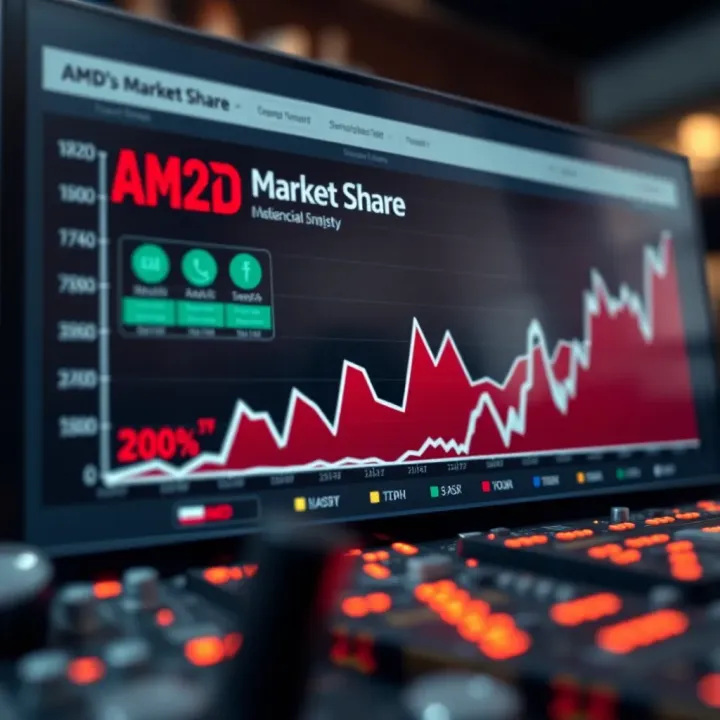
The Computing and Graphics segment includes AMD’s central processing units (CPUs) and graphics processing units (GPUs), which form the backbone of PCs, laptops, and gaming consoles. Recent earnings show strong sales growth in this segment, largely driven by demand for Ryzen CPUs and Radeon GPUs. These products are popular with consumers upgrading their systems and gamers seeking better performance.
This segment's revenue growth is also supported by advancements in architectures like Zen 4, enabling AMD to compete effectively with rivals like Intel and Nvidia. For traders, sales figures here can indicate AMD's competitive footing in core markets, which influences stock movement and valuation.
Consumer demand remains robust, driven by remote work, online gaming, and content creation needs. At the same time, AMD has increased its footprint in enterprise markets with workstation-grade CPUs and GPUs for professionals.
The rising adoption of high-performance computing in India’s tech startups and cloud service providers contributes to steady demand. This consumer-enterprise blend diversifies AMD's revenue, reducing reliance on a single market segment and offering stability amid economic fluctuations.
AMD’s data centre offerings, including EPYC server processors, have recorded significant revenue growth. This segment benefits from the surge in cloud computing, AI workloads, and enterprise digital transformation, areas where India’s expanding IT infrastructure plays a big role.
The company’s ability to secure contracts with leading hyperscalers and cloud providers shows confidence in its technology. Analysts view this segment’s growth as a crucial indicator of AMD’s long-term value, given the high-margin nature of server chips.
Embedded products and semi-custom chips, including those used in gaming consoles like PlayStation and Xbox, contribute a steady revenue stream. Their growth is linked to evolving consumer electronics and customised solutions for specific applications.
In India, embedded systems cater to sectors like telecom, automotive, and healthcare, underscoring AMD's expanding relevance. Semi-custom chips help AMD tap into niche markets with tailored technology, providing a competitive advantage and additional revenue diversity.
Analyzing AMD’s revenue mix reveals not just current performance but also strategic positioning for future tech trends. Investors should watch these segments for signals of sustainable growth and potential market risks.
Understanding the factors influencing AMD's earnings is essential for investors and traders who want to gain a clearer picture of the company's current and future prospects. These factors reveal the challenges and opportunities behind the headline numbers, offering practical insights that can guide investment decisions.
The global semiconductor shortage has put significant pressure on AMD's production capabilities. Chip manufacturing relies on complex supply chains involving raw materials, foundries, and logistics, all of which faced disruptions recently. For AMD, this shortage meant delays and limited availability of key components, affecting their ability to meet the growing demand, especially in high-performance CPUs and GPUs. This bottleneck directly impacted sales volumes, despite strong market interest.
To tackle these supply constraints, AMD has taken several steps. It strengthened partnerships with contract manufacturers like TSMC to secure higher capacity prioritisation. Additionally, AMD adjusted its product mix to focus on higher-margin items where possible, optimising returns amid limited volumes. The company also increased inventory buffers and improved supply chain visibility, which helped in quicker response to disruptions. These measures have helped AMD sustain growth while managing the production hurdles.
AMD competes aggressively with Intel and Nvidia, particularly in CPUs and GPUs, respectively. While Intel remains dominant in certain segments like mainstream processors, AMD has progressively gained market share through its Ryzen and EPYC processors, which offer competitive performance and efficiency. Against Nvidia, AMD pushes hard in graphics performance and pricing, though Nvidia still leads in high-end gaming GPUs and AI-focused accelerators. This competitive tussle affects AMD's pricing power and necessitates continuous innovation.
Pricing strategies and product innovation remain key to AMD's market positioning. The company often offers strong performance-to-price ratios, enticing cost-conscious consumers and enterprises alike. At the same time, AMD invests heavily in developing new architectures such as Ryzen 7000 series and next-generation GPUs. Such innovations not only improve market competitiveness but also open doors to new customer segments and partnerships, critical for long-term earnings growth.
For investors, watching how AMD navigates supply challenges while outpacing rivals in innovation and pricing offers valuable signals on its likely future financial health and stock performance.
AMD's future outlook is a key focus for investors and analysts, offering insight into the company’s expected performance and strategic direction. Understanding this helps market participants anticipate revenue trends, profit margins, and potential risks, enabling informed decisions about buying, holding, or selling AMD shares.
AMD forecasts steady revenue growth for the upcoming quarters, largely driven by strong demand in data centre and high-performance computing segments. The company projects total revenue to grow in the high single-digit to low double-digit percentage range, backed by new product launches and expanding market share. This information signals investor confidence and helps set realistic expectations for earnings per share (EPS) moving forward.
However, AMD also notes several factors that could affect these projections. Supply chain bottlenecks, fluctuating semiconductor demand due to macroeconomic conditions, and intensifying competition from rivals like Intel and Nvidia could pose risks. Traders and investors must weigh these uncertainties against growth prospects, especially as geopolitical tensions could impact component availability and costs.
AMD is aiming to maintain its competitive edge with upcoming chip architectures such as the next generation of Ryzen and EPYC processors. These innovations promise improvements in performance per watt and integration of advanced features like AI acceleration. Such developments are designed to capture a larger share in both consumer and enterprise segments, potentially boosting revenues substantially.
Complementing these launches are AMD’s robust investments in research and development (R&D). The company has allocated significant budgets to expand its capabilities in 3D chip stacking and advanced process nodes. Sustained R&D helps AMD stay ahead in a fast-evolving semiconductor landscape, ultimately creating value for shareholders by fostering long-term innovation and market leadership.
Investors should monitor AMD’s guidance closely, assessing how realistic the revenue outlook is in light of evolving supply chain and market dynamics. Planned technological upgrades may not only drive earnings but also reshape competitive positioning.
By keeping a close eye on these projections and strategic moves, investors can align their portfolios with AMD’s growth trajectory and potential risks intrinsic to the semiconductor industry.
Understanding the implications of AMD's earnings is key for investors aiming to make informed decisions. The report sheds light on AMD's valuation post-earnings, dividend strategies, and share buyback plans, all of which influence investment attractiveness. For the semiconductor industry, AMD’s performance signals shifts in market dynamics and innovation trends, which ripple across suppliers, partners, and competitors.
Following the latest earnings announcement, valuation metrics such as price-to-earnings (P/E) and price-to-sales (P/S) ratios help investors gauge whether AMD’s stock is fairly priced. For example, if AMD’s P/E ratio contracts despite robust growth, it might indicate undervaluation, signalling a potential buying opportunity. Conversely, a stretched valuation could caution investors about over-optimism in the market.
Investors should also look at forward-looking metrics like price-to-earnings growth (PEG) ratio that factor expected earnings growth. This adds nuance to assessment, especially as AMD shifts focus to new products and emerging markets. These metrics, combined with broader market sentiment and sector trends, offer a clearer picture for portfolio allocation.
AMD has historically prioritised growth over dividend payouts, which suits investors seeking capital appreciation rather than income. However, any announcement regarding dividends or share repurchase schemes post-earnings can affect investor sentiment and share price.
For instance, a share buyback plan signals confidence from management about the company's future and can reduce the number of outstanding shares, boosting earnings per share (EPS). Indian investors monitoring such moves can anticipate potential short-term price support while weighing long-term growth prospects.
AMD’s earnings offer a snapshot of shifting industry currents. Its strong push into high-performance computing and data centre chips challenges incumbents like Intel and Nvidia, driving innovation and competitive pricing. This dynamic prompts other players to accelerate R&D, impacting semiconductor technology cycles.
For example, AMD's advancements in 3nm chip architecture are closely watched, signalling a broader trend toward energy-efficient, high-performance processors. Such developments influence manufacturing priorities and supply chain strategies worldwide.
AMD’s growing interaction with the Indian technology sector is shaping local semiconductor and computing landscapes. Collaborations with Indian startups and research institutes fuel product localisation, optimising chips for software commonly used in India.
Moreover, AMD’s investments in Indian talent and participation in government initiatives like the India Semiconductor Mission (ISM) bolster the country's aspirations to become a semiconductor hub. For Indian investors and tech companies, this underlines opportunities in the semiconductor supply chain and skill development, aligning with the broader ‘Make in India’ push.
In sum, AMD's earnings reflect more than just financials — they provide insights on strategic moves affecting investments and the semiconductor industry ecosystem, especially within India’s growing tech narrative.
Explore Radhakishan Damani's investment portfolio 📊, key sectors 🔍, top companies 🏢 & how his strategy shapes the Indian stock market 🇮🇳.

Explore Ram Fincorp's services in detail: financial products, loan terms, application process, customer feedback, and how it stacks up against other lenders 📊💰

📈 Discover Ecash price forecasts with market trends, expert views & risks explained. See what investors in India can expect from Ecash’s future growth potential.

🔎 Explore how crypto market sentiment shapes prices and trading decisions in India. Understand measurement methods, influencing factors, challenges, and market impact.
Based on 10 reviews