
Bitcoin Forecast Today: Market Trends & Insights
Explore today's Bitcoin forecast with insights on market trends, price drivers, expert views, and risks to help Indian investors make informed decisions 📈💰.
Edited By
Charlotte Evans
Today's BTCUSD forecast requires a close look at multiple factors influencing Bitcoin's price against the US Dollar. Traders and investors are keen to understand how recent market behaviour, technical patterns, and global economic events might sway Bitcoin’s movement in the near term.
Bitcoin faces a volatile climate due to shifting investor sentiment and external triggers like regulatory news and macroeconomic data from key economies. For instance, recent hikes in US interest rates by the Federal Reserve have affected risk assets, including cryptocurrencies. This has caused traders to watch BTCUSD closely for potential price corrections or consolidation phases.
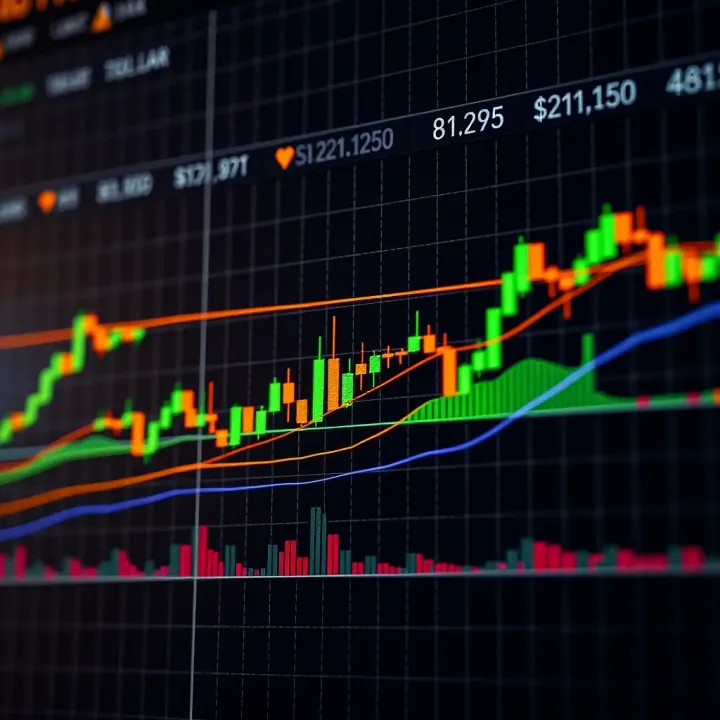
On the technical side, key support levels near $27,000 and resistance around $30,000 stand out as critical zones. If Bitcoin manages to hold above the support, it could signal a buying opportunity for day traders, while a break below might indicate further downside risk. Volume trends and momentum indicators like RSI and MACD reveal whether the current upswing is sustainable or losing steam.
Fundamentally, factors such as Bitcoin network upgrades, institutional adoption, and macro policies continue to influence market outlook. For example, recent announcements from global payment platforms integrating Bitcoin could add buying pressure. Conversely, stricter crypto regulations by regulators may introduce hesitancy among large investors.
Keeping an eye on intraday price action combined with broader macro signals helps you make informed BTCUSD trading decisions.
To summarise, trading BTCUSD today demands:
Monitoring key price levels for breakouts or breakdowns
Assessing momentum and volume indicators
Staying updated on macroeconomic developments and crypto regulations
Considering fundamental news influencing Bitcoin’s demand
This approach equips you with practical insights essential for navigating Bitcoin’s highly dynamic market.
A clear understanding of the current market overview of BTCUSD (Bitcoin to US Dollar) is vital for anyone engaged in trading, investment, or analysis. This overview serves as the foundation for identifying actionable trends, managing risks, and aligning trades with market dynamics. For instance, a trader focusing only on technical charts without grasping the present market mood may miss crucial signals tied to price movements.
Performance in the last 24 hours: BTCUSD's price action within the previous 24 hours reveals the immediate market reaction to various factors, such as news, market events, or sudden shifts in investor sentiment. A sharp intraday rise or fall can often hint at heightened volatility or emerging trends. For example, if BTC surged 5% overnight following a major institutional investment announcement, traders can anticipate momentum-driven trades.
Short-term price volatility: Short-term volatility indicates how wildly BTCUSD prices swing in the brief timeframe. Higher volatility often means greater trading opportunities but increased risk. Day traders particularly watch this as it affects stop-loss placement and profit targets. If the volatility spikes after a central bank's policy statement, traders should be cautious of rapid price reversals.
Comparison with previous weeks: Looking beyond the last day to compare current price tendencies with the previous weeks helps discern whether the recent moves are part of a sustained uptrend or just short-lived corrections. For instance, steady weekly gains accompanied by growing volume generally suggest robust bullish interest, whereas erratic price behaviour may signal uncertainty.
Currency fluctuations and dollar strength: Since BTC is traded against the US dollar, any dollar strengthening typically puts downward pressure on BTC prices, and vice versa. For example, when the US dollar index rises amid global economic uncertainties, BTCUSD often sees a temporary dip as investors prefer safer assets. Investors in India exchange value based on these swings when converting profits or losses.
Geopolitical developments: Political tensions, international sanctions, or policy shifts can influence BTC's demand and price stability. For example, if tensions rise between major economies affecting trade routes, investors might turn to BTC as a hedge, pushing its price upwards. Conversely, government bans on crypto trading in large markets can trigger sharp sell-offs.
Market sentiment among global investors: The mood of global investors—whether cautious, optimistic, or fearful—directly impacts BTCUSD. Positive sentiment often leads to increased buying, pushing prices higher, while negative sentiment results in sell pressure. Sentiment trackers, social media buzz, and fund flows give traders clues on the direction. For example, if institutional funds start withdrawing from BTC-related exchange-traded funds, it signals waning confidence.
Keeping an eye on these facets equips traders and investors to navigate BTCUSD markets with better precision, helping them capitalise on emerging opportunities while avoiding pitfalls.
Monitor both recent price activity and broader trends to understand BTC's near-term direction.
Factor in global economic conditions to anticipate external forces acting on BTCUSD.
Use sentiment analysis alongside technical data for a well-rounded market view.
Technical analysis plays a significant role in understanding Bitcoin's price action against the US Dollar for today. Traders and investors rely on this approach to identify potential price points where the market may reverse or continue its trend. By analysing historical price data and chart patterns, technical analysis helps in making informed decisions, especially in a market as volatile as BTCUSD.
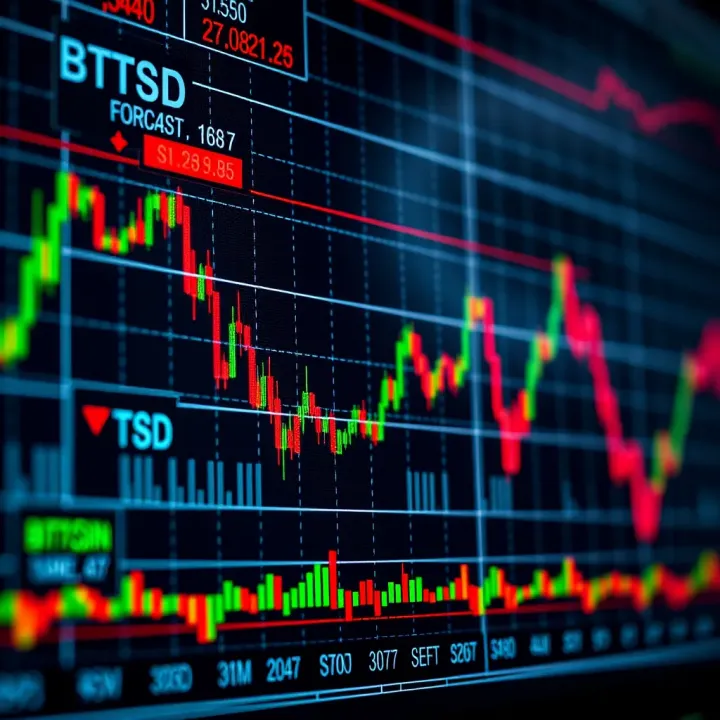
Support and resistance levels act as psychological barriers in the BTCUSD price movement. Support is the price level where buying interest tends to prevent the price from falling further, while resistance marks the level where selling pressure may cap price advances. For example, if Bitcoin has repeatedly bounced near ₹24 lakh, that becomes a support zone. Conversely, a resistance might form around ₹26 lakh where upward momentum stalls. Keeping an eye on these levels enables traders to plan entry and exit points effectively.
Chart patterns like head and shoulders, double tops, or triangles reveal market sentiment and possible price direction. Recently, BTCUSD has shown a consolidation pattern between ₹24 lakh and ₹26 lakh, suggesting either a breakout or breakdown is imminent. Recognising such patterns helps traders anticipate moves and set stop-loss orders accordingly, reducing risk and maximising gains.
Moving averages smooth out price fluctuations, highlighting trends. The 50-day and 200-day moving averages are widely watched; a crossover can signal shifts in momentum. For example, if the 50-day average crosses above the 200-day (a golden cross), it typically indicates a bullish phase. Alongside, trend lines drawn on recent highs and lows help confirm directional bias. BTCUSD's current trend line support around ₹24.5 lakh remains crucial to watch for sustaining an uptrend.
RSI measures the speed and change of price movements to evaluate overbought or oversold conditions. An RSI above 70 suggests BTCUSD may be overbought and prone to a correction, while below 30 indicates potential undervaluation and a bounce-back. Today's RSI reading around 65 hints at firm bullishness but warns to watch for possible weakening momentum.
The Moving Average Convergence Divergence (MACD) indicator shows momentum shifts via the relationship between two moving averages. A bullish signal forms when the MACD line crosses above the signal line, while a bearish signal emerges on the opposite. Presently, the MACD for BTCUSD is slightly above the signal line, supporting cautious optimism among traders. However, the momentum isn’t strong enough yet to rule out sudden reversals.
Monitoring these technical aspects allows traders to weigh risk and spot opportunities amidst Bitcoin’s volatile market. Combining support/resistance insights with indicator readings gives a fuller picture for day-to-day decision-making.
Understanding fundamental factors is vital for grasping what drives Bitcoin's price movements beyond the charts. These factors often shape market sentiment and can create lasting impacts on BTCUSD valuations. They include regulatory updates, institutional demand shifts, and behavioural trends among retail investors. Traders and investors benefit by keeping an eye on these fundamentals to make timely decisions rather than relying solely on technical signals.
Recent developments from major economies have a direct influence on Bitcoin's price. For example, when the US Securities and Exchange Commission (SEC) signals stricter oversight on cryptocurrency exchanges, it tends to create uncertainty, leading to price dips. On the other hand, announcements like approval of Bitcoin ETFs can trigger rapid price appreciation. European Union policies on digital assets and China's stance on crypto mining also weigh heavily on market confidence globally, affecting BTCUSD trading volumes and volatility.
In the Indian regulatory environment, developments have grown more nuanced recently. While the government imposed a 30% tax on crypto earnings from FY 2022-23, clarity on regulations for exchanges and KYC norms has stabilised the market to a degree. The Reserve Bank of India’s (RBI) cautious approach, including a ban on banks dealing with crypto firms in the past, has softened but not disappeared. Traders watch for signals on potential regulatory easing or harsher restrictions, as these could sway domestic participation significantly.
Institutional investment movements remain one of the key drivers for Bitcoin price in 2024. Large players like MicroStrategy, Tesla, or BlackRock entering or exiting positions can cause notable price fluctuations. Their involvement also attracts retail investors by signalling confidence. Recently, increasing participation from Indian venture capital funds in blockchain startups indicates growing institutional belief in this asset class, indirectly boosting confidence in Bitcoin itself.
Observing retail investor behaviour in India and abroad reveals interesting patterns. Indian investors have shown greater acceptance of cryptocurrencies via UPI-enabled exchanges and mutual fund-like crypto products. Meanwhile, global retail interest often surges during periods of market optimism or popular online discussions. However, retail investors are more prone to panic selling in downturns. Recognising these trends helps traders anticipate sudden market swings triggered by behavioural shifts rather than fundamental value changes.
Fundamental factors provide a broader context to crypto price action, and savvy traders combine these insights with technical analysis for better timing and risk management.
Regulatory clarity stabilises markets and attracts long-term investment.
Institutional buying often signals bullish trends ahead.
Retail sentiment can cause short-term volatility, especially in emerging markets like India.
Keeping a close watch on these fundamental elements equips BTCUSD traders with a more rounded understanding, essential for navigating today's unpredictable crypto market.
Expert opinions hold significant weight in forecasting BTCUSD movements since these insights come from seasoned analysts who track market trends, assess risks, and interpret complex data sets. For traders and investors, tapping into these views provides a clearer understanding of potential price directions, helping them make informed decisions in a volatile market.
Cryptocurrency analysts focus on immediate market signals to predict Bitcoin’s price over days or weeks. For example, technical chart patterns combined with fresh news—such as regulatory announcements or sudden institutional trades—can trigger quick price swings. Traders benefit from these outlooks by fine-tuning entry and exit points, cutting losses early, or capitalising on short-lived rallies. Recently, analysts highlighted that Bitcoin’s reaction to rising US Treasury yields may pressure prices temporarily, suggesting caution for short-term buyers.
These predictions consider fundamental factors like adoption trends, technological advancements, and macroeconomic conditions over several months or years. Many analysts foresee Bitcoin gradually gaining strength as digital assets become mainstream. For instance, growing acceptance by Indian investors and companies points towards sustained demand, potentially driving prices higher. Investors with a longer horizon can use such forecasts to hold positions through volatility, viewing dips as buying opportunities rather than panic moments.
Certain events can swiftly alter Bitcoin’s trajectory, such as major exchange outages, security breaches, or significant regulatory rulings, especially from large economies like the US or India. For example, when SEBI updates crypto regulations, it might spark rapid price changes as market players adjust. Keeping an eye on these triggers helps traders and investors anticipate sudden volatility and plan accordingly.
Unexpected developments like geopolitical conflicts, sudden inflation spikes, or global economic slowdowns can reshape Bitcoin’s outlook quickly. For instance, if global tensions rise, some investors might see Bitcoin as a safe store, pushing prices up, while others may prefer liquid assets, dragging prices down. Such unpredictability means forecasting always carries risk, and careful risk management remains key for anyone involved in BTCUSD trading or investment.
Expert opinions are not crystal balls but valuable guides. They help you navigate uncertainty by combining data analysis with market experience, so consider them alongside your own research and risk appetite when planning trades or investments.
Navigating the volatile BTCUSD market requires more than just tracking price charts. Practical tips help traders and investors manage risks, optimise entry points, and make decisions grounded in real market behaviour. These strategies can safeguard capital while maximising profit potential in unpredictable conditions.
Setting stop-loss and take-profit levels is crucial for controlling losses and locking in gains. A stop-loss automatically sells your position when the price falls to a certain point, preventing further downside during sudden dips. For example, if bitcoin is trading at ₹30 lakh, setting a stop-loss at ₹28 lakh limits your loss to about 7%. Similarly, a take-profit level helps secure gains by automatically selling when the price reaches your target, say ₹33 lakh. This disciplined approach avoids emotional trading and helps you stick to your planned risk-reward ratio.
Diversification to manage volatility spreads risk by not putting all your capital into BTCUSD alone. The crypto market is known for sharp swings; holding other assets like gold, stocks, or stablecoins can cushion impact during bitcoin’s downturns. For instance, if bitcoin suddenly drops, gains in a portfolio’s equities or government bonds might offset those losses. Diversification can include investments across different sectors or asset types, helping smooth returns and preserve capital amid BTCUSD’s naturally volatile nature.
Using technical signals for trade timing allows traders to enter and exit positions with greater precision. Tools like RSI (Relative Strength Index) and MACD (Moving Average Convergence Divergence) indicate overbought or oversold conditions and potential price reversals. For example, if RSI crosses below 30, it may signal that bitcoin is oversold and a bounce back is likely, signalling a buying opportunity. Combining such indicators with price action can improve entry timing and avoid getting caught on the wrong side of the market.
Understanding market liquidity is essential to execute trades without significantly impacting the BTCUSD price. High liquidity means there are many buyers and sellers, allowing you to enter or exit positions quickly at stable prices. For instance, during peak trading hours on Indian exchanges or global platforms like Binance and WazirX, liquidity tends to be better. Conversely, low liquidity can cause slippage, where your trade executes at a worse price than expected, increasing costs or risks. Being aware of liquidity conditions helps you plan trades better, especially for large orders.
Effective risk management and timing strategies form the backbone of successful BTCUSD trading. They help you stay calm and in control even when the market turns choppy.
Following these practical tips will improve your chances of navigating bitcoin’s ups and downs more confidently while safeguarding your investments.
Explore today's Bitcoin forecast with insights on market trends, price drivers, expert views, and risks to help Indian investors make informed decisions 📈💰.

📈 Discover the AUD to USD forecast! Explore key economic indicators and market trends shaping the exchange rate for traders, investors, and businesses alike.

📊 Stay updated with today's EUR/USD forecast including key economic data from the Eurozone & US, market trends & expert views shaping currency moves.

📊 Discover how economic indicators, market mood, and analysis techniques shape EUR/USD trends. Practical tips help traders forecast this key forex pair confidently.
Based on 12 reviews