

Euro to INR Forecast: Next 5 Years Outlook
📈 Forecast the euro to INR exchange trends over five years with insights on economic indicators, geopolitical events, RBI policies, and their impact on investors and businesses.
Edited By
Henry Lawson
The euro to Indian rupee (EUR/INR) exchange rate plays a significant role in India's economy, impacting everything from import costs to foreign investment flows. This rate fluctuates daily, influenced by various economic indicators and geopolitical events, making accurate forecasting essential for traders, investors, and businesses that operate across these currencies.
Understanding historical trends gives a solid foundation for predicting future movements. For instance, the EUR/INR rate has shown sensitivity to the European Central Bank's policy shifts as well as India's Reserve Bank of India (RBI) interventions. A notable example is during the 2020 pandemic when rapid monetary easing on both sides caused considerable volatility.

Key factors affecting this exchange rate include:
Interest rate differentials: Higher rates in the Eurozone compared to India tend to strengthen the euro against the rupee, attracting capital flows.
Inflation rates: Diverging inflation rates can erode currency value, where higher inflation in India relative to Europe can weaken the rupee.
Trade balance: India's import dependency on the eurozone influences rupee demand; a rising trade deficit often pressures the INR downward.
Geopolitical risks: Political instability in Europe or India can trigger sharp movements driven by investor sentiment.
An informed trader watches these indicators closely to time currency trades or hedge exposures effectively.
Central banks, primarily the ECB and RBI, affect EUR/INR through policy announcements, interventions, and economic outlooks. For instance, a surprise rate hike or dovish comments can cause swift exchange rate shifts. Market sentiment, influenced by news and global trends, can sometimes override fundamental factors in the short term.
By combining these insights, traders and financial analysts can improve their forecasting models, aiding in better risk management and financial planning. For businesses relying on imports from Europe, understanding these trends helps in budgeting and avoiding unexpected currency losses.
In the sections ahead, we will explore data-backed forecasts, deeper economic drivers, and practical strategies for leveraging this knowledge in real-world scenarios.
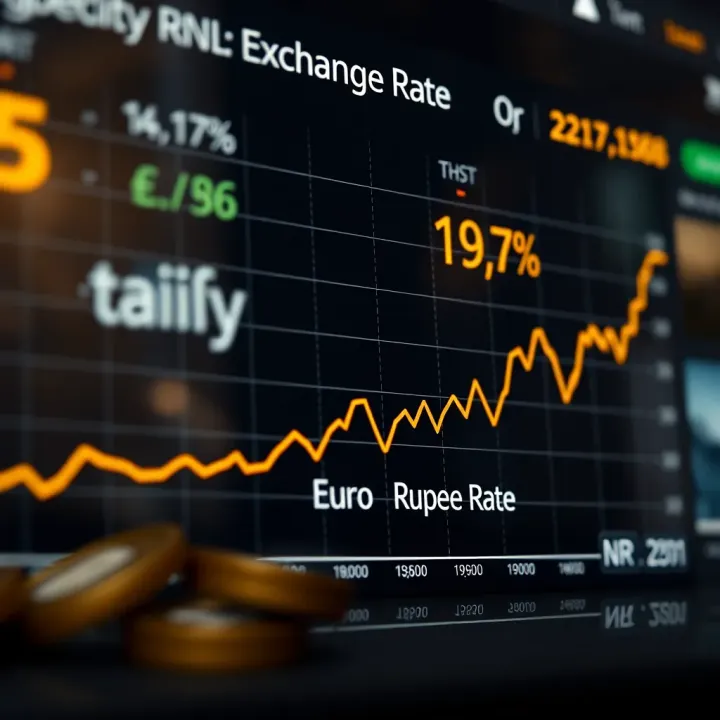
Understanding recent trends in the euro to Indian rupee (INR) exchange rate helps traders and investors make better decisions. Exchange rates fluctuate based on economic and political events, so tracking these trends provides practical insights on when to buy or sell euros for INR. For example, noticing a stable or strengthening euro against the rupee can encourage Indian importers to plan their forex requirements accordingly, locking in rates before expected rises.
Historically, the euro-INR pair has shown steady long-term appreciation, reflecting India's growing trade ties with Europe and the eurozone's economic strength. Over the past decade, the euro generally moved from around ₹65 to ₹90. This gradual increase has been interrupted by phases of volatility, often caused by global crises or domestic economic spells in either region. For instance, during the European debt crisis around 2012, the euro weakened temporarily, which affected Indian exporters and investors relying on this exchange rate.
In the last 12 months alone, several events pushed sharp changes in the euro-INR rate. Early in the period, geopolitical tensions in Eastern Europe caused the euro to drop to near ₹85, while RBI’s monetary tightening helped the rupee stabilise. Later, inflation trends in India, coupled with European Central Bank’s adjusted interest rates, pushed the euro back up, breaking ₹90 at points. These movements impacted market sentiment, forcing businesses engaged in cross-border trade to adapt fast.
Keeping a close eye on such significant shifts can help Indian financial analysts and day traders anticipate market reactions before they appear in price charts, providing an edge in timing transactions.
To sum up, recent trends highlight a mix of expected long-term euro appreciation against the INR, interrupted by short-term moves due to policy changes and external shocks. Grasping these patterns lets stakeholders manage currency risk better and tap emerging opportunities in the evolving forex market.
Economic factors play a vital role in shaping the euro to Indian rupee (INR) exchange rate. Traders and investors closely watch these indicators because they reflect the underlying strength and stability of the economies involved. Understanding these factors helps assess currency movements and make informed decisions.
Inflation Rates
Inflation rate differences between the Eurozone and India directly influence the euro-INR exchange rate. Higher inflation in India compared to the Eurozone generally weakens the rupee, as rising prices reduce purchasing power. For example, if India’s consumer price inflation hits 7% but the Eurozone remains around 2%, the rupee tends to depreciate against the euro to offset price imbalances. This dynamics matters for importers and exporters who need to guard against unexpected cost changes.
GDP Growth
The gross domestic product (GDP) growth rates indicate economic health and influence currency demand. Strong GDP growth in India often attracts foreign investment, increasing demand for the rupee and supporting its value against the euro. Conversely, if the Eurozone reports robust growth while India's momentum slows, the euro may strengthen. For instance, India's fast-paced GDP growth of 6-7% in recent years has helped stabilise the exchange rate amid global uncertainty.
Trade Balances
Trade balance reflects the difference between exports and imports and impacts currency flows. A trade surplus in the Eurozone coupled with a deficit in India can put downward pressure on the rupee. Importers in India need more euros to pay for goods, increasing demand for the euro while putting rupee under pressure. Tracking the shifting trade balances helps gauge sustained currency demand trends, critical for businesses engaged in cross-border trade.
European Central Bank Policies
European Central Bank (ECB) decisions on interest rates and quantitative easing shape the euro's strength. When ECB raises rates to control inflation or reduce asset purchases, it tends to boost the euro as investors seek better returns. For example, the ECB’s tightening cycle in 2022 caused a noticeable euro appreciation against many currencies, including the INR. Currency traders keep close watch on ECB statements and policy shifts for timely signals.
Reserve Bank of India Actions
Reserve Bank of India (RBI) policies also significantly affect the euro-INR exchange rate. Rate hikes by RBI to combat inflation attract foreign capital, supporting the rupee. On the other hand, RBI's easing or dovish stance can weaken the rupee. For instance, RBI’s repo rate increase in 2023 helped anchor inflation expectations and reduce rupee volatility. Understanding RBI’s monetary stance helps traders and investors anticipate currency moves linked to interest rate differentials.
Monitoring these economic factors offers a clear lens into currency dynamics, helping traders and analysts better forecast euro-INR trends and manage risk amid changing global conditions.
Geopolitical events have a marked influence on the euro to Indian rupee (INR) exchange rate. Traders and investors keep a close eye on political developments, trade policies, and international relations because these factors can swiftly alter market sentiments and currency values. Understanding these dynamics helps in anticipating sudden fluctuations and planning currency exposure efficiently.
Trade agreements and tariffs between the European Union (EU) and India play a significant role in shaping the euro-INR exchange rate. When both parties negotiate lower tariffs or sign favourable trade pacts, it commonly boosts trade volume and investor confidence. For example, a hypothetical free trade agreement could lead to increased demand for European goods in India and vice versa, driving euro inflows and strengthening the euro against the rupee.
Conversely, sudden imposition of tariffs or trade barriers often triggers uncertainty. Take the EU's negotiations with India over tariffs on automotive parts, which, if escalated, could reduce imports and exports, putting downward pressure on the euro relative to the INR. Such developments impact import-export companies, making it critical for businesses to hedge accordingly.
Political stability—or the lack of it—in Europe and India strongly affects the euro-INR exchange rate. Stability tends to invite foreign investment, supporting a stronger currency. For instance, elections or government changes in either region can lead to volatility. The Eurozone debt crisis in the early 2010s triggered a sharp decline in the euro due to fears over fiscal instability.
Similarly, political crises like Brexit had ripple effects, impacting the euro and global currencies including the rupee. Uncertainty over policy direction during such periods prompts traders to seek safer assets, often causing the rupee to weaken or the euro to fluctuate unpredictably. Investors and analysts must monitor ongoing political developments closely; even minor crises can lead to sudden currency corrections.
Understanding geopolitical risks aids financial professionals in better managing currency risk. It supports informed decisions on timing trades, hedging strategies, and capital allocation when dealing with euro and INR exposure.
In sum, geopolitical factors provide important context beyond pure economic data. Incorporating these insights allows traders and investors to better navigate the euro-INR currency pair, reducing surprises and optimising returns.
Forecasting the Euro to INR exchange rate helps traders and investors manage risks and make informed decisions in a volatile market. Understanding different forecasting techniques provides a clearer view of potential currency movements, supporting strategies such as hedging or timing investments.
This method examines economic indicators, monetary policies, and political events from the Eurozone and India to predict currency values. For instance, if inflation in the Eurozone rises while India's inflation remains steady, the euro might weaken against the rupee. Traders often look at data like GDP growth, interest rate decisions by the European Central Bank (ECB) and Reserve Bank of India (RBI), and trade balances. Such analysis works well for longer-term forecasts and helps understand why the currency pair moves beyond charts.
Technical analysis involves studying past price figures and volume patterns to forecast future moves. Traders use tools like moving averages, RSI (Relative Strength Index), and candlestick patterns to identify support or resistance levels. For example, if the EUR/INR pair forms a double bottom pattern on the charts, it indicates potential upward momentum. This approach suits short to medium-term traders who rely on market behaviour rather than economic fundamentals.
Sentiment analysis gauges market mood by tracking news coverage, social media chatter, and investor positioning. Positive developments in Eurozone-India trade relations or a surprise RBI policy cut might steer market sentiment bullishly for the euro against the rupee. Conversely, political instability in Europe or adverse inflation data could sour sentiment. This approach helps traders anticipate sharp moves driven by collective psychology rather than pure data.
Combining fundamental, technical, and sentiment analysis gives a more rounded forecast, reducing blind spots that a single method might miss.
Banks and financial firms like HSBC India, Citi, and Barclays regularly share forecasts on the Euro-INR pair. Their predictions consider detailed economic reports, central bank meetings, and geopolitical factors. For example, HSBC might forecast a strengthening euro in the short term if ECB signals rate hikes while India's economic data lags. Monitoring such expert views helps traders align strategies with broader market expectations. However, readers should treat forecasts as guidance, not certainty, given the currency market's unpredictability.
These forecasting methods and expert insights together equip traders, investors, and analysts to navigate the Euro to INR currency market with greater confidence and precision.
Understanding the euro to Indian rupee (INR) exchange rate trends matters greatly for businesses and investors dealing with Europe. Fluctuations in this currency pair can directly impact profit margins, investment returns, and competitive positioning. For Indian exporters, a weaker euro against the INR means lower rupee revenues for the same euro value, while importers pay more rupees to buy goods from Europe. Investors holding euro-denominated assets must also watch these changes closely to time their entry or exit.
Currency risk is a constant concern for businesses trading between India and the Eurozone. To manage this risk, Indian companies often use hedging tools such as forward contracts or options. For example, a Mumbai-based textile exporter shipping to Germany might enter a forward contract to lock in the current exchange rate for receivables due in three months. This way, even if the euro weakens, the rupee value remains protected.
Besides financial instruments, businesses must also keep an eye on economic indicators from both regions—like inflation data from the EU or RBI interest rate decisions—that could signal upcoming exchange rate movements. Effective forecasting allows traders to better plan invoice terms or negotiate prices that account for potential currency shifts.
Investors can leverage euro-INR exchange rate forecasts to optimise portfolio allocation and cross-border investments. For instance, foreseeing a strengthening euro against the rupee might prompt an investor to buy European stocks listed on the NSE or invest in euro-denominated debt instruments, aiming for gains both from asset appreciation and currency conversion.
Indian mutual funds with overseas exposure often balance their euro currency risk by adjusting allocations or using currency derivatives. Meanwhile, savvy retail investors watch the pair to time remittances or online purchases in euros, looking for favourable conversion rates.
Effective management of exchange rate risks and timely investment decisions can significantly improve financial outcomes for businesses and investors operating on both sides of the Euro-India corridor.
Overall, staying informed on the euro-to-INR exchange dynamics lets Indian businesses avoid unexpected losses and helps investors discover new opportunities. Planning with a clear currency risk strategy and keeping tabs on macroeconomic signals form the foundation of sound financial decision-making in this space.
📈 Forecast the euro to INR exchange trends over five years with insights on economic indicators, geopolitical events, RBI policies, and their impact on investors and businesses.

Explore today's Bitcoin forecast with insights on market trends, price drivers, expert views, and risks to help Indian investors make informed decisions 📈💰.

🐶 Explore Dogecoin's 2025 outlook, trends, and investment tips. Understand its history, market shifts, challenges, & buyer insights for smarter decisions 📈

📉 Explore the EUR USD forecast with expert take on economic data, geopolitical risks, and monetary moves shaping this currency pair's trend. Trade smarter!
Based on 15 reviews