
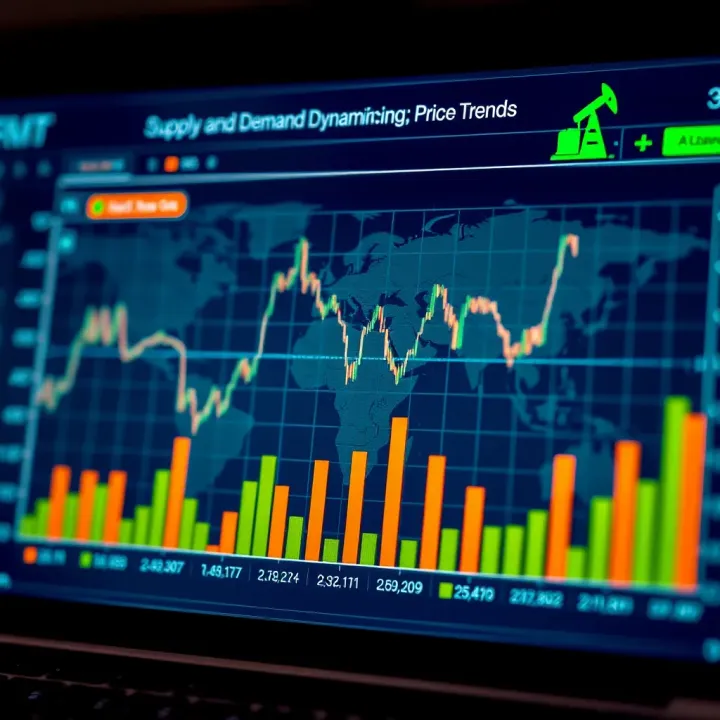
Crude Oil Price Prediction: Key Methods & Market Factors
🔍 Discover how crude oil price prediction methods consider supply-demand shifts, geopolitical events, and tech advances impacting India's energy markets and economy.
Edited By
James Fletcher
Crude oil prices remain highly sensitive to a mix of economic, geopolitical, and supply-demand factors. For Monday's market, traders and investors should keep a close eye on several key indicators shaping the outlook.
The global economic environment plays a large role. Recent manufacturing data from China and the US, two of the world's biggest oil consumers, offer early signals for demand trends. Weakening factory output can hint at subdued oil consumption ahead, while robust figures push prices upward. Indian traders should also note the rupee-dollar exchange rate as it affects import costs directly.
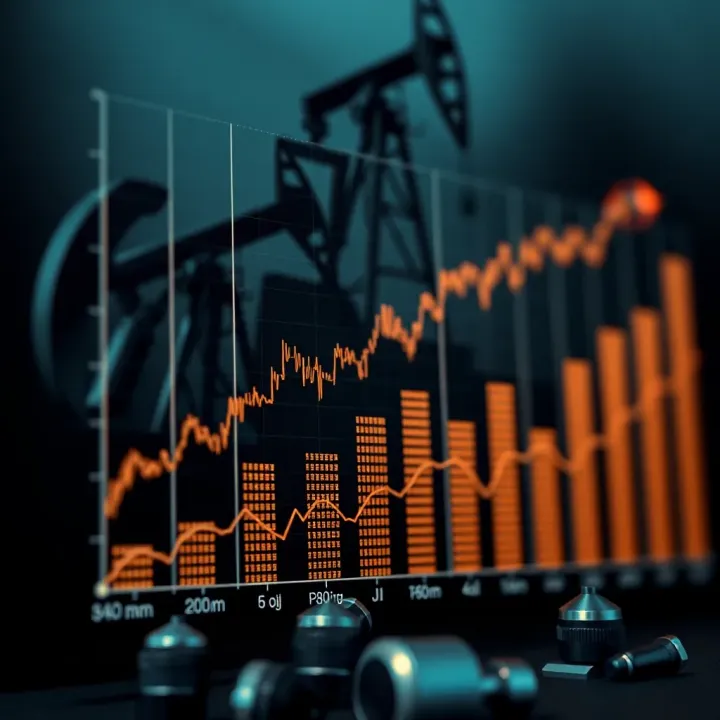
Geopolitical events continue to stir volatility. Rising tensions in the Middle East, fluctuations in OPEC+ production targets, and sanctions on oil-exporting countries directly impact supply availability. For instance, any decision by Saudi Arabia or Russia to alter output will ripple through the market quickly. These moves tend to create sharp price swings, so staying informed through reliable financial news sources is a practical necessity.
On the technical front, oil futures charts suggest support and resistance levels that traders watch closely. If prices hold above a key moving average, it points to bullish momentum. Conversely, a break below certain technical thresholds may signal a potential downturn, prompting careful position adjustments.
Keep in mind that unexpected weather disruptions in oil-producing regions can also affect supply and, by extension, prices. For example, storms in the Gulf of Mexico often lead to temporary halts in production.
To summarise, here are the main factors to monitor for Monday:
Economic indicators from China, the US, and India
Geopolitical developments, especially in OPEC+ nations
Rupee-dollar exchange fluctuations
Technical analysis levels in crude oil futures
Weather events impacting production hubs
Together, these will shape the near-term price direction. By tracking these variables, traders and investors can make more informed decisions rather than reacting on guesswork or rumours.
Understanding current crude oil market conditions is key for traders and investors planning moves for Monday. These conditions shape price expectations by revealing supply-demand dynamics, market sentiment, and emerging risks. In particular, analysing global factors like OPEC decisions alongside recent price behaviour helps you spot where the market might head next.
OPEC’s production strategies directly affect crude oil prices. If OPEC opts to cut output, it typically tightens supply, pushing prices higher. For instance, when OPEC announced reduced production last month, Brent crude prices gained nearly 4% amid concerns about undersupply. Conversely, if OPEC signals an increase or maintains high production, prices may soften as supply eases. Traders closely monitor these announcements since they indicate the group’s standpoint on market balance.
US shale oil adds complexity to global supply. The shale sector can ramp up production relatively fast, counteracting OPEC’s cuts. Recently, US shale firms have boosted output in response to higher prices, cushioning supply tightness. This flexibility often dampens sharp price surges, creating resistance levels around which prices fluctuate. For traders, tracking rig counts and production reports from agencies like the Energy Information Administration (EIA) offers timely clues on supply shifts.
Demand from countries like the US, China, and India strongly influences oil prices. With economic recovery gaining pace in these markets, fuel consumption tends to rise, lifting crude demand. For example, improved industrial activity and vehicle sales in India have increased petrol and diesel usage, supporting crude prices. Conversely, signs of weakening demand due to inflation or policy tightening can cool prices. Staying attuned to gross domestic product (GDP) growth, manufacturing indices, and energy consumption data provides insights into demand trajectories.
Last week’s price action sets the stage for Monday’s trading. Crude oil has shown moderate gains amid volatile sessions, reflecting mixed signals from supply concerns and demand uncertainties. For instance, a midweek dip followed by a strong rebound indicates trader indecision and potential for short-term swings. By analysing these movements, traders can identify support and resistance levels crucial for entry and exit decisions.
Recent economic reports, such as inflation figures and job data from major economies, have swayed crude prices. Strong economic data tends to boost demand expectations, pushing prices up, while weaker data raises fears of slower growth and subdued fuel use. For example, softer-than-expected US employment numbers last Friday led to a slight pullback in oil prices. Such reactions underline the importance of economic calendars before Monday’s market.
Investor sentiment shapes willingness to take positions in oil markets. Currently, confidence appears cautiously optimistic but tentative due to mixed geopolitical signals and economic data. Sentiment trackers, futures positioning, and volume trends reveal underlying risk appetite or aversion. Knowing when investors are leaning risk-on or risk-off helps predict volatility and potential price moves.
Keeping a close eye on these fundamental and sentiment factors provides traders with a grounded picture of market currents shaping crude oil prices this Monday. It helps avoid surprises and informs smarter trading strategies.
Geopolitical and economic factors play a significant role in shaping crude oil prices, especially ahead of the Monday market session. Traders and investors closely watch these influences because disruptions or changes can quickly alter supply expectations and market sentiment. Understanding these elements helps in making informed trading decisions, whether it is adjusting positions or anticipating price volatility.
Conflicts in key oil-producing areas such as the Middle East or parts of Africa can create sudden supply risks. For example, any escalation in tensions around the Persian Gulf or disruptions due to clashes in Libya or Nigeria often push prices upward, as traders worry about potential supply shortages. These conflicts raise uncertainty about steady crude flow, encouraging speculative buying. For Monday, keeping an eye on news from conflict zones can provide clues to price movements.
Sanctions imposed by major economies on oil-producing countries, like those on Iran or Venezuela, can restrict global supply. When new sanctions are announced or tightened, or when trade negotiations affect export volumes, oil prices often react sharply. Traders in India must especially note how sanctions impact oil availability and shipping routes. Any fresh restrictions ahead of Monday may tighten supplies and push prices higher.
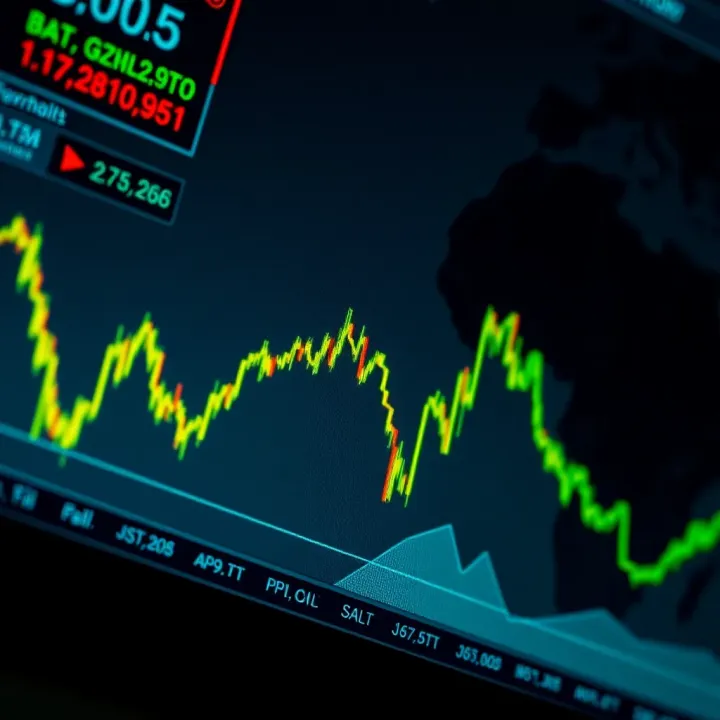
Political stability in producing nations directly impacts production levels. Countries facing elections, government changes, or social unrest can experience production slowdowns or strikes. For instance, unexpected labour strikes in Saudi Arabia or Venezuela can reduce output, triggering price spikes. Monitoring political developments over the weekend gives traders a heads-up on supply side risks that may reflect in Monday’s pricing.
Inventory data reveal current crude stock levels and demand trends. The US Energy Information Administration (EIA) publishes weekly reports showing changes in crude inventories. A drop in stocks usually signals higher demand or lower supply, boosting prices. Similarly, India's oil stock levels and demand data provide a local perspective, influencing domestic pricing expectations. Traders anticipating Monday moves should review the latest reports released over the weekend or Friday.
Crude oil is priced in US dollars, so fluctuations in major currencies affect pricing dynamics. For Indian traders, the rupee-dollar exchange rate matters greatly. A weaker rupee against the dollar generally makes oil imports costlier, which can pressure domestic prices even if global crude is steady. Conversely, a stronger rupee eases import costs. Ahead of Monday, currency movements must be tracked along with crude trends for a clearer pricing picture.
Expectations about global economic growth influence oil demand forecasts. Slower growth estimates from organisations like the International Monetary Fund (IMF) or World Bank tend to signal reduced energy consumption, putting downward pressure on prices. Conversely, optimistic growth outlooks imply higher oil demand. Checking the latest updates on global growth before Monday can help traders gauge demand-side strength and probable price direction.
Staying updated on geopolitical events and economic data is essential for anticipating crude oil price changes, especially for Monday’s market. These factors combined create the backdrop against which technical patterns and trader sentiment unfold.
Technical signals and price prediction models are vital tools for traders and investors to decipher crude oil price movements and make informed decisions. Unlike fundamental analysis that focuses on external factors, technical analysis hinges on price charts and market data, helping spot patterns and trends that indicate possible price directions. Using these signals effectively can aid in timing trades and managing risks, especially in a volatile market like crude oil.
Support and resistance levels represent price points where crude oil tends to pause or reverse. Support acts as a floor preventing prices from falling further, while resistance is a ceiling where prices face selling pressure. These levels are crucial because they reflect collective market psychology; for instance, if crude oil repeatedly bounces back near ₹5,200 per barrel, traders consider this a strong support zone.
Knowing these levels helps traders set entry and exit points. For example, buying close to support with a stop loss just below it limits losses if the price breaks down. Conversely, resistance levels guide profit booking or short-selling decisions. Ignoring these zones can lead to getting caught in unexpected price swings.
Moving averages smooth out price data over a set period, like the 50-day or 200-day moving average, highlighting prevailing trends. When the short-term average crosses above the long-term one—a pattern known as a "golden cross"—it signals a possible upward trend. Conversely, a "death cross" indicates bearish momentum.
Momentum indicators such as the Relative Strength Index (RSI) or Moving Average Convergence Divergence (MACD) measure the speed of price changes. An RSI above 70 suggests crude oil is overbought and may soon correct, while below 30 indicates oversold conditions. Combining these indicators with moving averages gives traders a clearer idea of trend strength and potential reversals.
Volume reveals the number of contracts or barrels traded during a price move, confirming the strength behind that movement. A price rise on increasing volume suggests genuine buying interest, while a price rise on low volume can be a weak rally likely to fade. Similarly, price falls with high volume signal stronger selling pressure.
For example, if crude oil crosses a resistance level of ₹5,300 with a surge in volume, this breakout may be genuine and sustainable, signalling buying opportunities. Tracking volume patterns alongside price helps traders avoid false breakouts and better time their trades.
Market analysts across reputed brokerage firms often share their price predictions based on a blend of technical signals, supply-demand outlook, and geopolitical developments. These consensus targets indicate a price range traders expect for Monday, helping set realistic expectations.
For instance, if the consensus target falls between ₹5,150 and ₹5,250, traders can plan their strategies accordingly, avoiding overexposure to unexpected price swings beyond this range. Such forecast ranges also guide intraday and short-term trading decisions.
Crude oil is known for rapid swings due to geopolitical events or economic data releases. Analysts assess volatility trends to alert traders about possible intense price fluctuations on Monday. Knowing volatility expectations helps in adjusting position sizes and setting stop losses prudently.
If higher volatility is forecasted, traders might prefer conservative intraday strategies, while stable volatility allows more aggressive positions. Such insights serve as risk management aids in the unpredictable crude oil market.
Analysts usually outline different scenarios based on key triggers—like unexpected inventory data, OPEC announcements, or currency shifts—that might sway crude prices Monday. Each scenario comes with suggested trading strategies, such as buying on dips near support or shorting after failed breakout attempts.
For example:
Bullish scenario: Strong US inventory drawdown pushes prices above ₹5,300, suggesting momentum trades with trailing stops.
Bearish scenario: Renewed sanctions ease supply fears, causing prices to slip below ₹5,100, favouring short positions.
Having predefined scenarios and strategies helps traders react swiftly rather than guessing during market noise.
Combining technical analysis and expert forecasts empowers traders to navigate Monday's crude oil price movements with greater confidence and preparedness, managing risks efficiently while capitalising on emerging opportunities.
Crude oil price fluctuations strongly influence India’s economy, making this section critical for traders and investors keeping an eye on market moves. India imports nearly 85% of its crude oil, so global price changes quickly filter down to domestic petrol and diesel rates. This affects not just fuel expenses but also impacts inflation and key sectors like transportation and manufacturing.
The retail prices of petrol and diesel in India are determined by a mix of global crude oil rates, refining costs, and local taxes. The central government levies excise duty, while state governments add Value Added Tax (VAT), which varies across states. For instance, Maharashtra’s VAT on petrol is significantly higher than that in Delhi. These taxes make up a substantial chunk of the final price at the pump.
When crude oil prices rise, the increase doesn't translate one-to-one to pump prices due to this layered taxation. Similarly, if global prices dip, state and central taxes limit how much consumers benefit. This pricing mechanism means traders must watch both crude rates and fiscal policies to anticipate retail price movements accurately.
Changes in crude prices do not immediately reflect in petrol and diesel costs. Oil marketing companies (OMCs) review and revise retail prices daily but are influenced by government guidelines and market conditions. This delay in pass-through can sometimes lead to situations where consumers face high retail rates despite recent price corrections at the global level.
This lag affects consumer sentiment and buying patterns, especially for transport fleets and small businesses where fuel costs form a major part of operational expenses. Traders should note these timing gaps as they can cause short-term volatility in fuel demand and stock movements related to energy sectors.
Fuel costs are a major driver of inflation in India because they influence transport and logistics expenses, which trickle down to goods and services. Rising crude oil prices tend to push up the Consumer Price Index (CPI), impacting the Reserve Bank of India’s (RBI) monetary policy decisions.
For example, when crude hit over $80 per barrel recently, core inflation saw noticeable upticks, prompting RBI to signal tighter interest rates. Traders should keep track of crude price trends as early indicators of potential inflationary challenges that can affect equity and bond markets.
Heavy industry, including chemicals, fertilisers, and plastics, relies on petroleum products as raw materials or energy sources. A jump in crude prices raises production costs, squeezing profit margins or pushing prices higher for end consumers. Additionally, India's crude oil import bill swells with rising crude prices, impacting the trade deficit.
This tends to weaken the Indian rupee against the US dollar, adding to import costs for other commodities. Investors and financial analysts should monitor crude price moves closely alongside currency trends to assess sectoral impacts and identify opportunities or risks in the stock market.
Understanding the nuances of how crude oil prices affect India’s economy helps traders make smarter decisions, considering not just the raw commodity movements but also local market and policy factors influencing price transmission and economic health.
Knowing how to prepare for Monday’s crude oil price changes is vital for both traders and consumers. For traders, it’s about managing risks and making the most of market opportunities. Consumers, especially businesses reliant on fuel, need to plan their budgets and consider alternatives to stay unaffected by price swings.
Stop loss and limit orders help traders control potential losses and lock in profits. A stop loss order automatically sells a position if prices fall to a certain level, preventing bigger losses if the market suddenly moves against the trader. For instance, if crude oil is trading at ₹5,000 per barrel and a trader sets a stop loss at ₹4,900, their position will exit once the price hits ₹4,900, limiting further downside risk.
Limit orders, on the other hand, allow traders to buy or sell only at a specified price or better. This is useful to enter or exit trades at precise levels without constantly monitoring the markets. A trader waiting for a dip to ₹4,800 can place a limit buy order, which will trigger only if prices fall to that point.
Real-time updates are indispensable due to the volatile nature of crude oil markets. Traders should keep an eye on developments such as OPEC announcements, geopolitical tensions, or economic reports impacting demand. For example, a sudden update about unrest in an oil-producing region may cause prices to spike swiftly.
Using platforms that offer live market data and news feeds helps traders make quick, informed decisions. Many Indian brokerage firms now provide integrated news alerts with trading terminals. Staying ahead with fresh data reduces surprises and optimises trade execution.
With crude oil prices influencing petrol and diesel rates, businesses relying on transportation or manufacturing face fluctuating input costs. Planning a fuel budget considering possible price rises on Monday helps avoid last-minute financial strain.
A transport company, for example, can monitor expected price changes and adjust delivery charges accordingly or negotiate fuel surcharges in advance. Consumers should also consider fuel consumption habits to manage household budgets better, especially during festival seasons or peak travel periods.
For both consumers and businesses, exploring alternative energy sources offers some insulation against crude price volatility. Switching to electric vehicles or using solar power in production can reduce dependence on fossil fuels.
Small businesses with delivery fleets might evaluate hybrid or electric vehicles that lower fuel costs over time. Indian government incentives for renewable energy may further ease the upfront investment. This approach not only cuts costs but also aligns with growing environmental awareness.
Whether you trade oil futures or simply fill your bike’s tank, preparing smartly for Monday’s crude price movements will help you avoid shocks and make better decisions.
🔍 Discover how crude oil price prediction methods consider supply-demand shifts, geopolitical events, and tech advances impacting India's energy markets and economy.

📈 Explore Bittorrent's price potential with insights on key drivers, market trends, risks, and expert views to guide your investment decisions confidently.

📈 Explore the long-term outlook of Reliance Industries share price by 2030, factoring in market trends, company strategy, and economic risks for Indian investors.

📈 Explore RCom's share price forecast till 2030, with insights on market trends, risks, and strategies for Indian investors to make smart decisions.
Based on 7 reviews