

Aave Price Prediction and Market Outlook
Get detailed insights on Aave's price trends, market factors, expert forecasts, and risks. Stay informed about Aave's future in DeFi with this clear outlook 📈💡
Edited By
Emma Sutton
Crude oil price prediction matters a lot for traders, investors, and analysts since it directly affects sectors like manufacturing, transportation, and even inflation rates in India. Knowing the likely direction of prices helps in making informed decisions on investments, hedging strategies, and risk management.
Oil prices are influenced by a mix of supply-demand factors, geopolitical tensions, and technological changes. For example, the announcement of increased production by OPEC countries or a sudden conflict in the Middle East tends to send prices soaring. Conversely, advancements in electric vehicles or renewable energy adoption can reduce oil demand, pushing prices down.
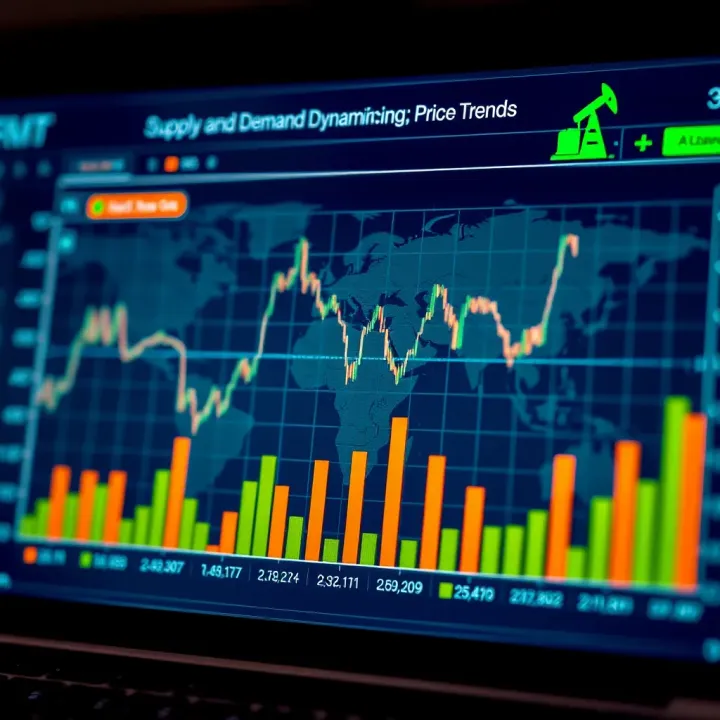
Indian stakeholders must also watch global inventory levels, USD fluctuations, and local policy shifts like changes in fuel taxes or the opening of upstream oil exploration. These factors combine in dynamic ways, making price forecasting a challenging task.
Accurate crude oil price forecasting is complex, but staying updated with key market drivers can significantly reduce risks and improve decision-making.
To help readers grasp this complexity, the article will cover:
Fundamental influences on crude oil prices such as production cuts, consumption trends, and geopolitical events
Forecasting methods including statistical models, machine learning techniques, and expert analysis
Challenges in prediction stemming from volatility, data limitations, and unexpected global events
By understanding these aspects, you can better navigate the energy market landscape and plan investments or business strategies accordingly.
This knowledge is particularly relevant for those engaged in Indian markets, where oil price shifts impact everything from petrochemical costs to transportation fares and ultimately consumer inflation.
Understanding what drives crude oil prices is essential for anyone involved in trading, investing, or analysing financial markets. These factors affect price trends and volatility, helping market participants make better decisions. A few key elements stand out for their significant influence: supply-demand dynamics, geopolitical and economic events, and currency movements combined with market speculation.
The amount of crude oil produced by top exporters like Saudi Arabia, Russia, and the US has a direct bearing on global supply. When these countries increase output, it generally pushes prices down due to higher availability. For instance, Saudi Arabia’s decision in 2018 to ramp up production amid falling prices kept global crude oil relatively affordable. Conversely, decisions by the Organisation of the Petroleum Exporting Countries (OPEC) to cut production tighten supply and can send prices soaring. Traders watch these moves closely, as even small shifts in barrels per day affect market balance.
Rapid economic growth in countries such as India and China drives up the demand for crude oil steadily. Urbanisation, rising vehicle ownership, and industrial expansion increase energy needs. This growing appetite for oil strains supply, especially when production can’t keep pace, often leading to upward pressure on prices. For example, India’s increasing fuel consumption during festive seasons usually boosts crude prices globally. Investors and analysts factor these patterns into forecasts, as demand from emerging economies is less predictable than mature markets.
Strategic petroleum reserves (SPR) act as emergency stockpiles maintained by governments to stabilise supply disruptions. When oil prices spike due to sudden shocks like geopolitical conflicts or natural disasters, countries may release stocks to cool prices temporarily. India’s expanding SPR facilities, located at Vishakhapatnam and Mangaluru, help buffer domestic markets against international price swings. For market watchers, SPR releases represent a temporary supply increase that might lessen volatility, providing short-term relief to buyers.
Wars, civil unrest, or political instability in countries like Libya, Iran, or Iraq can disrupt oil exports and sharply reduce global supply. For example, tensions in the Strait of Hormuz, a vital shipping lane, often trigger price spikes because a significant share of the world’s oil passes through it. Such conflicts create uncertainty, leading traders to bet on higher prices as supply risks escalate. This unpredictability adds a layer of risk for investors and companies relying on stable energy costs.
Economic sanctions imposed on oil producers, such as US sanctions on Iran and Venezuela, restrict their ability to export crude oil. These measures reduce global supply and push prices higher. India's oil imports from sanctioned nations often fluctuate due to these policies, affecting refinery procurement and pricing domestically. Trade agreements and tariffs also influence crude oil flows and costs, so keeping track of international diplomacy is key for price predictions.
Economic slowdowns or recessions reduce industrial activity and energy consumption, trimming crude oil demand. The 2020 COVID-19 pandemic led to historic demand drops and a sharp fall in prices. Conversely, strong economic growth fuels greater energy use, nudging prices up. Investors monitor GDP growth rates, manufacturing outputs, and indicators like Purchasing Managers’ Index (PMI) to gauge future oil demand. This outlook influences trading positions and long-term contracts.
Crude oil is priced internationally in US dollars (USD), so the currency’s strength affects import costs for countries using other currencies. When the USD strengthens, oil becomes more expensive for holders of currencies like the Indian rupee, often causing import bills to rise. This in turn affects domestic fuel prices in India. Conversely, a weaker dollar tends to support higher oil prices due to increased global purchasing power. Traders therefore keep a close eye on dollar index movements.
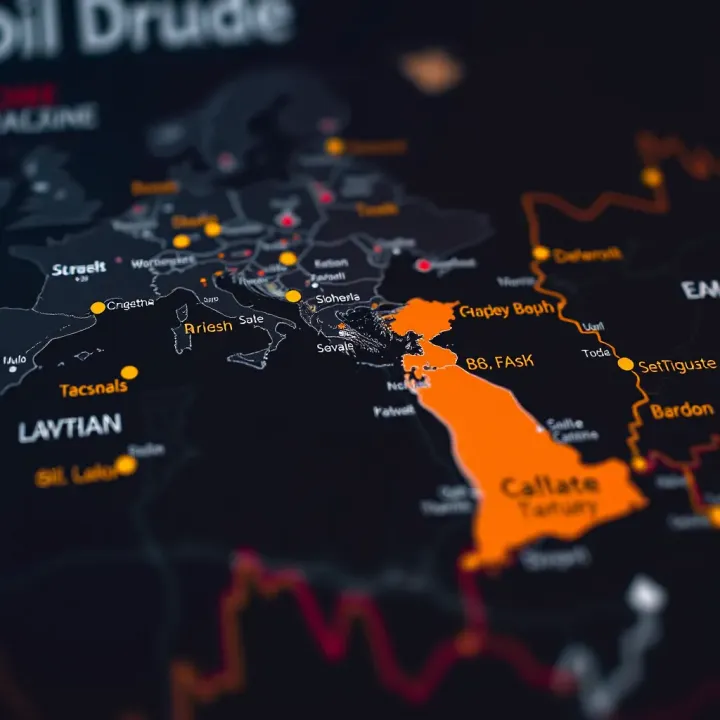
Futures contracts allow market participants to lock in oil prices for future delivery, managing risk amid price volatility. Hedge funds, oil companies, and importers use these instruments to protect against adverse price moves. High volumes in futures markets signal active hedging and speculation, which can drive price movements independent of physical supply-demand factors. For example, during periods of uncertainty, futures prices may reflect expected disruptions or recoveries.
Speculators often amplify price swings by buying crude oil contracts based on market sentiment rather than fundamentals. Large speculative positions can lead to sudden price jumps or crashes, especially when combined with geopolitical news or economic data releases. Understanding these behaviours helps analysts separate true supply-demand signals from noise caused by speculative trading. This insight is valuable for traders aiming to time entry and exit points accurately.
Monitoring these key factors together provides a more rounded picture of crude oil price movements. For market participants in India especially, given the country's reliance on oil imports, grasping these influences aids in crafting better investment and risk management strategies.
Knowing how to predict crude oil prices helps traders and investors plan better, as oil markets react to many complex factors. These prediction methods break down into fundamental analysis, technical analysis, and advanced statistical or machine learning models. Each offers unique insights and comes with its own benefits and challenges.
Examining supply-demand indicators is often the starting point. Analysts look at production data from major oil producers like Saudi Arabia or Russia alongside consumption trends in large economies such as China or India. For example, if China's industrial output rises suddenly, demand for crude might spike, pushing prices up. Conversely, oversupply from shale producers in the US can cool prices. Monitoring inventories held in strategic petroleum reserves and commercial stocks also indicates market tightness or ease.
Assessing geopolitical risk factors is crucial since oil supply disruptions from conflict zones like the Middle East or sanctions on countries such as Iran or Venezuela can cause sudden price swings. Traders watch news about these risks carefully because even rumours can trigger speculative moves. For instance, tension in the Strait of Hormuz, through which a significant portion of the world's crude passes, often leads to price volatility.
Economic data interpretation links oil prices to broader economic health. Slowdown signals like falling manufacturing indexes or rising unemployment can dampen oil demand expectations, lowering prices. On the other hand, strong GDP growth forecasts might prompt investment in energy sectors, lifting prices. For example, the Purchasing Managers' Index (PMI) figures from countries like the US or Germany often guide traders about future demand.
Price charts and trend patterns help spot probable future moves based on past price action. Traders examine candlestick patterns, head-and-shoulders formations, or support and resistance levels in oil price charts. For example, if crude prices bounce repeatedly off ₹5,000 per barrel, that level is seen as strong support.
Use of moving averages and oscillators like the 50-day or 200-day moving averages smooth out daily price noise and show overall trends. Oscillators such as the Relative Strength Index (RSI) highlight when prices might be overbought or oversold. A sharp climb in RSI above 70 could signal a price correction is near.
Volume and momentum indicators confirm the strength behind price movements. Rising prices accompanied by high trading volume suggest robust buyer interest. Momentum indicators like the Moving Average Convergence Divergence (MACD) provide clues about changing trends early. If MACD crosses above its signal line, traders might expect bullish momentum.
Time series forecasting techniques analyse historical price data to predict future trends. Methods like ARIMA models help capture patterns in oil price fluctuations over time. Although powerful, they require large datasets and assume that past patterns somewhat repeat, which is not always the case in highly volatile markets.
Artificial neural networks and regression models use algorithms mimicking the human brain to detect complex non-linear relationships among factors influencing prices. For example, they can factor in geopolitical events, economic data, and technical signals simultaneously to generate predictions. Big Indian financial firms and research bodies have begun employing these techniques with mixed success.
"While machine learning models hold promise, traders should remember they depend heavily on the quality and quantity of input data. Incomplete or delayed data can lead to misleading forecasts."
Limitations and data challenges persist across all prediction methods. Crude oil markets face sudden shocks like natural disasters or policy changes that models cannot easily foresee. Data delays, especially from emerging economies, reduce prediction accuracy. Overfitting to past data also risks forecasts being too narrowly tailored to historical quirks and failing under new conditions.
Combining these methods smartly and staying updated on global developments improves chances of realistic oil price forecasts. For traders and investors in India, blending fundamental insights with technical signals and cautious use of advanced models can help navigate crude oil market swings effectively.
Forecasting crude oil prices is never a walk in the park. Traders and analysts face numerous hurdles, mainly because oil markets are influenced by a complex mesh of unpredictable factors. Understanding these challenges is vital to making sense of price forecasts and managing associated risks effectively.
Sudden geopolitical disruptions can throw the oil market into chaos almost overnight. For instance, conflicts in the Middle East or unexpected sanctions on major oil producers like Iran or Venezuela can cause immediate supply fears. This uncertainty leads to sharp price swings, often beyond what any model predicted. Traders need to stay alert to such events as they can wipe out careful forecasts in hours.
Natural disasters and supply shocks add another layer of unpredictability. Cyclones damaging oil rigs in the Bay of Bengal or floods disrupting refinery operations can temporarily limit supply. Similarly, accidents, such as pipeline leaks or fires, can suddenly reduce available crude oil. These shocks are difficult to anticipate but impact prices significantly by creating short-term shortages or transport bottlenecks.
Timeliness and reliability of market data are crucial for accurate price prediction. Delays or inaccuracies in reporting production levels, inventory stats, or trade volumes hamper analysts’ ability to respond quickly. For example, if India’s crude imports data come in late or with errors, forecasting models may base predictions on outdated or skewed information, leading to wrong calls.
Access constraints in emerging markets complicate data gathering further. Some oil-producing countries do not publish detailed or regular data due to political or infrastructural reasons. This creates blind spots for analysts relying on comprehensive datasets. For example, lack of transparent reporting from certain African producers makes it harder to assess true supply conditions.
Challenges with complex forecasting models arise when analysts use advanced algorithms or machine learning techniques. While these models can capture intricate patterns, they sometimes fit too closely to historical data quirks rather than actual market behaviour. This overfitting leads to poor predictions when conditions shift unexpectedly.
Balancing accuracy with explainability is another practical concern. Highly complex models may offer better accuracy but behave like “black boxes,” making it difficult for analysts and traders to understand the rationale behind predictions. Simple models might be easier to interpret but could miss nuanced influences. Striking the right balance helps decision-makers trust forecasts while staying aware of their limitations.
To sum up, crude oil price forecasting faces real-world challenges from geopolitical surprises, data issues, and model complexities. Recognising these helps traders and investors use predictions more wisely, mitigating risks while planning their strategies.
Crude oil price predictions significantly affect India’s economy, given the country’s heavy reliance on oil imports. Accurate forecasting helps policymakers, investors, and businesses plan better, especially in managing inflation and trade balances. Understanding these impacts is vital for investors and traders who track market movements closely.
Crude oil prices directly influence petrol and diesel costs in India. When crude prices rise, it generally leads to higher fuel prices at the pump since the Indian government passes most of these cost changes to consumers. For example, a sharp increase in crude prices earlier in 2023 pushed petrol prices above ₹100 per litre in several metro cities, squeezing household budgets.
Fuel price fluctuations don’t stay confined to petrol pumps—they ripple through the economy. Transportation and logistics companies face increased expenses when diesel prices climb, straining supply chains. This burden often passes on to consumers in the form of higher prices for goods, contributing to overall inflation. For traders and financial analysts, tracking crude oil price shifts offers insight into future inflation trends, helping them adjust strategies accordingly.
India imports roughly 80% of its crude oil, making oil import bills a large chunk of the current account deficit. Rising crude prices mean a higher import bill, putting pressure on India’s trade balance. For instance, during the crude price spike in 2022, India’s trade deficit widened, impacting economic stability.
These import pressures can weaken the rupee since India needs more foreign currency to pay for oil imports. A shaky rupee, in turn, leads to tighter foreign exchange reserves and can increase the cost of servicing external debt. Investors and currency traders keep a close eye on crude forecasts to anticipate rupee fluctuations and plan forex exposure.
The government often responds to volatile crude prices by adjusting subsidies and taxes to shield consumers. For example, the phased reduction in petrol excise duties during periods of rising crude prices helps moderate retail fuel costs, though it affects fiscal health. Traders and analysts should watch such policy moves as they signal market interventions that can temporarily disconnect crude prices from retail fuel rates.
Besides immediate measures, India is stepping up investment in alternative energy sources to reduce crude dependency. The push for electric vehicles and solar power aims to stabilize long-term demand for oil. This strategic shift matters for investors eyeing energy sector trends and companies involved in renewables, as it influences future crude oil consumption and price dynamics.
Crude oil price predictions are more than just market data; they inform crucial decisions impacting India's inflation, trade balance, and energy future. Understanding these can give traders an edge in anticipating market and policy shifts.
The oil market evolves continuously, thanks to technology and shifting global energy patterns. Understanding future trends in crude oil price forecasting equips traders and analysts with tools to navigate this complex environment. These trends include the integration of big data and artificial intelligence (AI), shifts caused by renewable energy adoption, and closer collaboration among nations and organisations. Such developments improve prediction accuracy and help in better risk management.
Real-time market sentiment analysis plays a growing role in crude oil price forecasting. By analysing news reports, social media updates, and trading chatter instantly, AI systems can detect emerging market moods affecting demand or supply expectations. For example, detecting rising tensions in the Middle East or unexpected production cuts within minutes allows analysts to adjust forecasts swiftly. This real-time insight helps traders react faster than traditional methods relying on periodic reports.
In addition, improved pattern recognition and decision-making capabilities from AI models refine forecasts by recognising subtle trends often missed by human analysis. Machine learning algorithms digest vast historical datasets, including price movements, inventory levels, and economic indicators, to spot recurring patterns. These models can adapt to changing market conditions, reducing errors caused by outdated assumptions. Especially for day traders or financial analysts, such enhancements lead to more informed decisions and potentially better returns.
The rise of renewables is reshaping crude oil demand patterns worldwide. As India and other economies invest in solar, wind, and electric vehicles, the pressure on crude oil consumption grows. These changing demand patterns require forecasters to factor in the pace at which renewables replace traditional fuel sources. For instance, faster adoption of electric cars in metropolitan areas like Delhi or Bengaluru signals a decline in petrol and diesel consumption, influencing long-term price expectations.
This energy shift also has long-term implications for crude oil markets. With declining demand from transport and power sectors, producers may rethink investment and production strategies. Price forecasts must consider scenarios where crude oil becomes less central, affecting supply dynamics and price volatility. For investors, understanding this transition helps in portfolio adjustments aligned with future energy trends.
Energy security alliances between countries help stabilise oil supplies and mitigate risks from geopolitical disturbances. In South Asia, cooperation among oil-importing nations can smooth supply chains and share emergency reserves. Such alliances provide a more predictable foundation for price forecasting by reducing uncertainty tied to conflict or trade restrictions.
Moreover, shared data platforms for forecasting enable transparency and collective intelligence. Collaborative databases featuring production figures, inventory data, and consumption trends enhance the quality and availability of information. For example, platforms jointly maintained by oil producers and consumers offer a common view that reduces misinformation. For traders and analysts, access to these comprehensive data pools improves confidence in predictions and supports better market strategies.
Staying ahead in crude oil price forecasting means embracing technology, recognising energy shifts, and fostering international cooperation. These future trends strengthen forecasting models and help market participants manage risks more effectively.
Get detailed insights on Aave's price trends, market factors, expert forecasts, and risks. Stay informed about Aave's future in DeFi with this clear outlook 📈💡

📈 Explore Dot Coin price forecast with detailed analysis, market factors, expert views, and risks to help you make informed investment choices in India.

Explore Ripple XRP price predictions 📊 with in-depth insights on market trends, tech updates, regulations, and expert views shaping its future value globally.

🔍 Explore BCH coin price trends, expert forecasts, and factors shaping Bitcoin Cash valuations. Learn how Indian investors can stay updated and navigate regulatory shifts effectively.
Based on 15 reviews