
Understanding 30 Rates Silver: Market Trends & Investment
📈 Understand 30 rates silver in the Indian market: pricing factors, historical trends & investment tips to make well-informed decisions on silver trading and buying.
Edited By
Henry Lawson
The DAX share market stands as one of Europe’s most influential stock indices, representing the 40 largest companies listed on the Frankfurt Stock Exchange. It reflects Germany’s economic health and often acts as a barometer for the broader Eurozone market. For Indian investors and traders keeping an eye on global markets, understanding the DAX can provide useful diversification and insight opportunities.
Unlike single-stock trading, the DAX index itself tracks the weighted performance of top German firms from sectors like automotive, chemicals, banks, and technology. Companies such as Siemens, Volkswagen, Allianz, and Deutsche Telekom shape its movements.
Given its global importance, the DAX’s fluctuations often ripple through other major indices like the Sensex or Nifty 50, influencing investor sentiment and foreign portfolio investments.
Key drivers behind the DAX’s daily ups and downs include economic data releases from Germany and the Eurozone, central bank policies like those of the European Central Bank (ECB), geopolitical tensions, and global trade developments. For example, an unexpected change in ECB’s interest rates or fresh trade tariff news between the EU and the US can cause noticeable market swings.
Indian traders should also consider currency impact when evaluating positions in the DAX. Movements of the euro against the rupee influence returns, especially for those investing through overseas mutual funds or ADRs.
Understanding the DAX market further involves recognising its volatility patterns. It normally fluctuates in response to quarterly earnings reports of constituent companies and Germany’s industrial output figures. Unlike some emerging market indices, it tends to be less subject to speculative bubbles but reacts sharply to macroeconomic shocks.
To approach DAX investments wisely, Indian investors may:
Track global economic calendars for key Eurozone events
Monitor ECB policy meetings
Analyse sectoral trends within the DAX components
Factor in currency hedging options where necessary
This foundational knowledge sets the stage for more detailed analysis of trends, risks, and practical strategies tailored for those actively trading or investing in the DAX share market.
The DAX share market stands as a key barometer for investors worldwide wanting to understand Germany’s economic health and corporate landscape. This section lays down a strong foundation by explaining what the DAX index comprises and how it mirrors the broader German economy. For traders and investors, especially those from India aiming to diversify portfolios internationally, grasping these basics proves crucial before diving into market trends or investment strategies.
The DAX (Deutscher Aktienindex) tracks the performance of 40 large publicly traded companies listed on Germany’s Frankfurt Stock Exchange. These companies are primarily blue-chip and constitute roughly 80% of the market capitalisation of listed German firms. Examples include global giants like Siemens, Volkswagen, and Bayer, whose operational scale directly influences the index’s movement. This composition gives investors a snapshot of Germany’s corporate strength and sectoral weightage.
Being a performance index, DAX also factors in dividend payouts, unlike a price index, making it more comprehensive by reflecting total shareholder returns. This means investors get a clearer picture of market returns compared to indices that only track share price changes. Understanding such details helps traders align their expectations and portfolio management strategies.
Launched in 1988, the DAX initially included 30 companies but expanded to 40 in September 2021, reflecting market evolution. Its creation aimed to offer a reliable performance indicator tied closely to Germany’s industrial growth, serving both domestic and international investors. Over the decades, it evolved into an essential financial benchmark, comparable to other major global indices such as the FTSE 100 or the S&P 500.
Importantly, the DAX's timing overlap with global markets allows investors worldwide to gauge European market sentiment and react accordingly. For example, when economic data from Germany shows strength, it often triggers positive moves in the DAX, influencing fund flows from Asian and Indian investors seeking exposure to European equities.
The DAX brings together companies across various critical sectors including automotive, chemicals, pharmaceuticals, engineering, and finance. The automotive sector, dominated by firms like BMW and Volkswagen, accounts for a substantial slice of the index, making it sensitive to global demand changes, chip shortages, and supply chain disruptions.
Pharmaceutical and chemical companies such as Bayer and Merck also play a major role, highlighting Germany’s strength in these industries. This sectoral spread means shifts in industrial production, export demand, or regulatory changes directly impact the DAX’s performance.
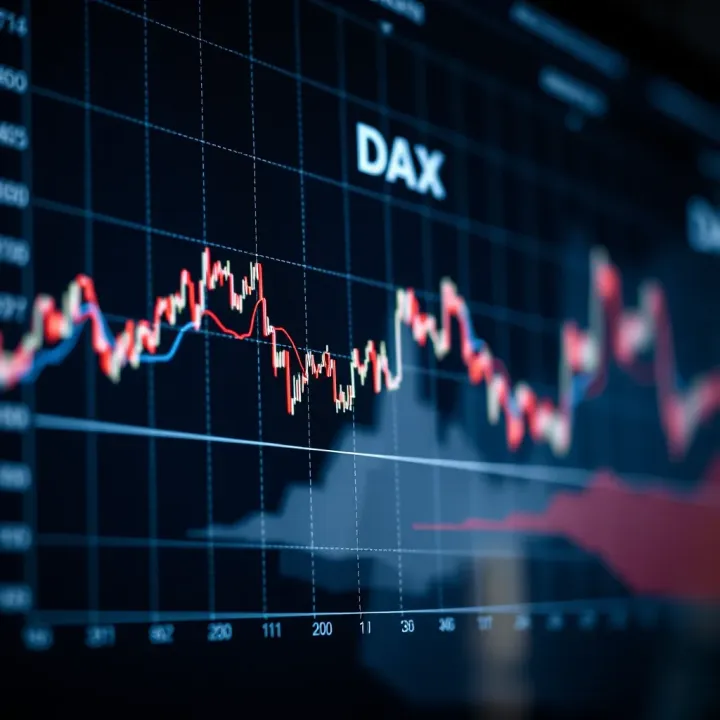
Several economic factors correlate strongly with the DAX levels, including Germany’s industrial output, export volumes, and business sentiment indices. For instance, a rise in the Purchasing Managers' Index (PMI) often hints at expanding manufacturing activity, which tends to boost DAX performance. Conversely, a slump in exports due to geopolitical tensions or global slowdowns weighs on share prices.
Investors often watch DAX movements alongside indicators such as the German Ifo Business Climate Index and European Central Bank (ECB) policy announcements. These give early clues for possible uptrends or corrections in the index, helping traders and analysts adjust positions strategically.
The DAX index not only tracks large German companies but also acts as a practical gauge for the health of the German economy, offering investors insights into sectoral performance and broader economic trends.
This overview sets the stage for deeper analysis of recent trends, influencing factors, and investment approaches later in the article.
The recent trends in the DAX share market offer crucial insights for investors aiming to understand how market dynamics evolve over short periods. Keeping an eye on these shifts helps traders and analysts adapt their strategies quickly to changing conditions. The DAX index, representing Germany's 40 largest firms, reacts not only to local economic developments but also to global financial currents.
In recent months, the DAX has experienced notable fluctuations due to a mix of factors including rising inflation rates in Europe and uncertainty over energy supplies exacerbated by geopolitical tensions. For instance, the surge in gas prices following tensions involving Russia affected energy-intensive sectors in the index. This volatility means investors must stay alert to daily news impacting these sectors and adjust their positions accordingly.
Economic data releases also contribute significantly to market movements. Weak industrial production figures from Germany in the last quarter led to dips in the DAX, showing how closely performance links with on-ground economic realities. Such fluctuations are especially important for short-term traders who can benefit by reacting swiftly to these changes.
Global events like trade tensions between the US and China or political developments in the European Union impact the DAX as well. For example, announcements about new tariffs or Brexit developments tend to create waves across European markets, including Germany’s main share index. This external influence underscores the interconnectivity of global financial markets and highlights the need for continuous monitoring of international affairs by investors with exposure to the DAX.
When compared with Indian indices like Sensex and Nifty, the DAX generally shows different volatility patterns owing to its industrial and export-heavy composition. While Sensex and Nifty reflect the Indian economy's growing service and technology sectors, the DAX is more cyclical in nature. For Indian investors, this difference means diversification benefits if they include European equities alongside domestic holdings, balancing sector and geographic risks.
The DAX also exhibits correlations with major western indices such as the S&P 500 and the FTSE 100, though with variations. It often moves in tandem with these indices during global market rallies but can decouple during Europe-specific economic events. For example, a strong US jobs report might lift the S&P 500 and positively influence the DAX. Meanwhile, FTSE movements often share more similarities with the DAX, given proximity and economic ties, yet differences in sector weights lead to occasional divergence. Understanding these correlations lets investors strategise across markets, hedging risks while capturing gains.
Tracking recent trends and market comparisons equips investors to make informed decisions on timing, asset allocation, and risk management in the DAX share market.
Understanding what drives the prices in the DAX share market is crucial for investors and analysts aiming to predict market movements or make informed decisions. This section explains key elements shaping the DAX, focusing on economic policies, geopolitical tensions, corporate performance, and sector-based impacts.
Role of German and European Union policies: German government policies, along with European Union (EU) regulations, exert significant influence on the DAX index. For example, changes in fiscal policy, such as adjustments to corporate tax rates or subsidies for key industries, can affect company profitability and, in turn, their stock prices. The EU’s trade agreements and regulatory framework also play a vital role, especially for export-driven companies within the DAX like Siemens or BASF. During periods when the EU introduces tighter environmental standards, industries dependent on energy or manufacturing may face increased costs, which reflect in their share prices.
Beyond direct impacts, monetary policies by the European Central Bank (ECB)—such as interest rate changes—affect borrowing costs for German companies. Lower rates often encourage investment and expansion, pushing stock prices up. On the flip side, strict regulations or uncertainty over reforms may cause caution, leading to market stagnation or declines.
Impact of geopolitical tensions: Political instability or conflicts can rattle financial markets worldwide, and the DAX is no exception. Tensions in Eastern Europe, disruptions in trade relations between the EU and other nations, or sanctions can trigger volatility. For instance, during the Russia-Ukraine conflict, German firms with significant energy dependencies or supply chain ties experienced price swings. Investors tend to be wary of such geopolitical risks as they can disrupt supply chains, increase costs, and reduce demand.
Geopolitical risks often cause short-term corrections but can have broader economic consequences if prolonged. For DAX investors, monitoring global diplomatic developments alongside regional politics provides a practical edge in anticipating share price moves.
How company earnings affect their stock prices: Earnings reports offer a snapshot of a company’s financial health and directly impact its stock value. When major DAX-listed firms like Volkswagen or Deutsche Bank announce quarterly results that beat market expectations, their share prices often jump. Conversely, disappointing figures tend to trigger sell-offs.
Investors use these reports not just to assess individual companies but also to gauge sector trends and overall market sentiment. Earnings provide clues about cost management, revenue growth, and risks that feed into valuation models. Staying updated on earnings calendars and reading detailed reports can help traders time their entries and exits more effectively.
Sector-specific influences: The DAX index contains diverse sectors such as automotive, chemicals, banking, and technology, each reacting differently to market forces. For instance, automotive companies might be sensitive to raw material costs and environmental regulations, while banks are closely tied to interest rates and credit conditions.
Sector-specific events like a surge in electric vehicle demand can boost stocks of companies focused on that technology, while energy price hikes could hurt manufacturing firms with high power consumption. Recognising these sectoral nuances enables investors to make targeted decisions rather than treating the DAX as a uniform market.
Monitoring a combination of economic policies, geopolitical shifts, corporate earnings, and sector trends provides a comprehensive understanding of what influences the DAX share prices. This approach equips investors and traders to anticipate changes and navigate the market wisely.
Investing in the DAX share market requires a clear strategy that fits individual goals, risk appetite, and market understanding. This section breaks down practical approaches, especially for Indian investors looking to diversify beyond domestic markets. The DAX, being a major European equity index, offers unique opportunities but also comes with specific challenges like currency risks and geopolitical influences.
Indian investors can access the DAX through multiple routes. One common way is via mutual funds or exchange-traded funds (ETFs) that track the DAX index or German equity markets. Funds from Indian asset management companies, like Nippon India or SBI Mutual Fund, provide a regulated and relatively straightforward channel. Alternatively, investors with a portfolio account in a brokerage firms offering international trading can buy individual DAX component stocks directly. Brokers such as Zerodha and ICICI Direct have started providing such services, making it easier for investors to participate in foreign markets.
Currency considerations play a vital role with DAX investments. Since the index is denominated in euros, Indian investors exposed to the rupee-euro exchange rate may face gains or losses unrelated to market movements. For example, a falling rupee against the euro could increase returns when converted back, but the opposite is also true. This added volatility can influence investment outcomes, so hedging foreign exchange risks or monitoring currency trends is advisable. Understanding the impact of swap rates, currency market hours, and forex regulations issued by the Reserve Bank of India (RBI) also helps in managing these risks effectively.
Long-term investing in the DAX often benefits from compounded growth and dividend reinvestment, especially given the steady presence of blue-chip German companies like Siemens and Allianz. Holding for several years can smooth out short-term volatility caused by economic cycles or geopolitical tensions. However, patience is needed as returns may fluctuate due to broader European economic conditions.
On the other hand, short-term trading targets quick gains from market swings or news-driven moves. This approach demands active monitoring, technical analysis skills, and quick decision-making. Traders focusing on DAX futures or options can exploit volatility, but success relies on timing and proper risk controls. It’s worth noting that transaction costs and taxes also impact short-term profitability more significantly than long-term holdings.
Technical analysis helps identify entry and exit points by studying price charts, moving averages, and momentum indicators. For instance, a trader might watch the DAX’s 50-day and 200-day moving averages crossing as signals to buy or sell. This method suits short-term investing where timing market shifts is critical.
Fundamental analysis looks at the financial health and outlook of DAX-listed companies, as well as macro factors like German GDP growth, European Central Bank policies, and corporate earnings. Indian investors applying fundamental analysis can better gauge if market dips present buying opportunities or if rallies are sustainable. Combining both analyses often gives a balanced view, tailoring strategies to fit either short-term trades or long-term investment plans.
Choosing the right investment strategy for the DAX means weighing exposure to foreign markets against currency risks and understanding how global economic factors influence this vital European index.
Tracking the DAX market effectively requires reliable tools and resources, especially for investors and traders who want timely, accurate data to make informed decisions. With the DAX index linked closely to Germany’s economy, having access to real-time updates, analysis, and expert insights helps one stay ahead of market movements.
Popular financial websites for DAX updates offer comprehensive coverage including live prices, market news, company reports, and macroeconomic indicators. Websites such as Bloomberg, Reuters, and MarketWatch provide detailed DAX data alongside global market trends. For Indian investors, platforms like Moneycontrol and Economic Times Markets also cover DAX movements, making it easier to compare it with Indian indices like Sensex and Nifty. These sites often feature expert opinion or curated pieces explaining market shifts, adding valuable context beyond mere numbers.
Apps for real-time monitoring are vital for active traders who need instant access to price changes and alerts. Apps like Investing.com and TradingView allow users to customise watchlists focused on DAX stocks, receive push notifications for significant events, and analyse interactive charts. For convenience, many Indian brokerages such as Zerodha and ICICI Direct integrate global market data, including DAX, within their mobile apps. This integration enables seamless monitoring and quick trade execution, beneficial for traders who follow multiple markets at once.
How Indian platforms cover international markets has improved significantly, with many financial news portals offering dedicated sections for global markets, including the DAX. Business newspapers like The Economic Times and Mint regularly publish updates on major European market trends and their impact on Indian portfolios. This coverage helps investors understand how events such as EU policy changes or German corporate results can influence their overseas investments.
Brokerage services offering access to DAX shares have also expanded with growing investor interest in foreign equities. Firms like ICICI Securities, HDFC Securities, and Kotak Securities provide options to invest directly in international stocks or via exchange-traded funds (ETFs) that track the DAX index. They offer currency conversion support and insights on regulatory compliance to ease the process for Indian investors. Besides brokerage platforms, some global trading apps available in India, such as Interactive Brokers and Upstox Global, also facilitate trading in DAX shares with competitive charges.
Keeping up with the right tools—be it online platforms, mobile apps, or local financial services—helps investors tap into the DAX market effectively and with better confidence.
📈 Understand 30 rates silver in the Indian market: pricing factors, historical trends & investment tips to make well-informed decisions on silver trading and buying.
📊 Explore market structures—perfect competition, monopoly, oligopoly, and monopolistic competition—with Indian and global examples that shape pricing and strategies.
Explore today's Bitcoin forecast with insights on market trends, price drivers, expert views, and risks to help Indian investors make informed decisions 📈💰.
📈 Explore the future of Reliance share price over the next decade, with insights on growth drivers, risks, and market trends for smart investing in India.
Based on 10 reviews