
Ethereum Coin Price: Factors and Investment Insights
📈 Explore Ethereum coin price trends, key factors affecting value, market insights, and tips tailored for Indian investors navigating the crypto market confidently.
Edited By
Oliver Hughes
Ethereum, a leading cryptocurrency, has grown beyond just a digital currency to become a key player in the world of blockchain technology. Its share price reflects the market's sentiment, technological progress, and regulatory environment, making it an important indicator for anyone monitoring the crypto space.
Unlike traditional stocks, Ethereum's value is shaped by factors unique to digital assets. These include network upgrades, decentralised finance (DeFi) developments built on Ethereum's blockchain, and the overall adoption of smart contracts. For example, the transition to Ethereum 2.0, focusing on Proof of Stake (PoS), has significantly influenced price movement and investor confidence.
Tracking Ethereum’s price history reveals periods of sharp volatility, often driven by macroeconomic events or sudden shifts in market sentiment. In India, interest in Ethereum has increased thanks to platforms like WazirX and CoinDCX, which facilitate easy buying and selling. Understanding these trends can help investors time their entries and exits more effectively.
Ethereum’s share price tends to react not only to global crypto market trends but also India's regulatory environment, making it essential to stay updated on policy changes.
Key drivers of Ethereum’s price include:
Technological advancements: Network upgrades can lead to improved scalability and lower fees, boosting adoption.
Market demand: Increasing use cases in NFTs, DeFi, and enterprise solutions raise demand.
Regulatory clarity: Policy updates from Indian authorities and abroad affect investor sentiment.
Global economic factors: Bitcoin’s price movements, inflation concerns, and currency fluctuations influence Ethereum too.
By keeping an eye on these factors and leveraging reliable market data from exchanges and analysis tools, traders and investors can better anticipate Ethereum’s price trends. This first section sets the stage for deeper discussions on what shapes Ethereum's market value and how to navigate its investment landscape successfully.
Understanding what Ethereum share price signifies is key for traders and investors aiming to make informed decisions in the crypto market. Unlike traditional stocks, Ethereum share price reflects the value of the Ethereum cryptocurrency token (ETH) on various exchanges, indicating market confidence, demand, and network activity. Grasping this helps in assessing both short-term trading opportunities and long-term investment potential.
Ethereum is a decentralised blockchain platform known for its smart contract functionality. Its native currency, Ether (ETH), powers transactions and applications on the network. Traders watch Ethereum’s market value closely as it often signals broader trends in the digital asset space. For instance, a surge in ETH price can indicate increased interest in decentralised finance (DeFi) projects built on Ethereum.
While Ethereum itself is a cryptocurrency, the term "Ethereum shares" can sometimes be confusing. Unlike traditional company shares representing ownership in a corporation, Ethereum tokens don’t grant ownership rights but represent a digital asset usable within its blockchain ecosystem. This distinction is vital for investors shifting from stock markets to crypto markets, where asset value drivers differ considerably.
Ethereum’s price is primarily set by supply and demand on cryptocurrency exchanges. Factors such as network upgrades, transaction fees, market sentiment, and liquidity influence its value. For example, announcements about Ethereum 2.0 often spur price movements by signalling improved scalability and security, which boosts investor confidence.
Exchanges like WazirX, CoinDCX, and ZebPay lead crypto trading in India, while globally, Binance, Coinbase, and Kraken dominate. These platforms serve as venues where buyers and sellers meet, facilitating the discovery of Ethereum’s price through continuous trading activity. Choosing a reputable exchange ensures accurate price information and secure transactions.
Higher trading volumes usually lead to more stable and reliable price information. Sudden spikes in volume, however, can cause sharp price changes. For example, during major market events or news releases, volume surges on exchanges like Binance can push Ethereum’s price up or down rapidly.
Ethereum’s price isn’t uniform across all exchanges due to factors like liquidity, user base, and currency pairs available. Indian platforms might show slight variations compared to global ones because of INR liquidity or local trading demand. Traders exploiting these gaps through arbitrage should be aware of withdrawal fees and transfer times.
Ethereum’s price reflects real-time market sentiment but always consider exchange-specific factors for the most accurate trading decisions.
By understanding these fundamentals, investors and traders can navigate Ethereum’s dynamic market more effectively and spot opportunities aligned with their risk appetite and investment goals.
Ethereum's price shifts hinge on several strong factors that traders and investors watch closely. Understanding these can help you anticipate changes and make better decisions. The main categories include market demand, technological updates, and regulatory or global events.
Retail investors in India and globally often drive short-term price swings through quick buying or panic selling. For example, during festive seasons or economic uncertainty, retail enthusiasm or fear can cause noticeable price changes in Ethereum. On the other hand, institutional players, like mutual funds or crypto-focused firms, tend to influence longer-term trends by holding large volumes steadily. Their moves can signal confidence or caution to the market.
Social media buzz and breaking news impact Ethereum's price almost in real time. Tweets from influential personalities or unexpected regulatory updates can spark rapid buying or sell-offs. In particular, Indian crypto forums and WhatsApp groups often amplify local investor sentiment, influencing volumes during critical market phases. News about technological breakthroughs or market partnerships also tend to boost confidence and push up prices.
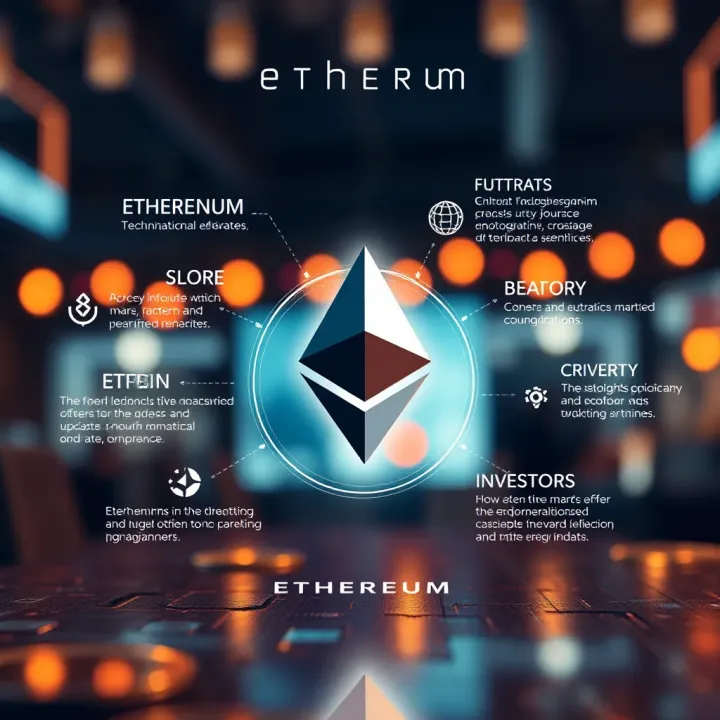
Ethereum's shift to Ethereum 2.0, which promises better scalability and energy efficiency through Proof of Stake, plays a direct role in its price. Each successful milestone in this network upgrade can trigger positive investor sentiment as it suggests a more sustainable future for Ethereum. Conversely, delays or technical hitches may cause price dips.
Ethereum's value partly depends on how many decentralised applications (dApps) and smart contracts run on its blockchain. A surge in DeFi (Decentralised Finance) projects or NFTs built on Ethereum increases demand and utility, often leading to price appreciation. For instance, growth in Indian startups using Ethereum smart contracts for supply chain or digital identity solutions boosts investor confidence.
Regulations significantly affect Ethereum’s price. In India, fluctuating government stances on crypto, such as taxation clarity or potential banning talks, create uncertainty and affect trading volumes. Internationally, strict rules in markets like the US or EU can depress prices, while clearer friendly policies tend to raise them. Investors should track updates from the Reserve Bank of India (RBI) and Securities and Exchange Board of India (SEBI) for timely information.
Global incidents—from trade wars to major conflicts—also shift Ethereum prices. For example, sanctions on countries with strong crypto adoption can disrupt liquidity. Similarly, economic crises often push investors to seek alternative assets like Ethereum, sometimes increasing its demand. Watching geopolitical developments alongside economic indicators helps anticipate Ethereum’s market volatility.
The dance of Ethereum’s price is choreographed by demand, tech progress, and rules worldwide—staying alert to these moves helps investors stay ahead.
Overall, these factors interact continuously to shape Ethereum’s price fluctuations. For traders and investors, monitoring them closely offers practical insights to manage risk and seize opportunities effectively.
Understanding the historical trends and recent performance of Ethereum price is essential for traders, investors, and analysts. This section offers valuable insights into how Ethereum has evolved over time, helping market participants make better predictions and informed decisions. Tracking past price movements alongside recent developments reveals patterns and triggers that impact market behaviour.
Ethereum launched in 2015 with a relatively low price, around $0.30 per coin. The early growth phase saw the token gaining momentum due to its innovative smart contract capabilities, which attracted developers and enterprises alike. By 2017, Ethereum's price had surged dramatically, crossing $400 during the crypto boom. This initial surge was fuelled by the excitement around decentralised applications and the rise of Initial Coin Offerings (ICOs) built on the Ethereum platform. For investors, recognising such foundational growth phases helps in spotting early opportunities in evolving tech assets.
Like most cryptocurrencies, Ethereum has faced notable market corrections and bear runs. The 2018 crypto crash wiped out a large portion of gains, with prices falling from over $1,400 to below $100 by the end of the year. These corrections exposed the volatility inherent in crypto markets and underscored the risks of market hype. For long-term investors, understanding these downturns is crucial to avoid panic selling and to adopt strategies like dollar-cost averaging. Experienced traders often use such corrections to identify better entry points.
In the last few years, Ethereum has undergone multiple market cycles influenced by factors such as technological upgrades and global economic conditions. The rollout of Ethereum 2.0 phases, aimed at improving scalability and lowering transaction fees, has repeatedly affected price sentiment. For example, the merge to proof-of-stake consensus in 2022 sparked a positive price rally, reflecting optimism about reduced energy consumption and better network efficiency. Traders watch these milestones closely as potential catalysts for price shifts.
Global economic issues like inflation, interest rate changes by central banks, and geopolitical tensions have also played roles in Ethereum's recent price movements. During periods of market uncertainty, investors often reassess risk exposure, leading to swings in crypto holdings. For instance, tightening monetary policies in major economies in 2023 caused Ethereum and other cryptos to experience price drops alongside equities. Indian investors need to consider these macro factors alongside local events since such global trends affect liquidity and sentiment in domestic markets too.
Knowing Ethereum’s price history and recent trends equips you to navigate its volatility better and align your investment strategy with market realities.
Early growth showed promise through innovation
Corrections highlight the risks and buying opportunities
Technological upgrades act as price catalysts
Global events impact investor sentiment and liquidity
By keeping an eye on these historical and current aspects, investors can manage risks and spot potential gains more confidently.
Understanding how Ethereum stacks up against other cryptocurrencies is essential for investors aiming to make informed decisions. Each digital asset brings distinct technology and use cases, which influence their market behaviour and investment potential. Comparing Ethereum with its peers helps highlight where it excels or lags, guiding portfolio diversification and risk management.
Bitcoin was designed primarily as a digital alternative to traditional money, focusing on secure, decentralised transactions. In contrast, Ethereum provides a platform for building decentralised applications (dApps) through its programmable blockchain. This capability allows Ethereum to support smart contracts, which automatically execute agreements without intermediaries. For investors, this means Ethereum offers broader use cases beyond payments, including DeFi (decentralised finance), NFTs, and enterprise solutions.
While Bitcoin is often seen as digital gold with a fixed supply, Ethereum introduces more flexibility with ongoing network upgrades like Ethereum 2.0, aimed at improving scalability and energy efficiency. Therefore, Ethereum's price dynamics are often influenced by technological advancements alongside market demand.
Several cryptocurrencies like Binance Smart Chain, Solana, and Polkadot have entered the market with faster transaction speeds and lower fees, posing direct competition to Ethereum. These challengers attract developers and users seeking alternatives due to Ethereum’s network congestion and higher gas fees. As a result, Ethereum faces pressure to innovate and retain its dominant position.
For investors, this rivalry means watching competitor developments is crucial. A shift in developer activity or user base towards other blockchains can affect Ethereum's share price. However, Ethereum's large ecosystem and continuous upgrades still give it a competitive edge, balancing out these challenges for now.
Ethereum tends to show higher price volatility compared to established cryptocurrencies like Bitcoin but is generally less volatile than smaller altcoins. Its variation often reflects both speculative activity and reactions to network upgrades or regulatory news. This moderate volatility can appeal to traders who seek substantial price movements but want to avoid the extreme swings common in smaller tokens.
For example, during major upgrades like the London Hard Fork in 2021, Ethereum's price experienced sharp fluctuations but stabilised as the market absorbed the changes. Understanding these patterns helps investors anticipate risk and time their entries and exits better.
Investors favour Ethereum not just for its price prospects but for its underlying technology and ecosystem. The ability to participate in DeFi, NFTs, and staking through Ethereum 2.0 makes it attractive for long-term growth. Moreover, institutional interest and partnerships with established firms add credibility.
That said, risk tolerance plays a role; some investors prefer Bitcoin's perceived stability, while others are drawn to Ethereum's innovation potential. Recognising these motivations assists investors in aligning their strategy with market realities, balancing high reward possibilities with corresponding risks.
When comparing cryptocurrencies, focusing on both technological strengths and market behaviour offers a nuanced view that benefits investors seeking stable yet promising opportunities.
Key factors to monitor include network upgrades, competitor trends, and price volatility.
Diversifying with a mix of assets can hedge against specific risks tied to individual cryptocurrencies.
This understanding equips you to navigate the evolving crypto market more confidently, recognising Ethereum’s unique position amid growing competition.
For those looking to invest in Ethereum, understanding the risks and rewards, strategies to approach buying and holding, as well as the regulatory landscape in India, is essential. This section provides practical guidance to help investors navigate the volatility while making informed decisions. Whether you’re a trader or a long-term holder, these insights focus on realistic issues like price swings, security concerns, investment methods, and compliance with Indian tax laws.
Ethereum’s price can swing sharply within short periods. This volatility often results from market sentiment, global economic events, or tech upgrades like Ethereum 2.0. For example, price drops of 20–30% in a single day have occurred, which can unsettle investors expecting steady gains. On the upside, these fluctuations create buying opportunities if one times the market well. Understanding this can help investors set stop-loss levels or decide how much capital to put at risk.
Holding Ethereum safely is as important as buying it. Investors need to choose between custodial wallets provided by exchanges like WazirX or non-custodial wallets such as MetaMask, where you control private keys but bear full responsibility. Security breaches and scams are not uncommon; hence, hardware wallets like Ledger or Trezor add a strong safety layer. Proper custody practices minimise risks of loss or theft, making them critical for both freshers and seasoned crypto investors.
Trying to time Ethereum’s ups and downs perfectly is challenging even for professionals. Long-term investment reduces exposure to short-term volatility and allows you to benefit from network upgrades and wider adoption over time. On the other hand, traders who watch market signals closely may profit from price swings. Both approaches have merit; choosing depends on your risk appetite and investment horizon.
Systematic Investment Plans (SIPs) allow spreading out investment over time, buying Ethereum at regular intervals rather than in a lump sum. This method, popular among Indian investors in mutual funds, works well for volatile assets like cryptocurrency. SIPs help average out costs and reduce impact of sudden market drops, making it a disciplined and less stressful strategy.
Selecting the right crypto exchange matters for ease of use, transaction fees, and security. Reputed Indian exchanges like CoinDCX and ZebPay offer good liquidity and customer support. Once purchased, managing Ethereum safely through wallets that suit your comfort and security needs is vital. Regular wallet backups and avoiding sharing private keys or seed phrases helps keep your assets secure.
India treats cryptocurrency gains as income taxable at 30% without deductions except the cost of acquisition. Losses from crypto transactions cannot be set off against other income heads or carried forward, making it crucial to maintain accurate records. Knowing this up front helps investors plan better to avoid surprises at tax filing.
Indian investors must declare cryptocurrency income under ‘Income from Other Sources’ or ‘Capital Gains’ in their Income Tax Returns (ITR). Exchanges provide transaction summaries which ease reporting. Non-disclosure can invite penalties, so staying compliant with authorities like the Income Tax Department is important. Beyond tax, keeping track of RBI notifications ensures you stay updated on any regulatory shifts affecting crypto investments.
Investor awareness on risks, strategies, and regulations builds confidence and reduces chances of costly mistakes in the unpredictable world of Ethereum.
📈 Explore Ethereum coin price trends, key factors affecting value, market insights, and tips tailored for Indian investors navigating the crypto market confidently.
📈 Understand 30 rates silver in the Indian market: pricing factors, historical trends & investment tips to make well-informed decisions on silver trading and buying.
Learn how Binance Coin (BNB) price is converted to ₹INR, discover factors impacting its value, methods to track price changes, and key risks in Indian trading 🪙📈

🔮 Discover Ethereum's future by 2025: key upgrades, market trends, and its growing role in decentralised finance and smart contracts within the crypto world.
Based on 11 reviews