
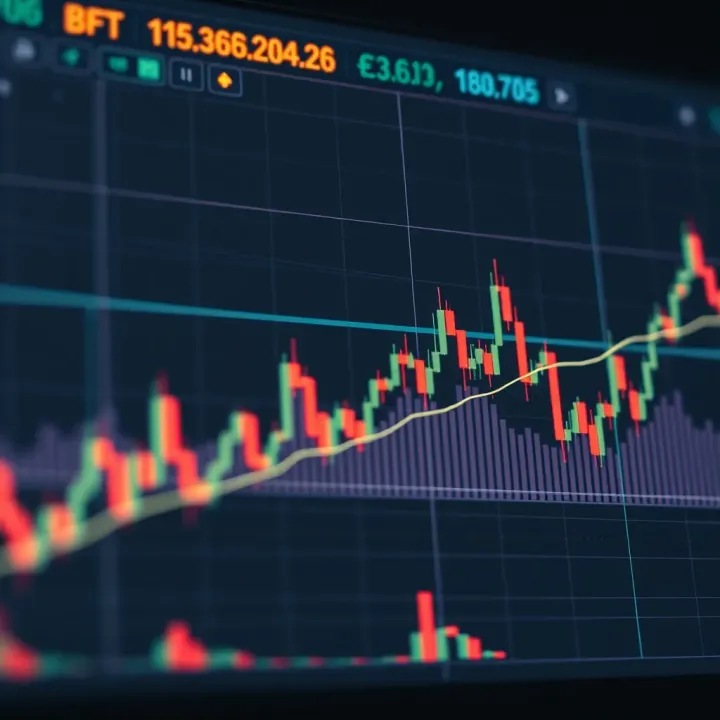
Bitcoin Forecast Today: Market Trends & Insights
Explore today's Bitcoin forecast with insights on market trends, price drivers, expert views, and risks to help Indian investors make informed decisions 📈💰.
Edited By
James Cartwright
Bitcoin continues to draw intense attention from traders, investors, and financial analysts, especially given its frequent price swings and growing adoption across India. Understanding Bitcoin's current trends involves looking beyond simple price charts to include market sentiment, technical signals, and key global events that often impact its value.
Today's Bitcoin price reacts to several factors, including regulatory updates, macroeconomic shifts, and developments in on-chain activity. For instance, announcements by central banks or sudden changes in international relations can cause sharp volatility, which traders should anticipate. Meanwhile, indicators such as moving averages, Relative Strength Index (RSI), and trading volumes help technical analysts identify potential entry and exit points.
Staying updated with real-time data and expert viewpoints can give you an edge when navigating Bitcoin's unpredictable market.
For Indian investors particularly, external influences like RBI’s stance on cryptocurrencies, SEBI regulations, and developments in India’s digital payment systems like UPI and Bharat BillPay also play a role in shaping the investment landscape. India’s growing interest in crypto, mirrored by increasing participation on exchanges such as WazirX and CoinDCX, means that price changes can sometimes reflect broader domestic enthusiasm or caution.
Key factors to track today include:
Global geopolitical tensions causing market uncertainty
US Federal Reserve statements influencing risk assets
Technical breakout or breakdown zones identified through charts
On-chain metrics such as Bitcoin whales’ activity and network fees
With Bitcoin’s historical trend of rapid price changes, it’s critical to combine technical analysis with awareness of news events. Traders should use stop-loss orders and risk management diligently, while investors might want to focus on medium- to long-term outlooks considering India's evolving legal framework.
Understanding the current market overview of Bitcoin is essential for anyone looking to trade or invest in this cryptocurrency. This section sheds light on how Bitcoin has been performing recently, what influences its price swings, and the mood among traders and investors. For example, knowing whether Bitcoin is experiencing high volatility or steady growth can help you time your trades more effectively or decide when to hold on during market dips.
Bitcoin's price has often been a rollercoaster. Recently, it oscillated between ₹20 lakh and ₹25 lakh, showing notable spikes linked to global events such as changes in interest rates or regulatory announcements. These price swings aren't random; they reflect reactions to market news and investor sentiment. For instance, a surge in demand in countries like the US or South Korea often triggers a sharp upward move, whereas negative news about hacked exchanges or bans can cause abrupt falls. Such volatility means traders should keep a close eye on daily price charts and news feeds.
Volatility also poses risks for investors who are not prepared. Sudden drops can wipe out quick profits, while extended rallies might lead to a fear of missing out (FOMO). Tools like stop-loss orders or diversified portfolios can help manage this uncertainty.
Trading volume offers insight into market enthusiasm and potential price trends. Higher volumes usually indicate strong interest, while lower volumes might signal hesitation or consolidation phases. For example, during festive seasons like Diwali, increased trading activity has been observed, when retail investors step in with fresh funds.
Market sentiment often shifts with global events, such as announcements by the Reserve Bank of India (RBI) on cryptocurrency regulations or SEC decisions internationally. A bullish sentiment can encourage more buyers, pushing prices up, while bearish views prompt selling pressure. Platforms like WazirX and CoinDCX provide real-time data on trading volumes, helping you gauge when the market is active or quiet.
Tracking both price movements and trading volumes together gives a fuller picture. Sharp price moves with low volume might not be sustainable, whereas strong trends backed by high volume suggest genuine momentum.
By keeping these factors in mind, traders and investors can make informed decisions that align with the current market pulse of Bitcoin.
Understanding the factors shaping Bitcoin's price today helps traders and investors make sharper decisions. These elements don't operate in isolation; they interact and reflect global, regulatory, and technological shifts. Together, they offer a clearer picture of Bitcoin’s short-term movements and potential future paths.

Global economic events often dictate Bitcoin’s price swings. Inflation rates, interest decisions by central banks, and currency fluctuations can all sway investor sentiment. For example, when US inflation rises unexpectedly, some investors turn to Bitcoin as a hedge against currency devaluation. Similarly, a weakening US dollar typically boosts Bitcoin demand internationally. However, global market stress, such as stock market crashes or geopolitical tensions, might also push investors toward or away from Bitcoin depending on risk appetite.
Interest rates set by major banks like the US Federal Reserve or the RBI impact liquidity and borrowing costs, indirectly influencing Bitcoin investment flows. A sudden rate hike, for instance, could divert money from riskier assets like cryptocurrencies to safer bonds or fixed deposits.
Regulation remains a major driver of Bitcoin’s price volatility. Announcements from governments or financial regulators can trigger sharp moves. In India, the Securities and Exchange Board of India (SEBI) and the Reserve Bank of India (RBI) keep a close watch on crypto policies. Any talks of bans, taxes, or guidelines for trading impact market sentiment instantly.
Globally, decisions such as the US Securities and Exchange Commission (SEC) approving or delaying Bitcoin ETFs significantly affect prices. When favourable policies emerge, they often act as a confidence booster, attracting institutional investors. On the flip side, crackdowns or unclear rules tend to push prices down as uncertainty rises.
Technical factors like Bitcoin network upgrades or transaction volumes also influence price trends. For example, the implementation of a major protocol upgrade aiming to improve scalability or security can signal long-term growth potential. Increased transaction activity often points to rising interest and can precede price surges.
Mining dynamics also play a role. Changes in hash rate, which reflects network security and mining competition, sometimes correlate with price trends. When mining becomes less profitable due to high electricity costs or block reward halving events, this can reduce new Bitcoin supply, potentially pushing prices higher.
Keeping an eye on these three areas—economic indicators, regulatory news, and technology shifts—helps you grasp the forces moving Bitcoin's price today and forecast near-term movements with greater confidence.
Technical analysis remains a widely relied-upon method among traders and investors to predict Bitcoin's price movements. By studying past market data—mainly price and volume—technical analysis helps spot trends and possible turning points without delving into external factors such as news or fundamental changes. This method suits Bitcoin's fast-paced and often volatile environment, giving traders immediate tools to make decisions on entry or exit points.
Several technical indicators are popular for Bitcoin predictions. Moving averages (MA), like the 50-day and 200-day MA, smooth out price data to reveal the underlying trend. For example, when the short-term MA crosses above the long-term MA (a golden cross), it typically signals a bullish move. Conversely, a death cross hints at a bearish trend.
Relative Strength Index (RSI) is another vital indicator, measuring whether Bitcoin is overbought (above 70) or oversold (below 30). Traders often use this to anticipate price corrections or reversals. Volume analysis supports these indicators by confirming the strength of price moves. For instance, rising prices with high volume suggest strong buying interest.
Chart patterns like head and shoulders, double tops, and flags also assist traders in forecasting potential reversals or continuations. Spotting a head and shoulders pattern on Bitcoin’s daily chart may warn traders of an upcoming decline.
While technical analysis offers valuable signals, it has its limitations, especially in the crypto space. Bitcoin's price is prone to sharp swings triggered by sudden news such as regulatory announcements or high-profile endorsements. These events can overwhelm chart-based predictions and cause unexpected volatility.
Additionally, cryptocurrencies often exhibit lower liquidity than traditional markets, leading to sudden price gaps and erratic movements that distort technical signals. Relying solely on historical price action without considering broader market sentiment or fundamental changes can lead to misleading conclusions.
Traders should therefore combine technical analysis with awareness of market news and macroeconomic factors to improve prediction accuracy.
Furthermore, technical indicators sometimes generate false positives, prompting premature trades. Careful backtesting and using multiple indicators together can reduce such risks. Considering Bitcoin’s unique market behaviour, adaptability and continual learning are key to effectively using technical analysis.
In short, technical analysis offers practical insights and visual tools that help track Bitcoin’s price moves. But it must be complemented by other forms of analysis and sound risk management, especially given the crypto market’s volatility and sensitivity to external factors.
Expert opinions and market forecasts hold significant value for those tracking Bitcoin’s price movements. Professionals in this field analyse complex data, market trends, and global developments to provide projections that help investors and traders make informed decisions. Unlike raw technical charts, expert insights often factor in economic, regulatory, and geopolitical influences, which can dramatically sway the cryptocurrency market.
Cryptocurrency analysts typically combine experience with specialised tools to evaluate Bitcoin’s direction. Leading Indian crypto experts, for example, often consider factors such as global monetary policies, the pace of institutional adoption, and network developments like the Bitcoin Taproot upgrade. An analyst might warn about short-term price dips following regulatory announcements but remain bullish for the long-term due to increased blockchain adoption. This practical forecasting helps traders adjust positions and manage risk during volatile periods. Analysts also assess sentiment indicators — looking at on-chain data trends or social media chatter — to gauge market mood, which can often signal an upcoming price reversal before it shows on charts.
Short-term Bitcoin predictions focus heavily on immediate market signals such as volume spikes, RSI (Relative Strength Index) levels, or intraday news events. These forecasts aim to assist day traders and swing traders in spotting entry and exit points within days or weeks. For example, a sudden surge in Bitcoin’s trading volume on Indian exchanges like WazirX or CoinDCX may trigger a short-lived bullish rally. However, such predictions are inherently sensitive to market noise and can change rapidly.
Long-term forecasts, on the other hand, lean on fundamental factors like macroeconomic trends, adoption rates, and regulatory clarity, looking months to years ahead. Predictions might consider how India's evolving regulatory stance could impact Bitcoin’s acceptance for payments or investment. Analysts offering seven- or ten-year outlooks weigh in broader valuations, suggesting Bitcoin might serve as a digital gold hedge against inflation or economic uncertainty. Hence, discerning between these two time horizons is essential for investors to align their strategies with personal risk appetite and financial goals.
Trusted expert forecasts provide a grounded viewpoint amid Bitcoin's price swings, blending data and experience to guide investment choices in a rapidly shifting market.
Understanding these distinctions enables Indian investors and traders to decide which forecasts align best with their style, whether it’s quick trades or patient holding for potential long-term gains.
Navigating the high waves of Bitcoin market requires more than just knowing the price trends. Indian crypto investors face unique challenges, such as fluctuating regulations and varying platform reliability. Practical advice tailored for India can help reduce risks and enhance profitability. This section focuses on managing risks amid volatility and selecting trustworthy platforms and payment methods that suit Indian investors.
Bitcoin’s price swings can be sharp, swinging by several percentage points within hours. Indian investors should avoid putting all their capital into crypto at once. Instead, spreading investments through Systematic Investment Plans (SIPs) in cryptocurrencies or periodic buying helps average out the entry price and reduces the impact of sudden dips.
Setting clear exit points is equally important. For instance, deciding in advance to sell once a certain profit percentage is achieved or if losses exceed a threshold guards against emotional decisions. Suppose you buy Bitcoin at ₹30 lakh and set a stop-loss at ₹27 lakh; this limits potential downsides. Tools like price alerts on platforms such as WazirX or CoinDCX can assist with timely actions.
Another layer of safety comes from maintaining a diverse portfolio. Placing funds across different cryptocurrencies or even balancing between crypto and traditional assets like gold or mutual funds cushions the investor from Bitcoin’s unpredictable nature. Risk management also means staying informed—Indian investors should keep an eye on RBI circulars or SEBI updates that can impact crypto trading rules.
Remember, volatility is part and parcel of crypto markets, but disciplined risk control can keep your portfolio afloat through rough patches.
Platform security is vital to protect investments. Many Indian investors prefer exchanges like WazirX, CoinDCX, or ZebPay due to their compliance with Indian regulatory norms and robust security measures. Always look for two-factor authentication (2FA), cold wallet storage options, and transparent fee structures while selecting platforms.
Regarding payments, UPI remains the most popular and hassle-free channel for buying crypto in India. It ensures instant transactions with minimal charges compared to traditional bank transfers. Some platforms also accept netbanking or IMPS, but UPI’s speed and ease often make it the choice for regular traders.
Investors must also be cautious about withdrawal limits and transaction fees before choosing a wallet or exchange. For example, if you plan to trade frequently, an exchange with lower transaction fees like WazirX will reduce costs significantly over time.
Additionally, it’s wise to avoid platforms lacking proper KYC verification as they pose higher risks for fraud or regulatory action. The Indian government regularly monitors crypto exchanges, so using vetted services will keep you on the safe side.
Summing up, Indian crypto investors should opt for platforms with proven security and efficient payment options, matched to their trading frequency and risk tolerance.
By combining sensible risk management with smart platform choices, you can make your Bitcoin investment journey smoother, even in volatile times.
Explore today's Bitcoin forecast with insights on market trends, price drivers, expert views, and risks to help Indian investors make informed decisions 📈💰.
🔍 Explore BCH coin price trends, expert forecasts, and factors shaping Bitcoin Cash valuations. Learn how Indian investors can stay updated and navigate regulatory shifts effectively.
Get detailed insights on Aave's price trends, market factors, expert forecasts, and risks. Stay informed about Aave's future in DeFi with this clear outlook 📈💡
Explore today's EUR/USD outlook with insights on economic data, central bank moves, geopolitical shifts, key support & resistance levels, plus trader sentiment 📊💱
Based on 10 reviews