

Reliance Future Share Price: Factors & Outlook
📊 Explore how Reliance Future's share price moves with insights on financial health, industry trends, and market mood to guide your investment choices.
Edited By
James Fletcher
The exchange rate between the US dollar (USD) and the South African rand (ZAR) attracts keen attention from traders, investors, and financial analysts alike. Understanding how this rate moves can provide a significant edge when making forex decisions or managing international investments.
Unlike more stable currency pairs, USD/ZAR is influenced by a mix of global and local factors that reflect economic health, political developments, and market sentiment. For example, shifts in South Africa’s commodity exports, such as gold and platinum, often sway the rand’s value because these exports make up a large portion of the nation's earnings.
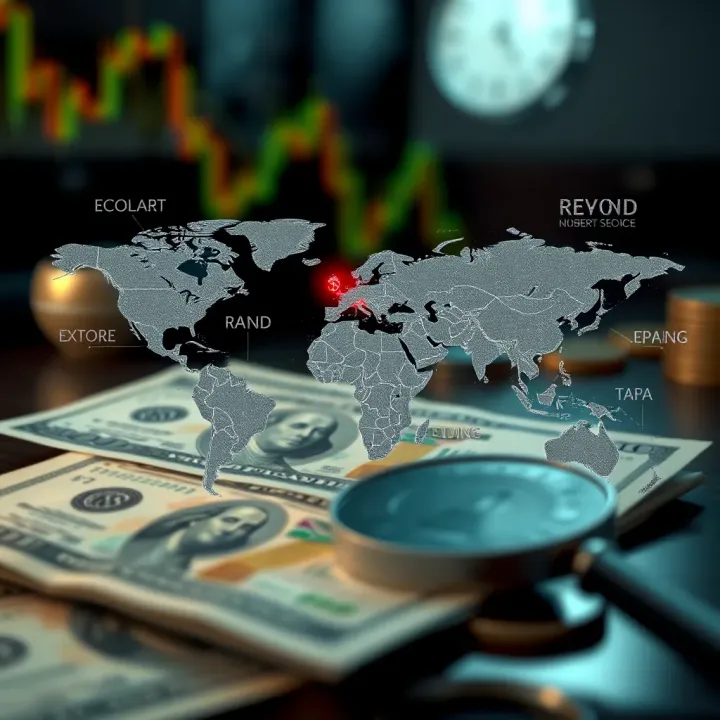
Several economic indicators weigh heavily on USD/ZAR forecasts. Inflation rates, interest rate changes by the South African Reserve Bank (SARB), and the US Federal Reserve's monetary policy shifts play critical parts. When the SARB raises interest rates to tackle inflation, the rand may strengthen by attracting foreign capital. On the other side, tightening by the US Fed can boost the dollar, pushing the rand lower.
Political stability in South Africa also impacts the rand. Election outcomes, policy announcements, or unrest can lead to caution among investors, causing sharp short-term movements. Geopolitical tensions worldwide can strengthen the US dollar due to its safe-haven status, indirectly affecting the rand.
Currency traders closely monitor market sentiment, economic releases, and global risk appetite, as these factors combined often trigger quick fluctuations in USD/ZAR.
Historical trends help put current levels in perspective. For instance, during times of global uncertainty, the rand tends to weaken sharply against the dollar, whereas periods of economic growth in South Africa generally offer a boost to the rand.
In practical terms, successful USD/ZAR prediction involves looking at:
Economic data releases from South Africa and the US
Central bank policy changes
Commodity price movements
Political developments
Global market risk trends
Traders often use this information alongside technical analysis to time entries and exits in forex markets. Understanding these factors enables a more informed outlook on what to expect from the dollar to rand rate moving forward.
Understanding the dollar to rand exchange rate is essential for anyone involved in forex trading, international business, or investment related to South Africa. The value of one currency against another affects import-export costs, profit margins, and even the pricing of commodities tied to the rand or dollar. For example, an Indian exporter to South Africa needs to track this rate closely to price goods competitively while safeguarding margins.
Currency exchange rates reflect the price of one currency in terms of another. This means if the dollar to rand rate is 18.50, it takes 18.5 South African rand to buy one US dollar. Exchange rates fluctuate continuously due to supply and demand dynamics influenced by trade flows, interest rates, inflation, and investor sentiment.
Exchange rates come in two main types: spot rates, which represent the current market price, and forward rates, which contract future exchange prices to hedge against risk. For traders and investors, knowing whether to lock in a forward contract or take a spot position can save substantial costs.
The USD/ZAR pair is notable because it connects one of the world’s strongest currencies, the US dollar, with an emerging market currency. South Africa is a major commodity exporter, especially of gold and platinum, whose prices often move with shifts in currency values. When the rand weakens against the dollar, South African exports become cheaper and more attractive globally, but imported goods and foreign debt servicing become costlier.
This pair is closely watched by Forex traders due to volatility triggered by both global risk sentiment and South Africa’s domestic economic health. For example, political uncertainties in South Africa tend to weaken the rand sharply, impacting multinational corporations and investors who then adjust their strategies accordingly.
For investors and traders, understanding the dollar to rand pair offers insights into not just currency risk but also broader economic trends affecting emerging markets and commodities, which can influence portfolio decisions.
In summary, grasping these basics about currency exchange rates and the particular role of the dollar-rand combination lays a strong foundation for analysing what moves this currency pair and how to anticipate future trends.
Understanding the forces behind the dollar to rand exchange rate helps investors and traders make informed decisions. Currency values do not move on whims but respond to real economic events and policies. For the US dollar and South African rand, three main categories shape the rate: South African economic indicators, US economic and monetary decisions, and wider global influences.
Inflation in South Africa plays a major role in the rand’s strength. When inflation rises sharply, the Reserve Bank of South Africa (SARB) may hike interest rates to cool spending, making rand-denominated assets more attractive. For example, if inflation surges to 6%, SARB might raise the repo rate, drawing foreign investment and pushing the rand up. Conversely, low inflation often leads to lower interest rates, which can weaken the rand as returns fall.
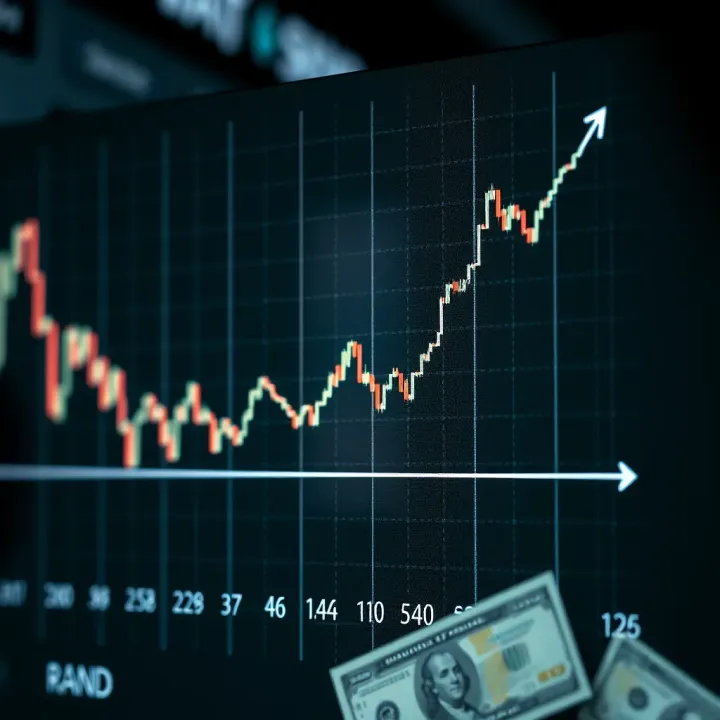
South Africa’s trade balance—exports minus imports—directly affects the rand’s value. A surplus means more demand for rand, supporting its strength. Mining exports like gold and platinum significantly impact this. In 2023, a spike in commodity prices boosted export revenues, temporarily strengthening the rand. On the other hand, a current account deficit signals more rand flowing out to pay for imports, leading to depreciation.
Stable governance and prudent fiscal policies encourage investor confidence in the rand. Frequent political upheavals or policy uncertainty tends to scare investors, triggering rand sell-offs. For instance, during periods of policy uncertainty over state-owned enterprises, the rand often weakens. Conversely, credible budgets and fiscal consolidation reassure markets, stabilising the currency.
US Federal Reserve interest rate moves heavily influence the dollar’s strength against the rand. When the Fed hikes rates to tackle inflation, dollars tend to strengthen as investors chase higher returns. This often puts downward pressure on the rand. For example, if the Fed increases rates sharply while SARB holds rates steady, the dollar gains and the rand weakens.
Strong US economic data like rising employment and robust GDP growth bolster the dollar, often at the rand’s expense. When US labour market numbers exceed expectations, they signal a healthy economy, drawing capital into dollar assets. This inflow can reduce demand for emerging market currencies like the rand.
Large US fiscal stimulus packages pump liquidity into the economy, sometimes weakening the dollar if they raise fears of inflation. However, excessive government debt can undermine confidence, impacting exchange rates indirectly. For the rand, shifts in US fiscal policy affect capital flows, influencing volatility and the dollar-rand rate.
South Africa’s rand is commodity-linked since the country exports minerals extensively. When global commodity prices rise, the rand usually gains value as export revenues increase. A recent rise in platinum prices boosted rand demand. Conversely, a slump in metals markets often depresses the rand.
Global tensions like trade wars or conflicts create risk-off moods, prompting investors to flock to safer currencies like the US dollar. These moves tend to weaken the rand. For example, during heightened tensions around the Russia-Ukraine conflict, emerging market currencies including the rand saw sharp depreciation.
Investor sentiment toward emerging markets broadly affects the rand's outlook. If worries about debt levels or political instability grow in emerging economies, capital flees, weakening currencies like the rand. On the other hand, when emerging markets attract foreign investment, the rand benefits.
Successful trading of the dollar to rand pair depends on understanding these complex, interlinked factors rather than guessing. Staying updated on South African economic data, US policy changes, and global shifts provides traders with essential clues to currency moves.
This section helps decode those influences, equipping investors with the insight needed to act confidently in volatile markets.
Understanding historical trends in the dollar to rand exchange rate is key for traders and investors aiming to predict future movements. Past fluctuations reveal how the rand reacts to various economic pressures and geopolitical events, offering practical clues for informed decision-making. Looking back helps you anticipate when the rand might weaken or strengthen against the dollar based on repeating patterns or trigger events.
Over the last ten years, the dollar to rand rate has seen notable ups and downs, reflecting South Africa's economic challenges and global market shifts. For instance, during 2015-2016, the rand lost significant ground due to domestic political uncertainty and slowing economic growth. The currency weakened sharply from around ₹12.5 to nearly ₹16 per dollar, hitting traders and importers hard. Another major fluctuation came in early 2020 when the COVID-19 pandemic triggered a global sell-off of emerging market currencies, including the rand, which depreciated sharply beyond ₹18 per dollar.
On the flip side, periods of strong commodity prices often strengthened the rand. For example, in 2017, improved platinum and gold prices helped recover the rand’s value closer to ₹13 per dollar. These wide swings illustrate how external factors often outweigh local fundamentals but also how commodity cycles directly impact the rand’s strength.
Global events heavily shape dollar to rand movements. The US Federal Reserve's interest rate hikes tend to strengthen the dollar, putting pressure on the rand. In 2018, when the Fed raised rates several times, capital flight from emerging markets caused the rand to weaken noticeably.
Geopolitical tensions, such as trade disputes or crises affecting global investor sentiment, also matter. The US-China trade conflict between 2018 and 2019 created market volatility and risk aversion, which pushed the rand down as investors sought safe-haven assets like the US dollar. Additionally, the Russia-Ukraine conflict starting in 2022 sent commodity prices soaring, benefiting South Africa’s export-driven economy and supporting the rand.
Historical analysis shows that understanding how the rand responds to key global events helps financial experts and investors manage currency risk effectively.
In summary, tracking the dollar to rand rate over time reveals how intertwined economic policies, commodity prices, and geopolitical events can impact this currency pair. Knowing these trends enables market participants to navigate volatility and identify potential windows for trading or hedging.
Understanding the current market outlook and expert predictions is vital when dealing with the dollar to rand exchange rate. These forecasts provide traders and investors with a sense of direction based on the latest economic data, policy moves, and global developments. For example, if analysts expect the US Federal Reserve to raise interest rates, the US dollar might strengthen against the rand, impacting decisions related to import-export, foreign investment, and hedging.
Financial analysts closely follow indicators such as inflation rates, GDP growth, and political events to predict the dollar to rand trend. Currently, many experts anticipate moderate rand depreciation due to persistent domestic inflation pressures and fiscal deficits in South Africa. However, bullish commodity prices, especially for gold and platinum—which South Africa exports heavily—can support the rand. Consensus forecasts often point to a narrowing range for the exchange rate over the next quarter, hovering around ₹17.50 to ₹18.50 per US dollar.
For instance, some Indian investors monitoring the forex market for opportunities might use these forecasts to time their trades better. Moreover, business owners importing machinery from the US can budget more accurately by considering these expert insights instead of relying on spot rates, which can be volatile.
Predictions on currency exchange rates carry inherent risks due to several unpredictable factors. Political developments within South Africa, such as sudden regulatory changes or unrest, can weaken the rand unexpectedly. Similarly, shifts in US monetary policy, like unexpected interest rate decisions, can rapidly alter dollar strength.
Global events also introduce uncertainties. For example, a sudden spike in crude oil prices affects trade balances, while geopolitical tensions can trigger risk aversion among investors, impacting emerging market currencies like the rand. Investors should also consider global financial market volatility, including changes in appetite for emerging market debt, which often affects the rand's value.
Analysts caution that no single prediction can capture all possible outcomes; hence, diversifying risk management through hedging instruments such as forward contracts or options is advisable for exposure to dollar-rand movements.
In sum, while expert predictions offer valuable guidance for traders and businesses, staying aware of the evolving economic and political landscape is essential to navigate the risks inherent in forex markets.
Understanding the dollar to rand exchange rate is not just an academic exercise; it has real consequences for investors and businesses dealing with South African and US markets. Currency fluctuations impact profit margins, capital costs, and investment returns directly. Decisions made based on the exchange rate outlook can either protect assets or expose portfolios to significant risk.
Currency risk arises when the value of foreign investments or contracts changes due to exchange rate movements. For instance, an Indian importer buying machinery from South Africa might face a higher cost in rupees if the rand strengthens against the dollar or rupee unexpectedly. Investors and companies usually employ hedging strategies such as forward contracts and options to lock in exchange rates and shield against volatility.
Hedging is not a one-size-fits-all solution; its effectiveness depends on timing and market conditions. A trader expecting the rand to weaken might avoid hedging to capture potential gains, while a corporate with fixed foreign payments would prioritise stability over speculation. Using currency futures or swaps requires careful monitoring to avoid losses from incorrect market calls.
Volatility in the dollar to rand rate creates trading opportunities for informed forex traders. Sudden geopolitical developments or economic shifts in either country can trigger sharp movements, allowing day traders and speculators to profit from short-term swings. However, this demands robust risk management tools and real-time market data.
On the trade front, businesses that import raw materials or export goods to South Africa can time their transactions to optimise costs. For example, a textile exporter in India might schedule payments when the rand weakens to reduce the rupee amount needed. Similarly, South African businesses could explore suppliers priced in dollars if the rand is strong. Both scenarios require close watch on macro factors like RBI policies and South African economic releases.
Businesses and investors should continually assess the exchange rate environment, combining expert forecasts with their risk appetite, to make better-informed decisions.
Taking practical steps in currency risk management and spotting market opportunities requires a clear understanding of how economic indicators and political factors influence the dollar to rand rate. Rather than reacting to every headline, disciplined strategies backed by data help mitigate losses and boost returns over time.
📊 Explore how Reliance Future's share price moves with insights on financial health, industry trends, and market mood to guide your investment choices.

🔍 Explore BCH coin price trends, expert forecasts, and factors shaping Bitcoin Cash valuations. Learn how Indian investors can stay updated and navigate regulatory shifts effectively.

Explore Ethereum Classic (ETC) future outlook 🔮 with price trends, tech updates, challenges & growth factors to help you assess investment opportunities wisely. 📈
📈 Discover Ecash price forecasts with market trends, expert views & risks explained. See what investors in India can expect from Ecash’s future growth potential.
Based on 7 reviews