
Best Trading Platforms Worldwide: A Guide for Indian Investors
Discover how to pick the best trading platform globally 🌍. Compare features, costs, security, and support tailored for Indian investors 💹₹ safely and confidently.
Edited By
Oliver Hughes
Contracts for Difference (CFDs) have become increasingly popular among traders looking to speculate on asset price movements without actually owning the underlying asset. In India, CFD platforms provide a way to engage in derivatives trading on equities, commodities, indices, currencies, and more, all from a single interface.
A CFD is essentially a contract between a trader and a broker where the difference between the opening and closing price of an asset is settled in cash. This means you can profit from both rising and falling markets — a feature that many find useful for hedging or short-term trading.

A key benefit of CFD trading is that it allows leverage, enabling traders to open larger positions with comparatively smaller capital. However, leverage also magnifies risks and can lead to significant losses if not managed carefully.
CFD platforms typically offer the following features:
Real-time market data: Instant quotes and charts for accurate decision-making.
Order types: Various instructions like limit, stop-loss, and market orders for flexible trading strategies.
Risk management tools: Features such as margin calls and automatic liquidations help contain losses.
User-friendly interfaces: Both desktop and mobile applications to trade anytime, anywhere.
In India, CFD trading falls under the regulations of the Securities and Exchange Board of India (SEBI), ensuring certain protections for investors. Still, not all platforms or products are regulated, so choosing a SEBI-registered broker is crucial for safe trading.
CFD trading suits experienced traders and investors who understand market dynamics and can actively manage risk. Beginners should approach with caution and ideally combine CFD trading with sound financial advice or education.
This guide will explain how CFD platforms function, what to look for in a reliable provider, and the key risks and rewards involved. Whether you are a stock broker, day trader, or financial analyst, understanding these aspects will help you navigate the Indian CFD market more confidently.
Understanding What CFD (Contract for Difference) platforms are and how they operate is essential for anyone aiming to trade without owning the actual asset. These platforms have gained popularity among Indian traders for their flexibility and access to diverse markets. They allow you to speculate on price movements across stocks, indices, commodities, and currencies, providing opportunities to profit both when prices rise and fall.
A CFD is essentially an agreement between a trader and a broker to exchange the difference in the price of an asset from the time the contract opens to when it closes. You don’t own the underlying asset, but you get exposure to its price changes. For example, if you enter a CFD position on Reliance Industries stock at ₹2,300 and close it when the price is ₹2,350, the broker pays you the ₹50 difference per share. If the price goes down, you pay the broker.
This setup allows you to avoid owning stocks outright, which can be capital intensive. Instead, you trade on margin with smaller upfront capital.
CFDs differ markedly from owning assets because you don’t get voting rights or dividends unless specified by the platform. You only gain or lose money based on price changes. This means exposure to asset price volatility without some benefits of ownership.
When trading CFDs, you open a position by deciding whether you expect the asset’s price to rise (going long) or fall (going short). Opening a position involves placing an order through the platform, and you close it by executing the opposite transaction. For example, if you bought a CFD on Tata Motors shares expecting the price to rise, you later close by selling that CFD contract.
Leverage is a key feature here. It lets traders control a larger position than their capital by putting up just a margin — a fraction of the total trade value. So, with ₹10,000 margin and 10x leverage, you can take exposure on ₹1,00,000 worth of assets. While this magnifies profits, it also increases losses, so margin management is crucial to avoid margin calls.
Brokers on CFD platforms play multiple roles. They provide the trading interface, match orders, and facilitate margin account management. Some brokers act as market makers, meaning they take the opposite side of your trade rather than sending orders to actual markets. It’s essential to use brokers regulated for transparency and fairness to reduce counterparty risks.
Trading CFDs requires understanding both the opportunities and risks. While leverage offers potential for high returns, it equally demands disciplined risk management and informed platform choice.
In India, although SEBI restricts overseas CFD providers, many Indian brokers offer CFD trading mainly on equity and index derivatives. As a trader, knowing how these platforms function helps you better navigate the options and tools available.
This understanding lays the foundation for evaluating key CFD platform features and selecting the right one suited for your trading style in India.
When choosing a CFD (Contract for Difference) platform, understanding its key features is vital. These determine not only your trading possibilities but also how effectively you can manage market risks and execute strategies. A platform loaded with the right tools and diverse options can make a world of difference, whether you’re a day trader or a long-term investor.
A wide range of tradable assets lets you diversify your trades without shifting between multiple platforms. Typically, CFDs cover stocks, indices, commodities, and currencies. For example, you might trade shares of Reliance Industries, indices like the Nifty 50, commodities such as gold or crude oil, and currency pairs including USD/INR. This variety lets traders tap into different markets and hedge risks effectively.
Looking at Indian and global markets, platforms offering access beyond domestic exchanges bring broader opportunities. An Indian trader can deal with not just BSE and NSE equities but also popular international indices like the S&P 500 or commodities traded globally. If you want to speculate on Nestle India as well as Apple Inc., or on Brent crude along with Indian crude benchmarks, a platform bridging both worlds is preferable.
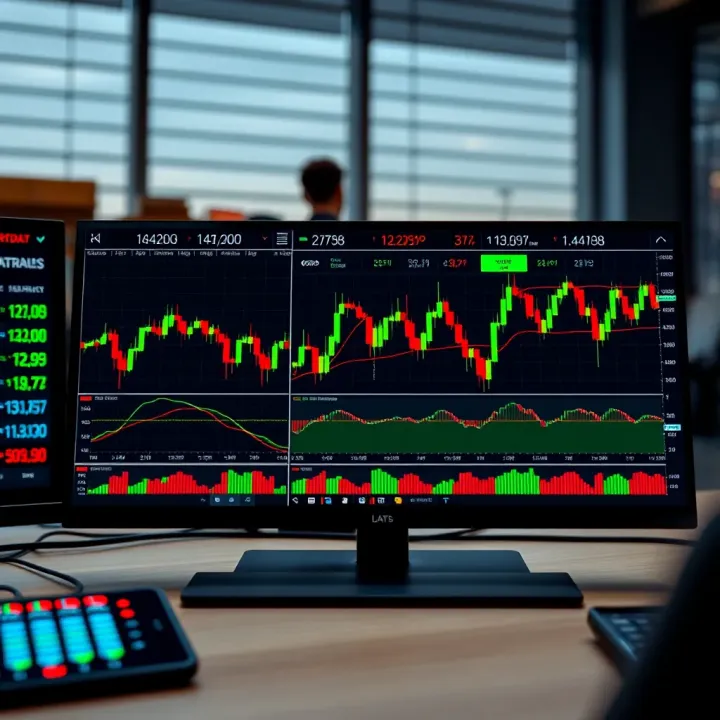
Charting tools and technical indicators form the backbone of smart trading. Platforms must offer multiple chart styles (candlestick, line, bar), and indicators like RSI, moving averages, and Bollinger Bands. These help analyse price trends and momentum, guiding trade entries and exits. For instance, spotting a divergence on RSI could prevent a bad trade.
Order execution types affect how quickly and efficiently your trades enter the market. Market orders ensure immediate execution at the current price while limit and stop orders let you specify exact entry or exit points. Some platforms also support advanced orders like trailing stops, helping lock profits as prices move.

User experience and platform usability can’t be overlooked. A clean interface with intuitive navigation speeds up decision-making. Mobile compatibility is crucial in India’s fast-paced environment, where traders might need to act on Indian markets between office hours. Platforms like Zerodha Kite or Upstox offer user-friendly layouts that Indian traders appreciate.
Stop-loss and take-profit orders automatically close positions at preset prices, limiting losses or securing gains without constant monitoring. For example, setting a stop-loss 2% below your entry price prevents major hits if the market suddenly reverses. This is indispensable for managing risk in volatile assets.
Regarding margin calls and notifications, these alert you if your account’s margin falls below required thresholds due to losses or market swings. Timely alerts let you add funds or close positions to avoid forced liquidation. Indian traders especially benefit when trading on volatile assets with high leverage to stay on top of margin requirements.
A CFD platform is more than a place to trade — it should act as your market assistant, offering diverse assets, reliable execution, smart tools, and robust risk controls. This helps you trade confidently and safely.
In summary, choose a CFD platform that offers a broad asset range including Indian and global markets, equipped with powerful charting and varied order options, all wrapped in an easy-to-use interface. Make sure it supports essential safety measures like stop-losses and margin alerts to guard your capital effectively.
Trading on CFD (Contract for Difference) platforms comes with clear advantages and some notable risks. Understanding these helps Indian traders use these platforms effectively and avoid common pitfalls. Let’s go through the main benefits and potential challenges you should keep in mind.
CFD platforms offer Indian traders a way to participate in global markets without the need to physically own the underlying assets. For example, you can speculate on price movements in US tech stocks like Apple or Indian commodities such as gold without actually owning shares or bullion. This bypasses paperwork and ownership costs, making it easier for individuals to tap into both domestic and international markets from their trading app at home.
Since CFDs track price changes directly, you gain exposure to a wide range of assets including stocks, indices, commodities, and currencies. This flexibility is especially useful for traders wanting to diversify their portfolios beyond the limitations of local exchanges.
Unlike traditional investing where profits come mainly from rising prices, CFDs let you potentially profit when prices fall as well. This short-selling ability allows Indian traders to take a position expecting the asset’s price to drop and earn from that movement. For instance, during volatile periods like a market downturn, you can use CFDs to open short positions on indices such as Nifty 50. This expands your trading opportunities, giving you more ways to capitalise on market trends regardless of direction.
This feature suits active traders or those looking to hedge existing investments. However, it requires quick decision-making and market awareness because losses on short positions can mount quickly.
CFD trading involves leverage, meaning you only put down a fraction of the full trade value (called margin). For example, if the margin requirement is 10%, you can open a ₹1,00,000 position with just ₹10,000 capital. This amplifies purchasing power and allows small investors to control larger positions.
This works well in India where many traders prefer starting with limited funds. However, leverage is a double-edged sword as it magnifies both profits and losses. Using leverage responsibly is key to avoiding heavy losses from even minor price swings.
The very leverage that lets you control bigger positions also increases risk. Price swings in volatile assets, such as currency pairs influenced by sudden RBI policy changes, can quickly erode your margin. Without careful risk management, a small adverse move may trigger margin calls or force position closures, leading to unexpected losses.
Indian markets sometimes see sharp intraday movements, so trading heavily leveraged CFDs during such times can be risky. It is best to set strict stop-loss orders and never risk more than you can afford to lose.
CFD trading depends heavily on the broker’s integrity and financial health since you don’t own the actual asset. If the broker faces financial trouble or fails to execute trades properly, your funds may be at risk. In India, strain on overseas CFD providers has increased regulatory scrutiny.
Choosing brokers registered with Indian regulatory bodies or well-established international names with strong reputations mitigates counterparty risks. Also, check if your broker holds client funds separately and offers clear terms related to trade execution.
CFDs in India face a complex regulatory environment. The Securities and Exchange Board of India (SEBI) restricts certain CFD activities, especially those involving overseas entities, which can impact access and usage. Traders should keep updated on legal changes to avoid inadvertent breaches.
On taxation, profits from CFD trading are generally treated as capital gains or business income depending on frequency. Reporting these properly under Income Tax rules is important to avoid penalties. Consulting a tax expert familiar with Indian market specifics helps ensure compliance.
Trading CFDs offers expanded opportunities but comes with risks linked to leverage, brokers, and regulations. Careful choice and strategy help Indian traders make the most while protecting capital.
The balance between advantages and risks means CFD platforms suit experienced traders who understand market dynamics and risk control. For beginners, learning gradually with demo accounts can build confidence before going live.
Understanding the regulatory landscape is essential for anyone considering trading CFDs in India. It helps traders stay within legal boundaries and protect themselves from unregulated practices. Regulations also ensure fair market conduct and reduce the chances of fraud or malpractice, which is particularly important given the popularity of leveraged products like CFDs.
CFDs are generally not permitted as standard investment contracts by the Securities and Exchange Board of India (SEBI). Indian regulations restrict the trading of derivative products not listed or cleared on recognised exchanges such as NSE or BSE. This means that many CFD products offered by overseas or foreign brokers are technically not allowed for Indian residents. SEBI emphasises investor protection and market integrity, so the lack of clear legal status means retail traders should be cautious when dealing with CFDs outside official exchanges.
Despite this, Indian traders often access CFDs through overseas brokers operating from outside India. However, these platforms do not come under SEBI’s direct supervision or investor protection schemes. This gap creates risks around trade execution, fund safety, and regulatory recourse if problems arise.
SEBI actively discourages Indian investors from using overseas CFD providers who do not comply with Indian laws. These platforms often operate from jurisdictions with looser controls, which raises concerns about transparency and dispute resolution. Indian regulators have issued warnings and sometimes blocked access to such platforms to protect traders.
As a practical note, Indian traders using overseas CFD services should verify if those brokers hold proper licences in respected jurisdictions and whether they maintain segregation of client funds. Ignoring these factors can expose traders to significant counterparty risks.
Profits earned from CFD trading are treated as income and taxed accordingly under the Income Tax Act. Most individual traders classify these gains as business income, which means regular tax rates apply based on the applicable slab. Losses from CFD trading can be set off against profits from other business income but not against salary or capital gains.
For example, if you make ₹5 lakh profit from CFDs in a financial year but suffer ₹2 lakh loss from stock trading, you can adjust these figures to reduce your taxable income. Yet, it is crucial to maintain detailed records of trades, expenses, and documentation to claim exemptions or offset losses successfully.
Indian tax laws require traders to declare all income sources, including CFD profits, in the annual income tax return (ITR). Non-disclosure can lead to penalties and scrutiny from the Income Tax Department. If your CFD trades are frequent and substantial, it is advisable to maintain proper bookkeeping and possibly register as a sole proprietor or firm for compliance.
Additionally, under the Goods and Services Tax (GST) norms, brokerage fees and other charges related to trading may attract GST, adding to the cost base. Traders should keep track of these expenses for accurate profit calculation.
Compliance with regulatory and tax rules around CFD trading is not just about legality; it safeguards your investment and provides clarity in your financial planning. Understanding SEBI’s stance and tax duties lets you trade confidently and minimise surprises.
In sum, Indian traders should prioritise platforms regulated by Indian authorities or thoroughly vetted foreign brokers, maintain transparent records, and consult financial advisors for effective tax planning.
Selecting the right CFD platform is key to trading success, especially in India where regulatory and market conditions differ from global norms. A good platform aligns with your trading style, budget, and risk appetite while offering essential features that protect your investments and help you execute trades smoothly. Indian traders should focus on elements like cost structure, security, user support, and learning tools to navigate the complexities of CFD trading effectively.
Commission and spreads are the most visible costs when trading CFDs. Commission refers to a fixed fee charged per trade, while spreads represent the difference between buying and selling prices. For example, a platform might offer zero commission but widen spreads to cover costs. This approach can eat into profits, especially for frequent traders. Indian traders need to compare both commissions and spreads, since both impact overall trading expenses. Platforms like Zerodha and Upstox are transparent about their charges, making them popular choices.
Overnight financing charges apply when CFD positions are held beyond market hours. Since CFDs usually involve leverage, you essentially borrow money to trade. The broker charges interest on this borrowed amount, which varies depending on the asset and broker policies. For instance, holding a leveraged position in foreign indices overnight on a platform like ICICI Direct would incur a small daily fee that adds up over time. Understanding these charges helps traders avoid unexpected costs that reduce net gains, especially for longer holding periods.
Strong data protection and encryption are non-negotiable given rising cyber threats. Reputable CFD platforms must use end-to-end encryption and two-factor authentication to secure your account and sensitive information. For Indian traders, confirming if the platform complies with RBI’s data guidelines or uses ISO-certified security protocols adds confidence. Platforms such as HDFC Securities invest heavily in security to safeguard users’ data.
Reliable customer support and availability play a vital role when issues arise with trading or transactions. A user-friendly platform falls short if help isn’t timely or competent. Indian traders should prefer platforms offering 24/7 support with accessible channels such as phone, chat, and email, plus bilingual assistance in English and Hindi or regional languages. Prompt support reduces downtime and prevents losses from delayed trades.
Trial trading to understand the platform before committing real money is invaluable. Demo accounts simulate live market conditions without financial risk, allowing new and experienced traders to test strategies and platform features. Most Indian platforms like Angel Broking and Groww offer demo versions reflecting real-time data, which helps build confidence.
The availability of learning materials is equally important. Comprehensive resources—videos, tutorials, FAQs, and market analysis—help traders grasp CFD intricacies and stay updated on regulations or market shifts. Platforms providing regular educational content empower users to trade smarter. For instance, NSE India’s learning modules aligned with CFD trading basics guide beginners well.
Choosing a CFD platform is not just about costs or technology; it’s about finding a reliable partner that supports your trading journey through clear pricing, strong security, useful tools, and responsive support.
By focusing on these aspects, Indian traders can minimise risks and maximise their potential in CFD markets.
Discover how to pick the best trading platform globally 🌍. Compare features, costs, security, and support tailored for Indian investors 💹₹ safely and confidently.

Explore Qutex trade in detail 📊 Learn how it works, benefits, risks, and get expert tips to trade confidently in India's market landscape 🇮🇳

📈 Understand Quotex with our detailed guide for traders in India 🇮🇳. Learn how to set up accounts, explore trading options, strategies, and key risks.

Explore Deriv's forex trading platform tailored for Indian traders 🇮🇳. Learn trading tools, risk management, regulations, and tips to trade currencies confidently ₹.
Based on 10 reviews