

Dot Coin Price Prediction: Market Insights & Analysis
📈 Explore Dot Coin price forecast with detailed analysis, market factors, expert views, and risks to help you make informed investment choices in India.
Edited By
Henry Mitchell
Binance Coin (BNB) stands as one of the leading cryptocurrencies in today's market, widely used within the Binance ecosystem for transactions, fee payments, and decentralised finance (DeFi) projects. Understanding BNB's price movement matters greatly if you are an investor seeking to navigate the volatile crypto space or a trader looking to capitalise on short-term trends.
BNB's price behaviour is influenced by multiple factors, including Binance's platform developments, regulatory shifts in major markets, and broader crypto market sentiment. For instance, Binance's quarterly token burns reduce BNB supply over time, often giving the price a boost by creating scarcity.

Recent market action reveals BNB trading with heightened volatility, responding sharply to global crypto regulations and updates on innovations such as Binance Smart Chain expansions. The coin’s price rallies sometimes coincide with Binance launching new products or partnerships, showing a strong correlation between ecosystem growth and investor interest.
For traders and investors, staying updated on Binance’s announcements and technical indicators like moving averages or Relative Strength Index (RSI) offers actionable entry and exit points.
Key technical trends show that BNB often respects its 50-day and 200-day moving averages as support and resistance levels. Breakouts above these marks can signal bullish momentum, while failure to hold support may lead to corrections.
Among risks affecting BNB's outlook are tightening regulations in jurisdictions like the US and EU, which may impact Binance’s operations and, by extension, BNB demand. Furthermore, market-wide downturns driven by macroeconomic factors such as interest rate hikes can weigh on crypto prices overall.
In brief, closely monitoring Binance ecosystem updates, technical charts, and the regulatory landscape provides a clearer picture of where BNB prices could head. This approach helps manage investment decisions with better insight into pricing patterns and potential turning points.
Grasping the basics of Binance Coin (BNB) and its standing within the crypto market is essential for anyone looking to invest or trade in this asset. Knowing what BNB is, how it functions within the cryptocurrency ecosystem, and how it compares to other digital currencies helps traders make informed decisions and better predict price movements.
BNB began as a utility token for Binance, one of the world’s largest cryptocurrency exchanges by volume. Initially launched through an initial coin offering (ICO) in 2017, BNB was mainly used to pay trading fees on Binance with a discount. Over time, its use cases have expanded considerably. Now, BNB powers transactions on Binance Smart Chain (BSC), a blockchain platform supporting decentralised applications (dApps) and DeFi projects. For example, users can stake BNB in yield farming protocols or participate in token sales on Binance Launchpad.
Beyond fee payments, BNB plays a vital role in facilitating operations on Binance’s network and other platforms built on BSC. This dual functionality – as both a transactional token and a fuel for smart contracts – makes it unique. For instance, popular DeFi platforms like PancakeSwap rely on BNB for executing trades and liquidity pool management. Moreover, its quarterly token burn mechanism, where Binance uses a portion of profits to buy back and permanently remove BNB from circulation, affects its supply dynamics and, in turn, influences price.
Compared to Bitcoin (BTC) and Ethereum (ETH), which mainly function as currency store or platform tokens respectively, BNB stands out as a hybrid asset with practical use cases tied to a specific ecosystem. While Bitcoin is widely viewed as digital gold, BNB’s value proposition hinges on its utility within Binance’s growing network. Unlike Ethereum, which faces high gas fees, Binance Smart Chain offers faster and cheaper transactions, making BNB an attractive choice for many in the crypto space. This distinct positioning contributes to its trading volume, market capitalisation, and investor interest.
Understanding these aspects of BNB helps clarify why it often reacts differently to market forces than other cryptocurrencies, which is key for accurate price forecasting.
In short, knowing what BNB is, how it functions within the crypto ecosystem, and how it compares to other tokens provides a strong foundation for analysing its price behaviour and spotting opportunities in the volatile markets traders face today.
Understanding the recent performance and price trends of Binance Coin (BNB) offers valuable insight into its potential future movements. Tracking how BNB has behaved over time helps investors and traders identify patterns, gauge market sentiment, and make informed decisions. These trends reflect not only BNB's standalone dynamics but also its interaction with broader cryptocurrency markets, making this analysis essential for anyone considering exposure to BNB.
BNB’s price history reveals notable volatility typical of top cryptocurrencies, with periods of sharp growth as well as corrections. For example, BNB surged from around $40 in early 2021 to an all-time high exceeding $600 by late May 2021. This rapid increase was driven by Binance Smart Chain’s increasing adoption and the rise of decentralized finance (DeFi) projects on the platform. However, the coin also faced steep corrections; by June 2021, it had retraced nearly 50% from its peak as the entire crypto market paused.
Such price swings illustrate BNB’s sensitivity to both internal developments on Binance’s platform and external market shocks. Investors benefit from understanding these moves because history often signals how BNB might react to similar future events, like new blockchain launches or regulatory news.
Market capitalisation offers a snapshot of BNB's relative size and importance in the crypto ecosystem. As of now, BNB consistently ranks among the top five cryptocurrencies by market cap, reflecting strong investor confidence and widespread use. For perspective, during its peak, BNB’s market capitalisation crossed ₹5 lakh crore, highlighting its significant stature alongside Bitcoin and Ethereum.
Trading volume complements this by showing liquidity and market activity. High volumes, often seen during major price shifts or announcements, indicate healthy participation from traders and investors alike. For instance, during the 2021 bull run, BNB regularly saw daily volumes exceeding $1 billion, providing ample liquidity for large trades without drastically affecting the price. This liquidity is crucial for both short-term traders and long-term holders, as it impacts how easily positions can be entered or exited.

Recent price trends combined with capitalisation and volume data paint a clear picture of BNB’s market health and underlying investor interest. This understanding guides your strategy, whether you’re looking to hold, trade, or analyse market timing.
By carefully studying these recent performance indicators, you position yourself to read market signals better and anticipate BNB’s potential movements with greater confidence.
Understanding the factors driving Binance Coin's (BNB) price is essential for traders and investors aiming to make well-informed decisions. These factors fall broadly into technical analysis indicators, fundamental elements, and external market conditions. Each plays a distinct role in shaping BNB’s price movements and helps gauge its future outlook.
Moving Averages help smooth out price fluctuations to reveal trends over time. For example, the 50-day and 200-day moving averages are commonly tracked. When the shorter-term 50-day moving average crosses above the longer 200-day, it signals bullish momentum, suggesting rising prices. Conversely, a downward cross hints at bearish trends. Traders use these patterns to time their entries and exits, helping them avoid knee-jerk decisions caused by daily volatility.
Relative Strength Index (RSI) measures the speed and change of price movements on a scale from 0 to 100. An RSI above 70 typically indicates an overbought condition, meaning BNB might be overpriced and due for a pullback. Below 30 suggests oversold conditions, often signalling a potential rebound. For instance, if BNB’s RSI hits 75 after a strong rally, cautious investors might wait before buying, anticipating a short correction.
Support and Resistance Levels act as psychological price barriers where BNB tends to stop and reverse direction. Support is the price level where buying interest prevents the price from falling further, while resistance is where selling pressure caps price rises. Understanding these levels helps traders set stop-loss orders and price targets. For example, if BNB repeatedly bounces back from ₹25,000, this becomes a key support level to watch.
Platform Developments directly impact BNB’s utility and demand. Binance’s continuous upgrades—like improving the Binance Smart Chain’s speed or introducing new DeFi products—increase BNB’s usage. Recent network updates, such as enhanced transaction speeds, encourage more developers and users, contributing to price appreciation.
Regulatory Environment shapes investor confidence. India's evolving stance on cryptocurrencies, along with global regulations, influence BNB’s market sentiment. For instance, tougher regulations or unexpected bans in major markets can cause abrupt price drops, whereas clear supportive policies often lead to price gains.
Partnerships and Adoption bolster BNB’s real-world relevance. Expanding use cases, such as collaborations with fintech firms or integration into popular apps, enhance BNB's acceptance. When Binance partners with payment platforms to allow BNB payments, it increases token demand, positively reflecting on its price.
Overall Cryptocurrency Market Trends broadly affect BNB prices. Since the crypto market tends to move in cycles, a bull run led by Bitcoin usually lifts altcoins like BNB. Conversely, a market-wide slump can drag BNB down regardless of its fundamentals.
Global Economic Factors such as inflation, interest rates, or geopolitical issues also impact crypto markets. During economic uncertainty, some investors turn to cryptocurrencies for diversification, boosting demand. However, rising interest rates might pull funds away to traditional assets, putting pressure on BNB's price.
Keeping an eye on these factors equips investors and traders with the insight needed to navigate BNB's price movements more effectively. Combining technical signals with fundamentals and macroeconomic awareness creates a more balanced and informed investment approach.
Expert forecasts and community sentiment significantly shape Binance Coin's (BNB) price outlook. Traders and investors watch these signals closely to gauge potential market movements, especially for volatile assets like cryptocurrencies. Expert opinions often synthesise technical data and fundamental analysis, offering insights that can guide smarter investment decisions.
Market analysts use a mix of chart patterns, on-chain metrics, and macroeconomic factors to form BNB price predictions. For example, some analysts observe BNB's adherence to moving averages and bullish RSI levels, suggesting possible uptrends during favourable market phases. Conversely, bearish scenarios emerge when BNB falls below critical support levels. Several Indian and global experts have forecasted BNB could oscillate between ₹18,000 and ₹30,000 in the next 12 months, depending on adoption rates and regulatory developments.
Analysts also consider Binance Smart Chain's expanding ecosystem as a bullish driver. New decentralized finance (DeFi) projects and partnerships can enhance BNB's utility, improving demand and price stability. However, regulatory clampdowns in key markets, including India’s evolving crypto policy, remain a significant risk influencing forecasts.
Investor sentiment often moves prices in the short term. Platforms like Twitter, Telegram, and Indian crypto forums reflect a mix of optimism and caution. Among retail investors, positive news such as Binance’s new feature launches or partnerships can trigger buying sprees. For instance, when Binance introduced the zero-fee trading period last year, the community buzz led to a noticeable price bump.
On the flip side, sudden dips or negative regulatory news provoke swift sell-offs, hurting sentiment temporarily. Sentiment analysis tools measuring social media trends indicate that BNB still holds strong support among Indian crypto investors, with growing interest beyond major cities, highlighting wider adoption.
Understanding both professional analyses and community mood equips investors with a clearer picture of BNB's potential paths. Balanced attention to these factors helps manage risks while identifying profitable entry points.
In summary, expert predictions provide evidence-backed price ranges and strategic insights, while investor sentiment reveals immediate market reactions. Traders and investors should combine these perspectives to form a well-rounded view before committing capital to BNB.
Understanding the risks and challenges that might impact Binance Coin's (BNB) price is vital for anyone involved in trading or investing in this cryptocurrency. These factors can shift market dynamics quickly, influencing both short-term movements and long-term outlooks. Without grasping these risks, traders could underestimate the potential downside or overestimate growth prospects.
Regulation remains one of the biggest uncertainties for BNB and the entire crypto sector. In India, the government and regulators like the Securities and Exchange Board of India (SEBI) and Reserve Bank of India (RBI) have expressed cautious stances on cryptocurrencies, including restrictions and tax policies. For example, the imposition of a 30% tax on crypto gains and a 1% TDS (Tax Deducted at Source) on transactions influences investor behaviour, often leading to subdued volumes. Any sudden regulatory tightening, such as banning crypto exchanges or limiting wallet usage, can trigger sharp price corrections in BNB.
Globally, the picture is equally complicated. Countries like the US have been intensifying scrutiny over crypto assets, focusing on compliance, anti-money laundering (AML), and investor protection. Binance itself has faced warnings and investigations in jurisdictions including the UK, Japan, and Singapore. These developments often create temporary uncertainty, causing price drops, as traders react to the perceived risk of regulatory crackdown.
Regulatory risks are not just about laws but also how regulators enforce them. Sudden policy changes can cause price swings irrespective of BNB’s underlying fundamentals.
BNB’s price is highly sensitive to overall cryptocurrency market volatility. This sector is known for rapid price swings caused by shifts in investor sentiment, technology updates, or macroeconomic factors. For example, when Bitcoin or Ethereum sees sudden declines, altcoins like BNB often follow suit. This effect was seen during the crypto crash in 2022, where BNB lost significant value alongside broader market sell-offs.
Competition also weighs heavily on BNB’s prospects. Binance faces rivalry from other exchanges issuing native tokens, such as FTX’s FTT (before its collapse) and Crypto.com’s CRO. Furthermore, the rise of decentralised finance (DeFi) platforms challenges Binance Smart Chain’s market share, impacting demand for BNB used in transaction fees and staking.
Investors should watch competitor moves and technological changes closely. A major upgrade on a competing blockchain with better scalability or lower fees may divert users away from Binance, hitting BNB’s utility and price.
In short, market ups and downs combined with fierce industry competition pose substantial challenges to BNB’s price stability. Staying aware of these risks can help traders make more informed decisions about exposure and entry points.
Investing in Binance Coin (BNB) requires a careful balance between understanding the risks and potential rewards. As with any cryptocurrency, BNB's price can be highly volatile, which means you should be prepared for significant fluctuations. However, its close ties to the Binance ecosystem and its regular use cases add a layer of fundamental value worth considering. Approaching BNB with a clear strategy can help you navigate this dynamic market and make more informed decisions.
Before putting your money into BNB, it's important to weigh the possible returns against the risks involved. For example, while BNB has seen substantial price appreciation in recent years, sudden regulatory changes in India or internationally could impact its value sharply. On the other hand, ongoing developments within Binance, like new platform features or adoption growth, may boost demand for BNB, potentially raising its price.
Consider how much loss you are willing to tolerate and adjust your investment size accordingly. It's also useful to track broader cryptocurrency market trends and economic factors like inflation or currency strength that can influence BNB’s movement. Balancing these realities will help prevent panic selling during volatile periods and plan exits or entries more strategically.
Holding BNB for the long term can be a solid approach if you believe in Binance’s vision and the broader adoption of its blockchain and services. Investors who bought BNB early and held through ups and downs have often been rewarded as the coin’s utility expanded across trading fee discounts, token sales, and DeFi applications.
This strategy involves less frequent trading and focuses more on growth potential over years rather than days or weeks. For example, an investor confident in Binance Smart Chain's role in India's growing DeFi space might choose to hold BNB through market slumps, expecting future gains as the ecosystem matures.
Active traders may prefer using technical analysis tools like moving averages, relative strength index (RSI), and support/resistance levels to decide entry and exit points for BNB. For instance, if BNB crosses above its 50-day moving average with strong volume, a trader might see this as a bullish sign to buy.
This method demands close monitoring of charts and market sentiment. It allows for capitalising on short-term price swings but requires experience to avoid false signals. Technical trading suits those who want faster feedback and frequent trading rather than waiting for long-term trends.
Putting all funds into BNB alone increases exposure to risks specific to Binance Coin or its platform. Spreading investments across other major cryptocurrencies like Bitcoin, Ethereum, or emerging tokens can lower risk and potentially improve returns.
A diversified portfolio cushions against market shocks impacting any one coin. For example, if regulatory action affects Binance's operations, other holdings might hold their value or even rise, balancing losses. Indian investors should consider diversification alongside their risk appetite and market outlook to avoid overconcentration.
When investing in BNB or any crypto, a clear strategy combined with realistic expectations can guide you through market ups and downs more confidently.
📈 Explore Dot Coin price forecast with detailed analysis, market factors, expert views, and risks to help you make informed investment choices in India.

Get detailed insights on Aave's price trends, market factors, expert forecasts, and risks. Stay informed about Aave's future in DeFi with this clear outlook 📈💡
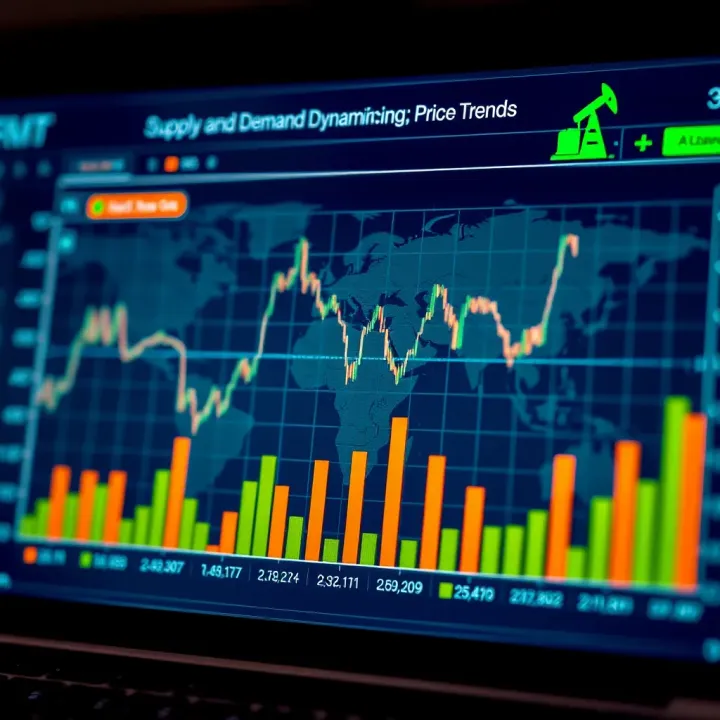
🔍 Discover how crude oil price prediction methods consider supply-demand shifts, geopolitical events, and tech advances impacting India's energy markets and economy.

Learn how Binance Coin (BNB) price is converted to ₹INR, discover factors impacting its value, methods to track price changes, and key risks in Indian trading 🪙📈
Based on 9 reviews