

Understanding Forex Trade Demo Accounts
Learn how forex trade demo accounts let beginners practise trading risk-free 📈 Gain tips to choose and use demo accounts effectively to sharpen skills before investing real money.
Edited By
Emily Harper
A forex demo account offers a no-risk environment to practise buying and selling currencies. Unlike live trading, where your real money is at stake, a demo account lets you explore market dynamics without financial pressure. This makes it a valuable tool, especially for new traders who want to understand how forex markets operate.
For example, if you are eyeing the USD/INR pair, a demo account allows you to simulate trades amid actual market conditions. You can try strategies—whether scalping for quick profits or swing trading over days—without worrying about losing money. By observing how various economic announcements affect currency prices in real time, you gain practical insights that theory alone cannot provide.
A demo account typically comes loaded with virtual funds, often amounting to ₹10 lakh or more. This cushion lets you experiment freely and build confidence gradually. It also helps you familiarise yourself with the trading platform's interface—whether it's charts, order types, or risk management tools—before switching to real capital.
A demo account is like a practice ground where you sharpen your skills, test new strategies, and adapt to market rhythms, all in a risk-free setting.
Remember, using a demo account effectively requires treating it like real trading. Resist the temptation to take exaggerated risks since real-money decisions often feel very different. Instead, focus on consistent discipline, sound strategy execution, and understanding market reactions.
In summary, a forex demo account is an essential stepping stone for anyone interested in currency trading. It bridges the gap between theoretical knowledge and live trading, enabling you to enter the market with well-tested strategies and greater confidence.
A forex demo account lets traders practise buying and selling currency pairs using virtual money. It replicates real market conditions but involves no financial risk, making it a crucial stepping stone for newcomers and even experienced traders testing new strategies.
A demo account provides a sandbox where you can experience live market dynamics like price fluctuations, spreads, and order execution speeds. For example, if the EUR/USD rate changes due to a major economic release, your demo account reflects it instantly, just like a real account. This simulation helps you understand how trades open, modify, or close under varying market conditions without worrying about losing money.
Practising in such an environment builds muscle memory and familiarity with the trading interface. You get to test timing, order types like stop-loss or take-profit, and see how leverage affects your positions—all within a risk-free setup.
The biggest advantage of demo accounts is that they eliminate financial pressure. Since you are trading with virtual funds only, the temptation to make impulsive decisions driven by fear or greed reduces significantly. This helps to develop good habits and a disciplined approach that’s essential in live trading.
For instance, if a novice trader places a large position and it hits a loss in a demo account, there’s no real money lost, so they can analyse the mistake calmly, adjust the strategy, and retry. This safety net encourages learning through trial and error without costing a single rupee.
Most brokers provide demo accounts that come equipped with live prices drawn directly from global forex markets. This means you see the same quote for USD/INR or GBP/USD as traders using live accounts, allowing you to react to news or technical signals as you would in reality.
This access ensures your practice is meaningful. For example, if the Reserve Bank of India (RBI) announces an unexpected interest rate decision, the demo platform price updates firsthand, helping you test your response to such events.
Typically, brokers allocate a virtual balance ranging from ₹1,00,000 to ₹10 lakh in demo accounts. You can use these virtual funds to place trades without worrying about running out of money since you can reset or refill the balance anytime.
This setup allows you to experiment with different position sizes and risk levels. For example, you might try trading small lots or leverage higher amounts to see how margin requirements work, all without affecting your real finances.
Demo accounts come with the same trading platforms brokers offer for live accounts, such as MetaTrader 4, MetaTrader 5, or broker-specific apps. You also get access to charting tools, technical indicators, and order types.
By using these tools in the demo, you learn how to execute strategies effectively. For instance, you can practise using moving averages or Fibonacci retracements to time entries and exits. Getting comfortable with the platform itself eliminates technical hiccups when you switch to live trading.
Using a forex demo account is like learning to drive a car in an empty parking lot before hitting busy city roads. It builds skills, confidence, and understanding without the stress of real losses.
Understanding how a demo account works and what it offers helps traders prepare better for the complexities of live forex trading. This foundation makes the transition smoother and increases the chances of success in the volatile currency markets.
A demo account offers traders a risk-free environment to understand the forex market and develop essential skills before committing real money. For newcomers and even experienced traders, this practice platform helps avoid costly mistakes that come with ignorance or overconfidence. Let's break down why using a demo account makes good sense.
Demo accounts allow you to familiarise yourself with how currency pairs move and how trades execute without facing any financial loss. For example, a trader trying to understand the impact of economic announcements—like RBI's interest rate decisions—can observe market reactions in real time through a demo account. This means you can get a feel for price fluctuations, spreads, and leverage effects while keeping your capital intact.
Experiencing the market without the fear of losing money helps you focus on understanding dynamics rather than emotions.
No strategy is foolproof at the outset. A demo account lets you test various trading approaches, whether you prefer scalping, swing trading, or carry trade, without risking your hard-earned cash. You might try placing multiple stop-loss and take-profit levels or experiment with different lot sizes to see which works best for your style. For instance, many traders simulate trades during major events such as US non-farm payroll releases to see how their strategies hold up under volatility.
Regularly reviewing these demo trades also uncovers patterns and flaws, giving you the chance to refine tactics. This practice ensures you enter live trading with a well-tested plan that’s suited to actual market behaviour.
Trading is as much psychological as it is technical. A demo account creates a controlled environment for building confidence and discipline. It is common for novices to experience hesitation or panic when placing real trades. Using a demo account for weeks or months helps build comfort with order placement, managing losses, and sticking to a trading plan.
It also encourages discipline by letting you follow risk management rules, such as risking only 1–2% of the trading capital per trade. This habit carries over when you start live trading, reducing emotional decision-making.
To wrap up, a forex demo account is an invaluable stepping stone, offering you practice and insight without financial risk. It helps you grasp market behaviour, test strategies, and develop psychological strength—making your transition to live trading smoother and more confident.
Getting the best from a forex demo account requires deliberate effort and smart practices. It’s not just about clicking buy or sell; the real value lies in mimicking live trading conditions, applying risk controls, and critically reviewing your trades. This approach helps develop skills that translate well when you switch to real trading.
Starting with realistic setups is vital. Treat your demo account as you would a live one. Limit your virtual funds to an amount you would realistically invest, say ₹50,000 rather than an unlimited balance. This prevents developing bad habits like reckless trading just because there is no real money involved. Also, simulate market timings that fit your schedule. For example, if you can trade only during evenings, focus your demo trading during those hours. This creates familiarity with real market volatility and liquidity you’d face.
Demo accounts offer a risk-free platform to master money management. Use this time to set stop-loss and take-profit orders regularly, just as you would in live trades. For instance, if you are trading the USD/INR pair, decide your maximum acceptable loss—say 1% of your total capital—and stick to it. Tracking how often these limits trigger helps gauge whether your strategy is too risky or conservative. Avoid the temptation to overleverage just because losses don’t affect your wallet; this can cause trouble when you go live.
Keeping track of each trade's outcome is essential to improve. Maintain a trading journal noting your reasons for entering trades, outcomes, and lessons learned. For example, if you notice repeated losses when trading during volatile market hours, you might reconsider your timing or strategy. Digital tools integrated with many demo platforms can also generate reports, showing your win rate, average loss, and profit. Analysing these details helps identify your weak points and sharpen strategies.
Regularly reviewing your trades and treating demo practice seriously bridges the gap between theory and real trading. Over time, this disciplined approach builds your confidence and sharpens judgement, reducing costly errors when actual money is involved.
By setting practical conditions, applying sound risk controls, and analysing your trades properly, the demo account becomes an effective training ground. It prepares your mind and tactics for the unpredictable world of forex trading with ₹ases and principles that apply to the live markets seamlessly.
While forex demo accounts offer valuable practice, understanding their limitations helps set realistic expectations and prepares you for live trading challenges. These accounts simulate real-market conditions but cannot replicate the full emotional and operational complexities traders face with actual money on the line.
One major difference between demo and live trading is the emotional impact. Demo accounts use virtual money, so you don’t experience the stress or adrenaline that comes with risking real ₹ amounts. In live trading, fear and greed can influence decisions, causing even seasoned traders to deviate from their strategy. For instance, a trader might hesitate to close a losing position in live markets due to the fear of losing money, while the same scenario in a demo account goes unnoticed.
This emotional pressure affects discipline and timing, making demo success no guarantee of live profitability. Recognising this gap helps traders prepare psychologically before risking real funds.
Demo trading platforms often provide ideal trade execution with instant order filling at quoted prices. However, live forex markets involve varying liquidity depending on the currency pair, time of day, and market conditions. This can lead to slippage—the difference between expected and actual execution price.
For example, during volatile news events, a live trader may face delayed orders or price gaps, which do not appear on demo accounts. Also, spreads can widen in real markets while demos might show fixed spreads, giving an unrealistic sense of cost and execution speed.
By being aware of these differences, traders understand that live trading can be less predictable and requires strategies to handle liquidity and execution risks.
It’s easy to overestimate your readiness based on demo trading performance alone. Demo accounts, with their controlled environment and lack of emotional stakes, can paint an overly optimistic picture. You might win consistently in demos but struggle in live markets.
To avoid this trap, approach your demo results as just one part of your preparation. Focus on developing sound strategies, managing risks, and building emotional resilience. Remember, the transition to live trading will test how well you handle the psychological and practical pressures that don’t surface in simulation.
Demo accounts are great training grounds but treating them like real trading environments only partially prepares you. The real test includes managing emotions, dealing with liquidity issues, and adapting to live market unpredictability.
In summary, forex demo accounts help you build foundational skills, but recognising their limitations—emotional disconnect, execution differences, and unrealistic expectations—is key to a smoother shift into live forex trading.
Moving from a forex demo account to live trading is a major step that requires careful preparation. While demo accounts simulate real market conditions, live trading introduces new elements, like actual money at stake and emotional pressure. This section explains when the transition is right and the practical steps to open a live account, helping you start on a confident note.
The decision to move from demo to live trading depends mainly on your readiness and experience. If you consistently make profits on your demo account without emotional impatience or risk management mistakes, it signals a good time to switch. For example, if a trader practising on demo for three months is able to apply stop losses effectively and maintain a steady approach in various market conditions, they are likely ready.
However, successful demo trading alone isn't enough. You should also feel comfortable managing your emotions, such as fear or greed, which tend to influence decisions when real money is involved. If you find yourself rushing to “make up” losses on demo or ignoring trade plans, more demo practice is advisable. Plus, ensure you have a solid understanding of currency pairs you trade and an established strategy.
Opening a live forex account in India involves a verification process to comply with Know Your Customer (KYC) norms. Brokers require identity proof like Aadhaar card or PAN card, address proof, and sometimes bank statements. This process helps prevent fraud and money laundering, aligning with the Securities and Exchange Board of India (SEBI) regulations. Though it may seem time-consuming, completing KYC is essential and usually takes just a few days.
Brokers also ensure you understand the risks involved in forex trading by providing disclosures during account setup. This protects traders from unexpected surprises and builds responsible trading habits.
Once your account is verified, funding it is the next step. Indian brokers typically offer multiple payment options including net banking, UPI apps like PhonePe or Google Pay, and even electronic wallets. Before depositing, consider the minimum deposit requirements, which often start from ₹10,000 onwards.
Choose a funding method that is safe and convenient for you. Keep in mind transaction times and any charges levied. For instance, net banking transfers usually credit funds same day, while some wallets might have limits on transfer size. Once funded, you can start trading live, but never invest more than you can afford to lose.
Starting live trading calls for discipline and a cautious approach. First, begin with small trade sizes relative to your live capital to manage risks better. For example, if you have ₹50,000, limit your initial trade exposure to 1-2% per trade.
Maintain a trading journal to track your decisions, profits, and losses. This habit helps identify patterns and avoid repeating mistakes. Also, control your emotions. Avoid impulses triggered by market fluctuations and stick to your strategies as practiced during the demo phase.
Lastly, take advantage of demo accounts even after going live. Testing strategies on demo before applying them with real money can prevent unnecessary losses.
Transitioning to live forex trading doesn't mean leaving behind everything you've learnt in the demo phase; instead, it's about applying those lessons with real discipline and care to protect your capital and grow steadily.
Learn how forex trade demo accounts let beginners practise trading risk-free 📈 Gain tips to choose and use demo accounts effectively to sharpen skills before investing real money.
💹 Learn how forex demo accounts help Indian traders practise currency trading with virtual money risk-free, plus top tips to switch confidently to live markets.
📈 Learn demo forex trading to practice currency markets risk-free! Get tips, benefits, and strategies tailored for Indian beginners to trade confidently live.
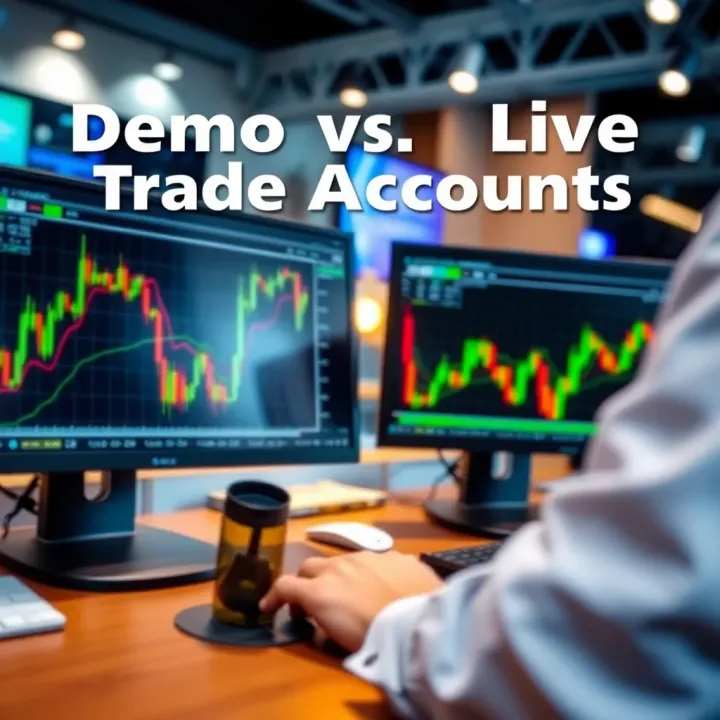
Learn how demo trade accounts help Indian traders practise and refine strategies risk-free. Discover features, benefits, tips for success, and shifting to real trading 📈💡
Based on 9 reviews